 listicle
Cost of 24/7 Home Care Services: 2026 Guide
Table of Contents
- What Drives the Cost of 24/7 Home Care Services
- Hourly, Daily, and Monthly Cost Breakdowns
- Live-In Care vs 24-Hour Care: Which Costs More?
- How to Pay for 24/7 Home Care: Funding Options Explained
- Long-Term Care Insurance for Home Health: What It Covers
- Comparing 24/7 Home Care Providers: What to Look For
- Frequently Asked Questions
Last Updated: August 11, 2026
Planning for 24/7 home care is one of the most financially significant decisions a family will make, and most families underestimate the cost significantly. At Katys home healthcare, we work with families across Ohio and North Carolina who arrive at this conversation without a clear picture of what continuous care actually costs, what drives those costs, and how to fund them responsibly. This guide breaks down the full financial landscape of 24/7 home care so you can plan with confidence rather than react in a crisis.
What Drives the Cost of 24/7 Home Care Services
The cost of 24/7 home care is shaped by three primary variables: the type of care required, where the client lives, and whether care is arranged through an agency or hired independently.

Type of Care: Non-Medical vs. Skilled Nursing
Non-medical assistance covers help with activities of daily living (ADLs) such as bathing, dressing, grooming, meal preparation, medication reminders, and companion care. A home health aide or certified nursing assistant (CNA) typically delivers these services and is the most common and affordable form of 24/7 home care.
Skilled nursing care involves licensed nurses performing clinical tasks: wound care, IV management, post-surgical monitoring, or managing complex chronic conditions. Skilled nursing costs meaningfully more per hour than non-medical assistance, with additional premiums for overnight care and weekend shifts.
A thorough care assessment is the only reliable way to determine the right level of care based on the client's specific ADL limitations, cognitive status, and medical complexity.
Geographic Location and Local Labor Markets
Geographic location is one of the most powerful cost drivers in home care. Labor markets vary sharply across states and even within counties. Rural areas often have fewer caregivers available, which can push rates up despite lower general costs of living. Metropolitan areas carry higher base wages and agency overhead.
According to Genworth's Cost of Care Survey, home care costs in the Midwest and Southeast tend to run below the national median, while coastal and urban markets run significantly above it. Ohio and North Carolina both fall in the more affordable range nationally, though rates vary by county and service type.
Agency Overhead vs. Independent Caregiver Costs
Hiring through a licensed home care agency means the agency handles employment taxes, workers' compensation, background checks, caregiver training, scheduling, and replacement coverage. Hiring an independent caregiver directly costs less per hour on paper, but you become the employer of record, responsible for payroll taxes, liability, and finding replacements when your caregiver is unavailable.
Hourly, Daily, and Monthly Cost Breakdowns
Pricing for 24/7 home care is rarely quoted as a flat monthly rate. Most agencies price by the hour, with daily and monthly figures calculated from that base. Overnight care and weekend shifts typically carry shift differentials that raise the effective hourly rate.
The table below illustrates how care type and schedule interact to produce different cost profiles. These ranges reflect general market patterns; actual rates depend on location, care complexity, and the specific provider.
| Care Type | Typical Hourly Range | Estimated Daily Cost | Estimated Monthly Cost |
|---|---|---|---|
| Non-medical (home health aide) | $26 - $40/hr | $200 - $320 (8-hr shift) | $6,000 - $9,600 (8 hrs/day) |
| Non-medical (24-hr coverage) | $26 - $40/hr | $600 - $960 | $18,000 - $28,800 |
| Live-in caregiver (non-medical) | Daily rate model | $350 - $700/day | $10,500 - $21,000 |
| Skilled nursing (RN/LPN) | $90 - $150/hr | Varies by visit | Varies significantly |
| CNA with overnight care | $28 - $50/hr | $672 - $1,200 | $20,000 - $36,000 |
These figures align with data from the Medicare.gov home health cost comparison tool. Monthly expenses for true around-the-clock non-medical care commonly exceed what families initially budget.
Live-In Care vs 24-Hour Care: Which Costs More?
Live-in care means a single caregiver lives in the home and is available during the day, with a designated sleep period (typically eight hours) during overnight hours. If the client requires nighttime assistance, the caregiver may respond, but continuous overnight monitoring is not guaranteed.
24-hour care means caregivers are awake and attentive at all hours. This typically requires rotating shifts: two or three caregivers working overlapping schedules to ensure no gaps in coverage. Because you are paying for active caregiver time across all 24 hours, the cost is higher than live-in care.
| Feature | Live-In Care | 24-Hour Care |
|---|---|---|
| Caregiver sleep period | Yes (typically 8 hrs) | No - active coverage all hours |
| Number of caregivers | Usually 1 (with backup) | 2-3 rotating shifts |
| Overnight monitoring | Limited | Continuous |
| Typical daily cost | Lower | Higher |
| Best for | Clients who sleep through the night | Clients with nighttime needs or fall risk |
| Caregiver consistency | High | Moderate (multiple caregivers) |
For clients with dementia who wander at night, significant fall risk, or complex medical needs, 24-hour care is the clinically appropriate choice. For clients who sleep soundly and need daytime ADL support, live-in care often delivers comparable quality at meaningfully lower monthly expenses.
How to Pay for 24/7 Home Care: Funding Options Explained
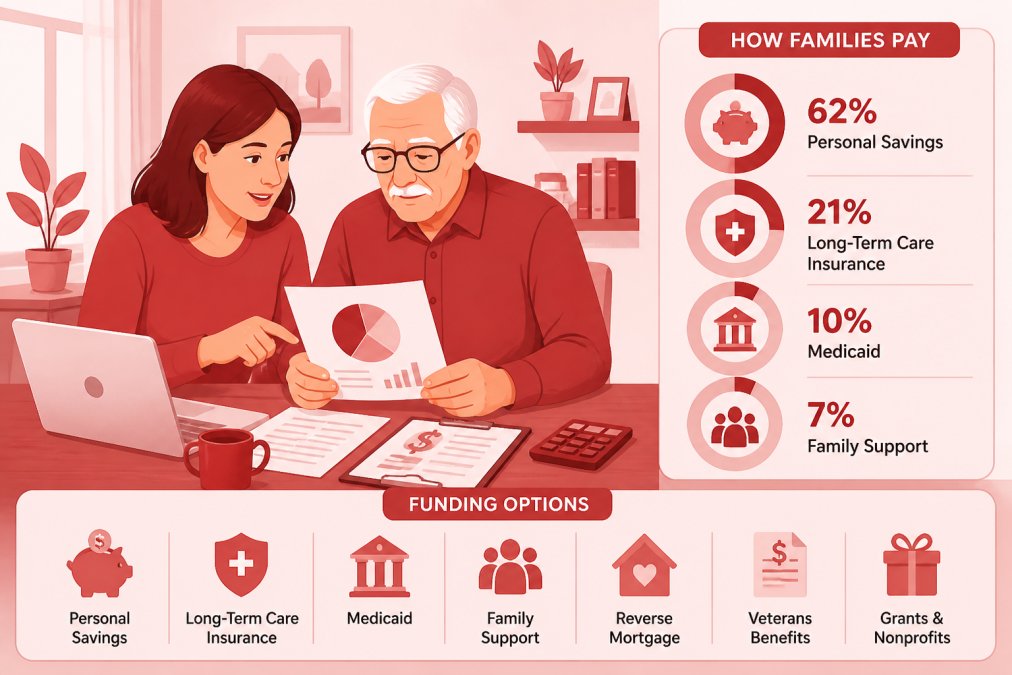
Most families pay for 24/7 home care through a combination of sources rather than any single funding stream. Private pay is the starting point for many, but it rarely has to be the only option.
Medicaid Waiver Programs and Veterans Benefits
Medicaid is the largest public payer for long-term home care. The Medicaid Home and Community-Based Services (HCBS) waiver allows states to fund personal care services and companion care for eligible individuals who would otherwise require nursing facility placement.
Ohio administers the PASSPORT Medicaid Waiver, which funds in-home personal care for eligible older adults. North Carolina operates the Community Alternatives Program for Disabled Adults (CAP/DA). Both programs have income and asset eligibility requirements and commonly have waiting lists. Applying early is critical.
Veterans benefits represent one of the most underused funding sources for home care. The VA Aid and Attendance benefit provides additional pension income to veterans and surviving spouses who require help with ADLs. The Veterans Directed Care program allows eligible veterans to hire and direct their own caregivers, including family members in some cases. Contact your regional VA office or a VA-accredited benefits counselor to determine eligibility.
Tax Deductions for Home Care Expenses
Home care costs may qualify as deductible medical expenses under IRS Schedule A when the care is medically necessary and prescribed to treat a specific condition. The deduction applies to the portion of qualifying expenses that exceeds a threshold percentage of adjusted gross income.
Care that is purely custodial (companionship, meal prep with no medical component) generally does not qualify. Consult a tax professional with experience in elder care expenses before claiming these deductions.
Long-Term Care Insurance for Home Health: What It Covers
Long-term care insurance is designed for extended care needs that Medicare does not cover. A well-structured policy can pay for home health aide services, personal care, companion care, and in some cases skilled nursing at home.
Key variables include the daily or monthly benefit amount, the elimination period (days the policyholder pays out of pocket before benefits begin), the benefit period, and whether the policy includes inflation protection. Most policies define benefit eligibility by the inability to perform a specified number of ADLs (typically two or more) or by cognitive impairment.
What long-term care insurance typically does NOT cover: care provided by a family member in most standard policies, care that does not meet the policy's minimum hours-per-day threshold, or services outside the policy's approved care plan. Medicare covers short-term skilled nursing care at home after a qualifying hospital stay, but not ongoing personal care or companion care.
Comparing 24/7 Home Care Providers: What to Look For
The price you pay for 24/7 home care is only part of the equation. Provider quality, caregiver consistency, and the agency's ability to handle complex care needs all affect your real cost.
Caregiver Consistency and Turnover Costs
Caregiver turnover is one of the least-discussed cost drivers in home care. Every time a caregiver leaves, the family absorbs the cost of transition: onboarding a replacement, adjustment time for the care recipient, and increased risk of care errors. For clients with dementia or behavioral health needs, caregiver changes can trigger significant behavioral regression and safety incidents.
When evaluating providers, ask directly about caregiver turnover rates and how the agency handles coverage when a regular caregiver is unavailable. A provider that maintains consistent assignments is functionally more cost-effective than a slightly lower-priced agency that rotates different caregivers.
Katys home healthcare has built its model around caregiver continuity, matching clients with a consistent team rather than filling shifts from a rotating pool. With over a decade of experience and a five-star rating from patients and families, the agency's approach reflects a direct response to the frustration families feel when consistency fails.
Hybrid Care Models That Reduce Out-of-Pocket Expenses
A hybrid care model combines professional home care with family caregiver involvement, community resources, and technology-assisted monitoring to reduce the total hours of paid professional care required without reducing quality of supervision.
Practical hybrid approaches include family members covering evenings or weekends while a professional handles daytime hours, remote monitoring technology (fall detection sensors, medication dispensers with alerts) that reduces the need for overnight active supervision, and adult day programs that provide structured activity during daytime hours. Families who map out their care hours carefully and identify which hours genuinely require professional support can often reduce monthly expenses while maintaining appropriate safety coverage.
| Funding Source | Who Qualifies | What It Covers | Where to Start |
|---|---|---|---|
| Medicaid HCBS Waiver | Low-income, meets care level criteria | Personal care, companion care | State Medicaid office |
| VA Aid and Attendance | Veterans/surviving spouses needing ADL help | Supplemental pension for care costs | VA.gov or accredited claims agent |
| Long-term care insurance | Policyholders meeting ADL/cognitive criteria | Home health aide, personal care, skilled nursing | Review policy documents |
| IRS medical deduction | Taxpayers with qualifying medical expenses | Medically necessary home care costs | IRS Schedule A, consult tax professional |
| Private pay | Anyone | Any care type | Direct agency or caregiver contract |
| Hybrid model | Families with partial caregiver availability | Reduces paid hours needed | Care assessment |
According to the AARP Public Policy Institute's long-term care financing research, most families rely on a combination of private pay and informal family caregiving, with public programs filling gaps for those who meet eligibility criteria. Understanding all available channels before committing to a single funding approach is the most effective financial strategy.
Budgeting for continuous home care is genuinely complex, and the stakes are too high to navigate it without reliable support. Katys home healthcare provides dedicated 24/7 home care services across Ohio and North Carolina, with a seasoned team of passionate caregivers focused on helping clients maintain independence and quality of life at home. Whether your family needs post-surgical recovery support, ongoing assistance with daily activities, or a care plan built around a loved one with dementia, our team is ready to help you build the right approach. Create your account with Katys home healthcare and take the first step toward a calm, consistent, and compassionate care environment for your loved one.
Frequently Asked Questions
Is 24/7 home care cheaper than a nursing home?
For many families, 24/7 home care and nursing home care fall in a comparable cost range, though the exact comparison depends on your location and the level of care needed. Home care lets your loved one stay in a familiar environment, which can support better outcomes and independence. For seniors who need only non-medical assistance with activities of daily living, home care often provides strong value relative to facility-based options. Request a personalized care assessment to compare costs for your specific situation.
What is the difference between 24-hour care and live-in care?
24-hour care uses rotating caregiver shifts, ensuring someone is awake and available at all times throughout the day and night. Live-in care means one caregiver stays in the home but is entitled to rest periods, typically 8 hours of sleep per night. For clients who need frequent overnight assistance or have conditions like advanced dementia, 24-hour shift care is generally safer. Live-in care tends to cost less but may not meet every client's overnight supervision needs. A care assessment helps determine which model fits best.
Does Medicare cover 24/7 in-home care services?
Standard Medicare does not cover ongoing 24/7 home care for non-medical needs. Medicare Part A may cover short-term skilled nursing or therapy services at home following a qualifying hospital stay, but only for a defined period and only when specific medical criteria are met. It does not pay for companion care, personal care services, or continuous supervision. Families covering long-term 24/7 home care typically rely on long-term care insurance, Medicaid waiver programs, veterans benefits, or private pay. Always verify current eligibility rules at Medicare.gov.
Are there financial assistance programs for 24/7 home care beyond Medicaid?
Yes. Veterans and surviving spouses may qualify for the VA Aid and Attendance benefit, which provides funds specifically for in-home care. Some states offer additional home and community-based services programs separate from standard Medicaid waivers. The IRS also allows qualifying home care expenses to be deducted as medical expenses when they exceed a threshold of your adjusted gross income, and dependent care flexible spending accounts may apply in certain situations. A care coordinator or elder law attorney can help identify every program available to your family.
How do agencies calculate hourly rates for 24/7 care?
Agencies factor in caregiver experience and certifications, local labor market wages, shift differentials for overnight and weekend hours, and the level of care required, such as personal care versus skilled nursing. Agency overhead including insurance, background checks, training, and care coordination is built into the rate. Clients requiring specialized support, such as dementia care or post-surgical rehabilitation, often see higher rates. Rates also vary by geographic location. Contacting an agency directly for a care assessment is the most accurate way to get a personalized quote.
This article was written using GrandRanker