 ultimate-guide
Home Healthcare for Rural Areas: A 2026 Family Guide
Table of Contents
- The Rural Care Gap: Why Distance Changes Everything
- 5 Home Healthcare Models That Work Beyond City Limits
- Using Telehealth for Rural Seniors: What Actually Works
- Medicare Home Health Eligibility: The 3 Core Requirements
- Coordinating Care for Stubborn Seniors Who Refuse Help
- A Practical Patient Navigation Guide for Rural Families
- The Bottom Line on Home Healthcare Access
- Frequently Asked Questions
Last Updated: September 8, 2026
The Rural Care Gap: Why Distance Changes Everything
When a parent lives 45 minutes from the nearest hospital, a routine checkup becomes an all-day event. That distance, repeated across specialists, labs, and follow-ups, is the quiet force shaping home healthcare for rural areas, influencing whether a senior receives preventative care or ends up in an emergency room.
The core challenge is the mismatch between where patients live and where services concentrate, affecting everything from provider shortages to transportation.
This guide breaks down the care models that work beyond city limits, how to navigate Medicare coverage, and the practical steps for coordinating care when you are not in the same room.
5 Home Healthcare Models That Work Beyond City Limits
The five models gaining traction in rural settings are: traditional home health agencies, home-based primary care, hospital-at-home programs, mobile clinic outreach, and telehealth-supported remote monitoring.
Home-Based Primary Care vs. Traditional Home Health Agencies
A traditional home health agency provides skilled nursing or therapy visits for a defined period, often after a hospitalization. Care is intermittent, a nurse might visit three times a week for a few weeks, and works well for acute recovery.
Home-based primary care, by contrast, brings a physician or advanced practitioner into the home for ongoing medical management, a critical option for rural seniors who cannot travel to a clinic. It focuses on managing chronic conditions over the long term. The distinction matters because families often assume one agency can do everything, only to discover a gap in ongoing medical oversight.
Hospital-at-Home and Mobile Clinic Outreach
Hospital-at-home programs are a newer hybrid care model where patients with certain acute conditions receive hospital-level care in their own beds. Clinicians make daily visits, and remote patient monitoring tracks vitals between check-ins. For rural patients, this avoids a long ambulance ride and the risk of hospital-acquired infections.
Mobile clinics take a different approach, bringing preventative screenings and primary care to community gathering points. While they do not provide continuous care, they address the preventative screenings gap that allows small issues to become emergencies.
Using Telehealth for Rural Seniors: What Actually Works
Most policy discussions treat telehealth as a simple fix for distance, but they skip the practical reality: the average rural senior is not a native smartphone user, and hardware and connectivity barriers are often the true gatekeepers.
The Real Barriers: Broadband, Devices, and Digital Literacy
The first hurdle is infrastructure. According to the Federal Communications Commission's 2024 Broadband Deployment Report, over 22% of rural Americans lack access to fixed terrestrial broadband at the 25/3 Mbps threshold (fcc.gov). Before committing to a telehealth plan, verify the patient's actual internet speed at home with a simple speed test, not just the advertised coverage in their zip code.
If broadband is insufficient, a cellular hotspot with a strong signal is a viable alternative, but data caps can be a problem. A more reliable fallback is a plain telephone call for audio-only visits, which Medicare has permanently covered for many services since the COVID-19 public health emergency.
Hardware: The Right Tool for the Job
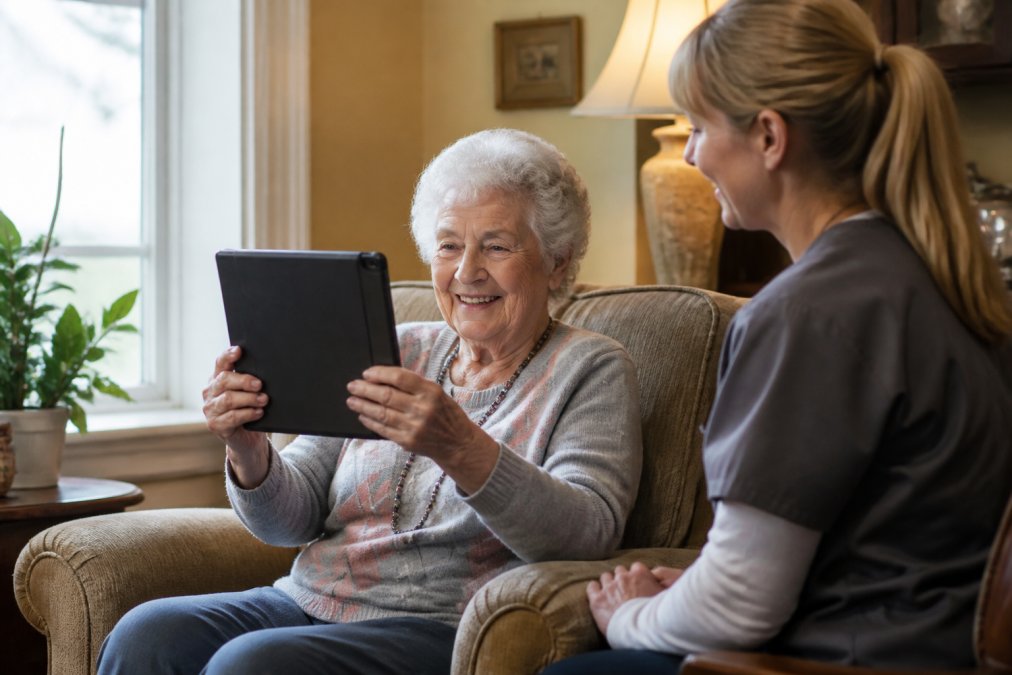
A smartphone with a 5-inch screen is often the wrong tool for a patient with low vision or arthritis. A tablet with a larger display and a simple interface is usually a better fit. The key is to choose a device dedicated to the purpose, not a shared family device. For patients with cognitive decline, a device locked into a single telehealth app can prevent confusion.
Many Area Agencies on Aging and local libraries offer device lending programs or technology training specifically for seniors, bridging the hardware gap without requiring a family to purchase a new tablet.
The Coaching Model: Why It Works
A common pattern is that a family member sets up the device, hands it to the senior, and leaves the room. This almost always fails. The most effective approach is a structured coaching model:
- Setup Visit: A family member or caregiver sets up the device, tests the connection, and places the first call to a friend or grandchild. This is a low-stakes call to build familiarity.
- Practice Visit: A second call is scheduled with the same family member, but the senior is asked to initiate the call themselves, with the family member present but not assisting.
- Clinical Visit: The first actual telehealth appointment is scheduled only after the senior can successfully initiate a call on their own.
This three-step process takes time, but it dramatically reduces the frustration and abandonment that occurs when a senior is thrown into a clinical visit without preparation.
When Telehealth Is Not the Answer
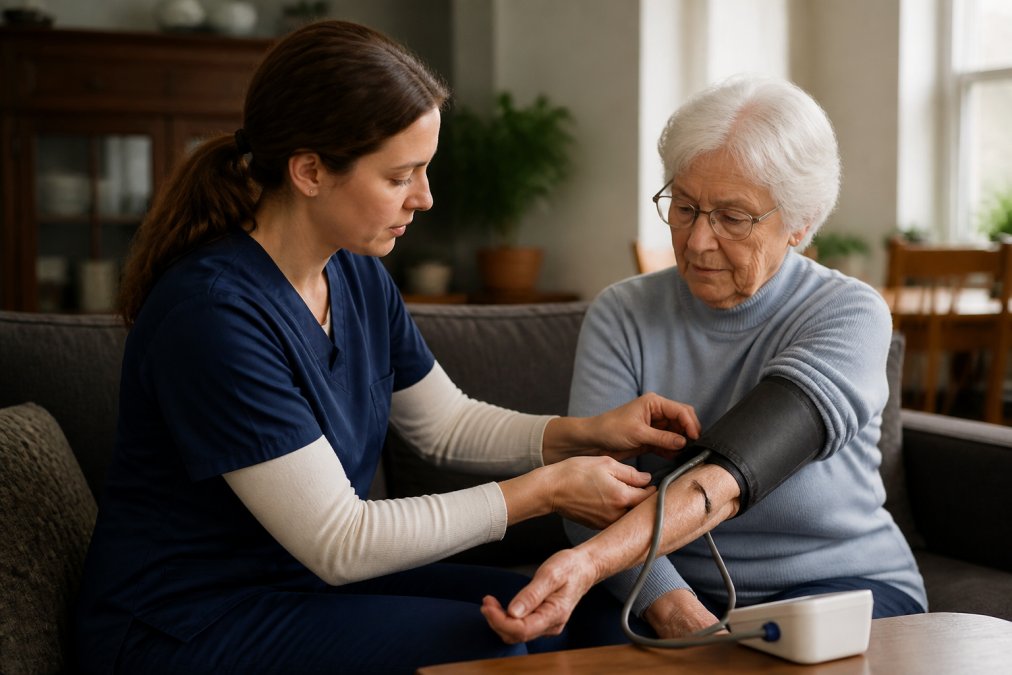
Telehealth is not a universal solution. For patients with significant hearing loss, cognitive impairment, or conditions requiring hands-on assessment, it is a poor substitute for in-person care. In these cases, the focus should shift to remote patient monitoring devices that transmit data automatically, such as blood pressure cuffs or glucose monitors. A nurse reviews the data and makes a phone call to discuss concerns.
Start with a single, low-stakes call to build familiarity before introducing a clinical visit. The goal is to maintain a connection with a provider, not to master a new device.
Medicare Home Health Eligibility: The 3 Core Requirements
Medicare home health eligibility rests on three conditions: the service must be deemed medically necessary, the patient must be homebound, and the care must be provided by a Medicare-certified home health agency.
The homebound requirement confuses most families. A patient does not need to be bedridden; they qualify if leaving home requires considerable effort and is typically limited to medical appointments or brief, infrequent outings. This is a lower bar than most assume, but it is strictly documented by the physician.
Medicare covers skilled nursing care, physical therapy, occupational therapy, and speech-language pathology on an intermittent basis. It does not cover 24-hour custodial care, meal delivery, or assistance with bathing and dressing when that is the only service needed. Many rural families discover this distinction only after assuming Medicare will pay for the full-time support their parent requires. For those needing continuous supervision, private-pay home care agencies fill the gap that Medicare leaves open. The official Medicare home health benefits overview provides the current coverage details and cost-sharing rules.
Coordinating Care for Stubborn Seniors Who Refuse Help
The clinical plan matters little if the patient refuses to let anyone through the door. Coordinating care for stubborn seniors requires a different skill set than scheduling visits. The resistance usually stems from a loss of autonomy, not a genuine rejection of help, but for the family caregiver, this resistance is exhausting.
The Caregiver's Burden: A Rural Reality
In rural areas, family caregivers are the backbone of the home health system. The AARP Public Policy Institute's 2023 report "Caregiving in the United States" found that rural family caregivers spend an average of 22 hours per week on caregiving duties, often while holding down a job, leading to high rates of burnout, depression, and physical health problems.
Reframing the Conversation: From Dependence to Independence
The most effective strategy is to reframe the conversation around independence. Instead of saying "you need a nurse," say "let's get you strong enough to drive again," shifting the focus from dependence to recovery.
Avoid forcing the issue during a crisis. If a parent has just been discharged after surgery, their defenses are low, but so is their tolerance for change. Start with short visits focused on a specific task, like preparing a meal.
Practical Tools for the Family Caregiver
For families facing this wall, there are concrete resources:
- Respite Care: The National Family Caregiver Support Program, administered by the Administration for Community Living, provides grants to states to offer respite care services. Contact your local Area Agency on Aging to find out what is available in your county.
- Caregiver Training: Many home health agencies offer training to family caregivers on topics like lifting, transferring, and managing medications. Ask your agency if they offer this before you start.
- Support Groups: The Family Caregiver Alliance and local chapters of the Alzheimer's Association offer both in-person and online support groups to share experiences and learn from others.
The Role of the Home Health Agency
A good home health agency should act as a partner to the family caregiver, not just provide skilled care to the patient. They should be willing to:
- Provide a consistent caregiver: Consistency is critical for seniors with dementia or trust issues. Ask if you can meet the caregiver before the first shift and whether the agency guarantees the same person for each visit.
- Communicate openly: A good agency will establish a clear communication cadence, whether that is a text after each visit or a weekly phone summary. Do not assume updates will happen automatically.
- Offer guidance on difficult behaviors: Agencies that specialize in dementia care are trained to handle the specific challenges of resistance and aggression. They can coach the family on what to expect and how to respond.
The National Institute on Aging guidance on long-term care decisions offers practical communication strategies for these conversations, but the most important step is to acknowledge that the caregiver needs support too. A plan that ignores the caregiver's burnout is a plan that will eventually fail.
A Practical Patient Navigation Guide for Rural Families
When managing care from a distance, a structured approach prevents costly mistakes. Use this checklist to build a reliable system.
- Verify service availability first. Call local agencies and ask specifically whether they cover your parent's zip code. Many rural counties have limited home health agency coverage.
- Clarify the payer source. If your parent has Medicare, confirm the agency is Medicare-certified and accepts assignment. If paying privately, ask about the consistency of the caregiver.
- Request a specific caregiver. Consistency is critical for seniors with dementia or trust issues. Ask if you can meet the caregiver before the first shift and whether the agency guarantees the same person.
- Establish a communication cadence. Decide whether you want a text after each visit or a weekly phone summary. Do not assume updates will happen automatically.
- Plan for transportation. If the agency does not provide transport, identify a backup option for medical appointments before you need it.
- Document everything. Keep a log of medications, vital signs, and any incidents. This record is invaluable during telehealth visits or when speaking with the physician.
This type of coordination is where a dedicated provider earns its keep. A seasoned team that handles scheduling and family communication reduces the burden on adult children. Prioritize agencies that demonstrate a clear process for caregiver vetting and training.
The Bottom Line on Home Healthcare Access
Rural families face a system designed around urban density, but the models above show that quality in-home care is achievable. The path forward requires matching the right delivery model to the patient's condition, verifying Medicare eligibility early, and building a coordination plan that accounts for distance and stubbornness.
The most important step is starting the conversation before a crisis forces a rushed decision. For families in Ohio and North Carolina exploring their options, Katys home healthcare provides dedicated 24/7 support from a team with over a decade of experience. Our caregivers focus on helping your loved one regain daily independence while providing the calm and supportive care environment needed to foster a healthy and happy lifestyle. Get started with Katys home healthcare and build a care plan that works for your entire family.
Frequently Asked Questions
What are the biggest barriers to home healthcare access in rural areas?
Provider shortages and travel distance top the list. Rural counties often have fewer home health agencies and physical therapists, forcing families to wait longer for visits or drive long distances. Geographic barriers also make it harder for agencies to staff consistent caregivers, which affects continuity of care. Transportation challenges compound the problem for follow-up appointments. Understanding these limits helps you plan ahead and ask agencies about their service radius and staffing backup before you commit.
How does telehealth integrate with in-home care for rural seniors?
Telehealth fills the gaps between in-person visits. A nurse might visit twice a week, while remote patient monitoring devices track blood pressure daily and a video check-in handles medication questions. This hybrid approach reduces travel for both the patient and the care team. For seniors, the key is matching the technology to their comfort level. A caregiver can set up the tablet and dial the call, so the senior only needs to talk and listen. This makes virtual visits practical even for those who are not tech-savvy.
What are the Medicare home health eligibility requirements?
Medicare covers home health care if you meet three core conditions. First, a doctor must certify that you need intermittent skilled nursing care or physical, occupational, or speech therapy. Second, that care must be medically necessary and ordered by your physician. Third, you must be homebound, meaning leaving home takes considerable effort. Medicare does not cover 24/7 custodial care or help with meals and bathing alone. Check the official Medicare website or call them directly for the full current requirements, as rules can change.
How can families coordinate care for a loved one who refuses help?
Start with a medical appointment and ask the doctor to recommend care as part of the treatment plan. Seniors often accept advice from a physician more readily than from family. Focus on one specific task, like help with bathing after a fall, rather than presenting a full care package. Introduce the caregiver gradually, starting with short visits for companionship or a simple chore. Consistency matters: having a consistent caregiver can help build trust and reduce resistance.