 how-to
What Happens If You Skip Physical Therapy After Stroke
Table of Contents
- Why Physical Therapy Matters After Stroke
- Consequences of Skipping or Delaying Physical Therapy
- How Long Is Physical Therapy After a Stroke
- Stroke Rehabilitation Exercises You Can Do at Home
- Outpatient Physical Therapy After Stroke: When and How It Works
- Caregiver Help After Stroke: Supporting Recovery at Home
- What to Do If You Cannot Attend Therapy Sessions
- When to Contact Your Therapist or Doctor
- Frequently Asked Questions
Last Updated: October 18, 2026
Why Physical Therapy Matters After Stroke
A stroke disrupts blood flow to the brain, damaging nerve pathways that control movement, balance, and coordination.
Early rehabilitation starts within days of stroke. The sooner you begin, the better your chances of regaining lost skills. Your brain is most adaptable in the first few weeks and months after injury. Missing this window means slower progress later.
Physical therapy after stroke isn't optional. It's the foundation for independence. Without it, complications pile up fast.
Consequences of Skipping or Delaying Physical Therapy
What happens if you skip physical therapy after stroke depends on how long you wait and how severe your stroke was. But the pattern is consistent: the longer you delay, the harder recovery becomes.
Skipping therapy isn't the same as taking a break. One missed week sets back progress. Two weeks compounds the problem. A month? Your body starts adapting to weakness instead of fighting it.
Muscle Weakness and Atrophy
Stroke damages the nerves that fire your muscles. Physical therapy retrains those pathways. Without it, muscles weaken rapidly.
Muscle atrophy begins within days of inactivity. Your muscles shrink and lose strength. The longer you wait, the more severe the loss becomes.
Regaining that strength takes longer than losing it. If you delay therapy by two months, you may spend six months rebuilding what you lost in eight weeks. The math gets worse the longer you wait.
Weakness also increases fall risk. Weak legs mean unstable walking. Unstable walking means falls. Falls mean new injuries and longer recovery.
Loss of Movement and Mobility
Stroke affects one side of your body. Your arm may hang limp. Your leg may drag. Your face may droop on one side.
Physical therapy teaches your brain to control that side again. Therapists guide movements. They repeat exercises. Your nervous system learns new pathways around the damaged area.
Skip therapy, and your body adapts to immobility. Your affected arm stops trying to move. Your leg forgets how to walk normally.
Relearning movement after your body has adapted to stillness is much harder. Your brain has already rewired itself around the disability. Reversing that takes time and intense effort.
Stiffness and Reduced Range of Motion
Stroke survivors often develop spasticity, involuntary muscle tightness on the affected side. It feels like your muscles are constantly clenched.
Physical therapy stretches tight muscles. Therapists move your joints through their full range. Regular movement prevents stiffness from locking in.
Without therapy, spasticity worsens. Your shoulder tightens. Your elbow locks. Your wrist curls. Your fingers clench into a fist.
Once spasticity sets in deeply, reversing it takes much longer. Some survivors develop permanent contractures, joints that can't straighten. These can't be fully reversed.
The consequences extend beyond stiffness. Limited range of motion makes daily tasks impossible. You can't reach your arm to eat.
Balance and Walking Difficulties
Stroke disrupts your balance system. You may feel dizzy or unsteady. Your body doesn't know where it is in space.
Physical therapy retrains balance. Therapists work on weight shifting, standing stability, and walking patterns.
Skip therapy, and balance problems persist. Your fear of falling grows. You move less. Moving less makes balance worse. This creates a downward spiral.
Walking becomes unsafe. You shuffle. You lean to one side. You can't lift your foot properly. You fall.
Independence disappears. You need someone with you constantly. You can't go to the store. You can't visit friends. You can't leave your home alone.
Pain and Lingering Symptoms
Stroke survivors often develop pain weeks or months after the event. Shoulder pain is common. So is pain in the affected arm, leg, or face.
Physical therapy manages this pain. Movement, stretching, and strengthening reduce pain over time. Therapists teach you how to move without aggravating it.
Delay therapy, and pain can become chronic. What starts as temporary discomfort becomes permanent. Chronic pain interferes with sleep, mood, and motivation to recover.
Other lingering symptoms include numbness, tingling, and abnormal sensations. These improve with therapy. Without it, they persist or worsen.
How Long Is Physical Therapy After a Stroke
Recovery timelines vary. Some survivors regain most function within three to six months. Others improve for years.
Most stroke survivors need intensive therapy for the first three months. Sessions typically happen three to five times per week.
After three months, many survivors transition to outpatient therapy. Sessions become less frequent, one to three times per week.
Some survivors benefit from therapy for years. The brain can rewire itself even years after stroke.
Skipping sessions interrupts this process. Your brain needs repetition to rewire. Missing weeks sets back progress.
The timeline stretches when you skip therapy. A recovery that could take six months takes a year.
Stroke Rehabilitation Exercises You Can Do at Home
Home exercises bridge the gap between therapy sessions. They reinforce what you learn with your therapist. They speed up recovery.
Safe home exercises depend on your specific stroke and your therapist's recommendations. Never start new exercises without checking with your physical therapist first.
Common home exercises include:
- Arm reaches: Extend your affected arm forward, to the side, and overhead. Hold each position for a few seconds. Repeat 10 times.
- Hand squeezes: Squeeze a soft ball or therapy putty. Hold for a few seconds. Release. Repeat 10 times.
- Leg lifts: Lie on your back. Lift your affected leg a few inches. Hold for a few seconds. Lower slowly. Repeat 10 times.
- Sit-to-stand: Sit in a sturdy chair. Stand up slowly. Sit back down. Repeat 10 times.
- Walking practice: Walk around your home. Use a walker or cane if needed. Start with short distances. Gradually increase.
- Standing balance: Stand near a counter or wall for safety. Lift one foot slightly off the ground. Hold for a few seconds. Switch feet. Repeat 10 times.
Do these exercises daily. Consistency matters more than intensity. Ten repetitions done every day beats 100 repetitions done once a week.
Keep a log. Write down which exercises you did and how many repetitions. This helps your therapist track progress and adjust your program.
Outpatient Physical Therapy After Stroke: When and How It Works
Outpatient therapy happens in a clinic or rehabilitation center.
Most stroke survivors start with inpatient rehabilitation in the hospital or a rehab facility.
Outpatient therapy typically starts two to four weeks after your stroke. Sessions happen in a clinic with specialized equipment.
Sessions usually last 45 to 60 minutes.
Outpatient therapy requires transportation. You need to get to appointments. If you can't drive, you need someone to take you.
If transportation is difficult, talk to your therapist. Some clinics offer telehealth appointments. Some therapists make home visits.
The cost of outpatient therapy varies. Insurance often covers it. Medicare covers physical therapy after stroke.
Caregiver Help After Stroke: Supporting Recovery at Home
Caregivers play a crucial role in stroke recovery. They help with exercises, transportation, and daily tasks. They provide emotional support when progress feels slow.
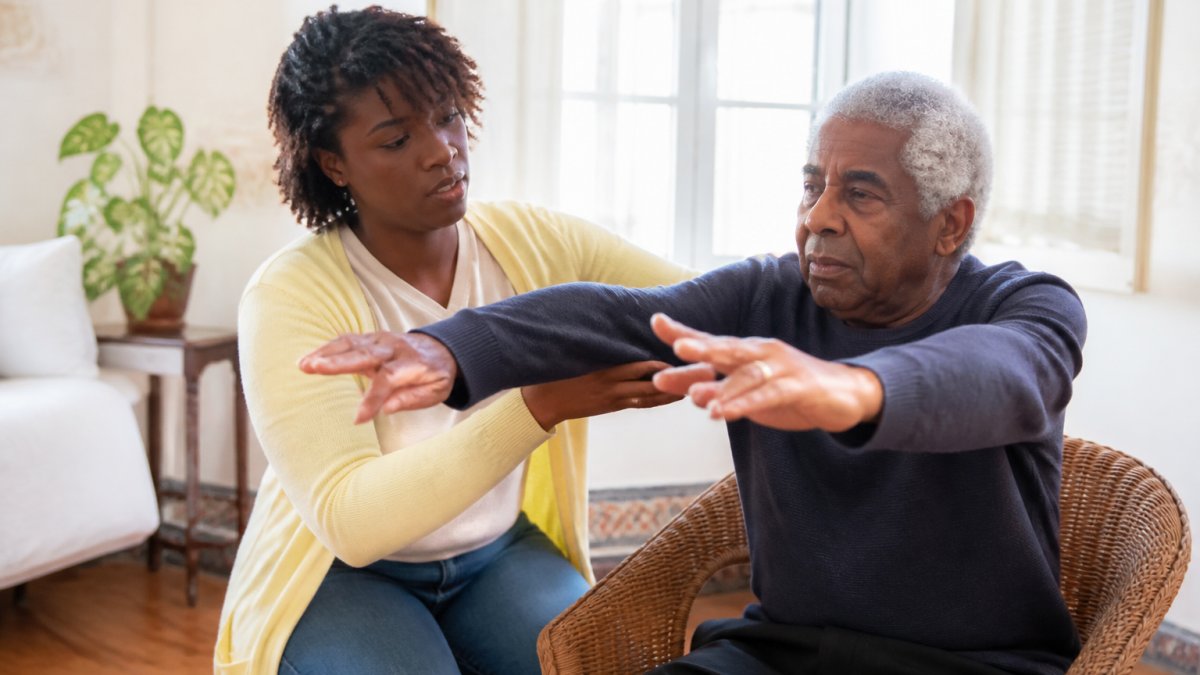
A caregiver can help by:
- Encouraging exercise: Remind the survivor to do home exercises. Help them perform movements safely. Offer encouragement.
- Assisting with mobility: Help the survivor stand, walk, and move around safely. Use a gait belt if needed. Stay close in case of falls.
- Managing appointments: Drive to therapy sessions. Help with scheduling. Keep track of progress.
- Providing emotional support: Stroke recovery is frustrating. Progress feels slow. Caregivers can listen, encourage, and celebrate small wins.
- Adapting the home: Remove tripping hazards. Install grab bars. Rearrange furniture to make movement easier.
- Monitoring for complications: Watch for signs of another stroke, falls, or pain. Report concerns to the doctor.
Caregiver burnout is real. Recovery takes time. Caregivers need breaks. Professional help can provide respite care and reduce caregiver stress.
At Katys home healthcare, our caregivers are dedicated to supporting individuals through their recovery process. We help families navigate the challenges of rehabilitation at home.
What to Do If You Cannot Attend Therapy Sessions
Life happens. Transportation fails. Finances tighten. Illness strikes.
Missing one session sets back progress slightly. Missing multiple sessions compounds the problem.
If you're sick: Contact your therapist. Reschedule as soon as you're well.
If transportation is an issue: Ask your therapist about alternatives. Some offer telehealth sessions.
If cost is a barrier: Talk to your therapist. Many clinics offer financial assistance.
If you're overwhelmed: Tell your therapist. Recovery is hard. Fatigue is real.
If motivation is low: Progress feels slow. You get discouraged. Your therapist can help.
The worst response is to stop therapy entirely.
Staying connected to your recovery team matters.
When to Contact Your Therapist or Doctor
Some changes during recovery are normal. Others signal a problem. Know when to reach out.
Contact your therapist if:
- You develop new pain or your pain worsens
- Your affected arm or leg becomes more swollen
- You notice increased spasticity or stiffness
- Your balance worsens suddenly
- You fall or come close to falling
- You feel discouraged or depressed
- You're not seeing progress after several weeks
- You have questions about your exercises
Contact your doctor if:
- You experience sudden weakness or numbness on the opposite side of your body
- You have trouble speaking or understanding speech
- You have sudden vision changes
- You experience severe headache
- You feel chest pain or shortness of breath
- You have signs of another stroke
These could signal a new stroke or other medical emergency. Don't wait. Call 911 if you're unsure.
Recovery from stroke takes time. It takes effort. It takes consistency. It takes support. But it's possible. People recover. People regain independence. People rebuild their lives.
The choice to stick with therapy matters. The decision to do your exercises matters. The commitment to recovery matters. These choices determine your outcome.
Stroke recovery is possible, but it requires consistent effort. At Katys home healthcare, we support stroke survivors through every stage of recovery with compassionate, professional care. Our experienced caregivers help with therapy adherence, safe home exercises, and daily support. Learn more about stroke recovery resources from the American Stroke Association.
Frequently Asked Questions
What happens if you skip physical therapy after a stroke?
Skipping physical therapy after stroke can lead to muscle weakness, stiffness, reduced mobility, and slower recovery of lost skills. The longer you delay or miss sessions, the harder it becomes to regain movement and independence. Consistent therapy helps prevent complications and supports your brain's ability to rewire neural pathways. Even short gaps in treatment can affect your progress, which is why early rehabilitation and ongoing sessions matter significantly for long-term outcomes.
How long should you do physical therapy after a stroke?
Physical therapy duration varies based on stroke severity, your age, and recovery progress. Most stroke survivors begin therapy within days of becoming medically stable and continue for weeks to months. Some patients benefit from ongoing therapy for years, especially for regaining complex skills like walking or balance. Your therapist will create an individualized treatment plan and adjust the timeline based on your functional improvements and goals. Recovery is not linear, and consistent sessions over time yield better long-term outcomes than sporadic attendance.
Can you restart physical therapy after stopping?
Yes, you can restart physical therapy after stopping, but recovery may take longer than if you had continued consistently. The longer the gap, the more muscle atrophy and stiffness may have developed, requiring additional time to regain lost progress. Your therapist will reassess your current abilities and create a modified plan to safely rebuild strength and mobility. Starting again as soon as possible, even if you've missed weeks or months, is better than remaining inactive. Early restart improves your chances of regaining independence and preventing further decline.
What should you do if you cannot afford or get to stroke therapy?
If cost, transportation, or fatigue makes attendance difficult, talk to your therapist or healthcare team about alternatives. Home-based exercises, caregiver-assisted practice, and telehealth therapy sessions may be available options. Some community programs and nonprofit organizations offer reduced-cost or free rehabilitation services. Your doctor can also help identify resources and payment assistance programs. Even modified or less frequent therapy is better than stopping completely. Consistent home exercises under professional guidance can help maintain progress when in-person sessions are not possible.