 listicle
7 Ways to Prevent Falls for Elderly at Home
Table of Contents
- 1. Remove Tripping Hazards and Clear Pathways
- 2. Improve Lighting With Motion-Sensing Night Lights
- 3. Install Grab Bars, Handrails, and Non-Slip Surfaces
- 4. Choose Supportive Footwear and Assistive Devices
- 5. Start Fall Prevention Exercises for Elderly Adults
- 6. Complete a Home Safety Assessment for Seniors
- 7. Hiring Home Caregivers for Stubborn Seniors and Managing Medications
- Frequently Asked Questions
Last Updated: September 18, 2026
1. Remove Tripping Hazards and Clear Pathways
Most falls at home start with something ordinary: a magazine on the stairs, a loose rug, a cord across the hallway. Removing tripping hazards is the single fastest way to prevent falls, and it costs nothing. (Source: CDC STEADI fall prevention framework)
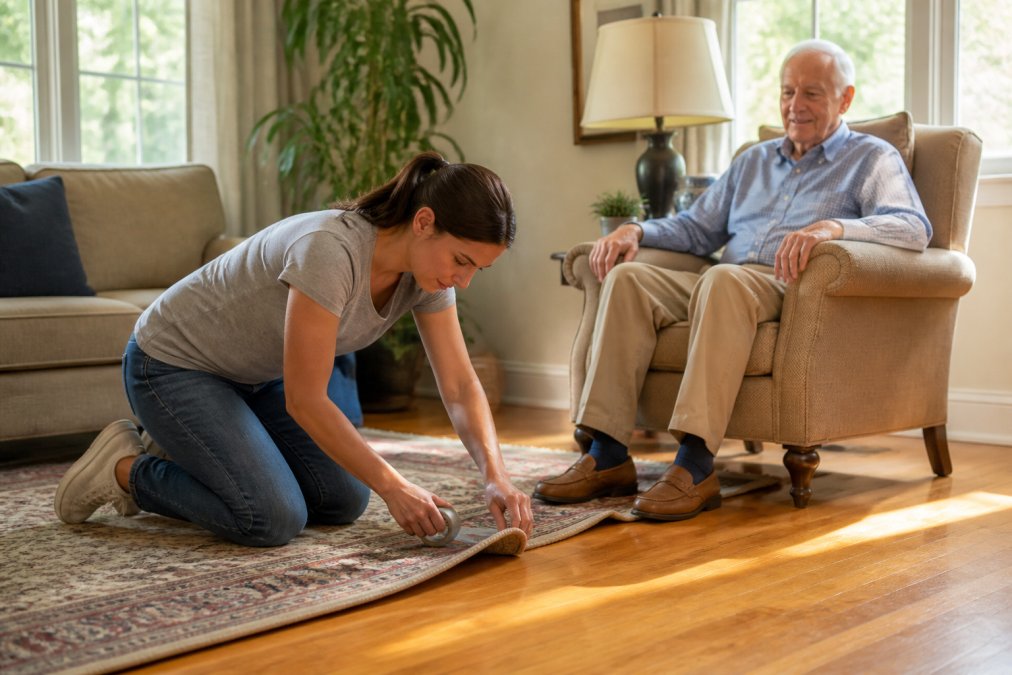
Walk through each room at eye level and then at floor level.
- Secure loose rugs with double-sided tape or remove them
- Coil electrical and phone cords against the wall
- Clear newspapers, shoes, and boxes from walkways
- Move low furniture, like coffee tables, out of the main path
- Repair uneven flooring and loose carpet edges
2. Improve Lighting With Motion-Sensing Night Lights
Poor lighting hides hazards and makes depth hard to judge, especially at night. Motion-sensing night lights solve both problems without anyone fumbling for a switch.
3. Install Grab Bars, Handrails, and Non-Slip Surfaces
Bathrooms and stairways cause the most serious home falls, and both can be made far safer with basic hardware. Grab bars, handrails, and non-slip surfaces give steady support exactly where balance is weakest.
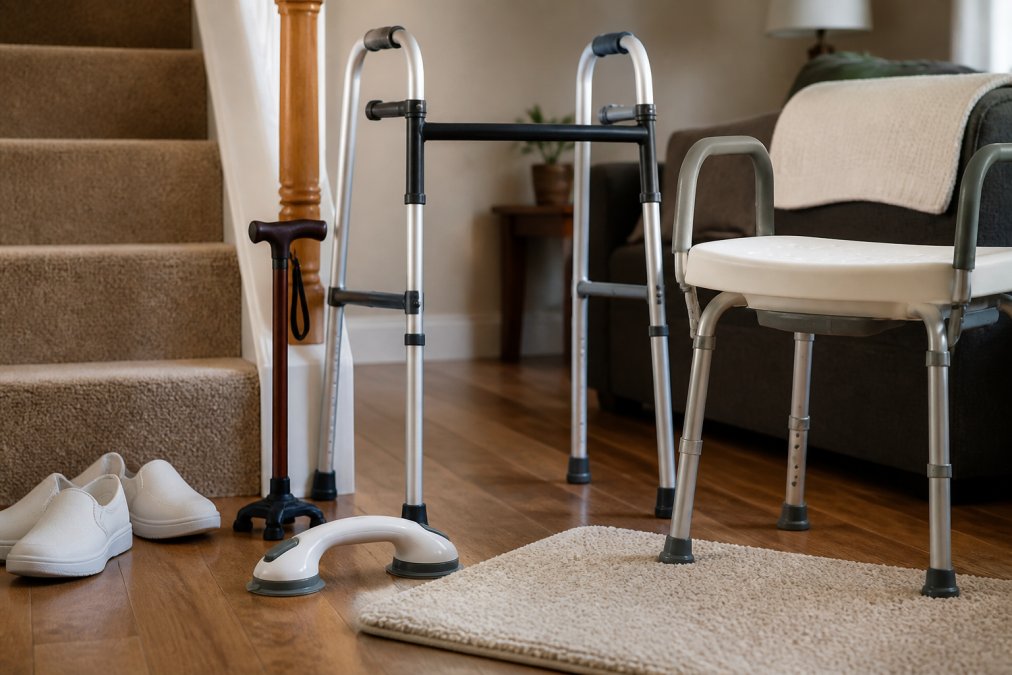
4. Choose Supportive Footwear and Assistive Devices
Socks and loose slippers are a hidden hazard on hard floors. Supportive footwear with non-slip soles improves gait stability and reduces tripping.
5. Start Fall Prevention Exercises for Elderly Adults
Muscle strength and balance are the two best defenses against falls, and both improve with regular movement. The key word is regular: a single weekly class will not move the needle. Most practitioners find that older adults get the best results from short, frequent sessions rather than one long workout, because fatigue itself becomes a fall risk late in a session.
- Balance and proprioception: standing on one foot while holding a counter, heel-to-toe (tandem) walking, weight shifts side to side
- Lower-body strength: sit-to-stand repetitions from a firm chair, light resistance bands, gentle squats to a counter for support
- Gait and endurance: a daily 20-30 minute walk, indoors or out, at a pace that still allows conversation
How to Dose It Safely
A common starting pattern is 10 minutes of balance work, 10 minutes of strength work, and a walk, three to five days a week. Progress by adding repetitions or seconds held, not by adding weight or speed first. Two rules keep it safe:
- Always have a stable support within arm's reach, a counter, a sturdy chair, or a rail. Balance exercises are where people fall during exercise.
- Stop at the first sign of dizziness, chest pain, or shortness of breath and check with a doctor before resuming.
Programs Worth Asking About
SilverSneakers is included with many Medicare Advantage plans and offers balance-focused classes at thousands of gyms, plus live online sessions for people who prefer to stay home. A Matter of Balance, a structured group program built around fear-of-falling and strength, is offered through many Area Agencies on Aging and senior centers at low or no cost. Tai chi has the strongest track record of any single activity for reducing falls in older adults, and beginner classes are widely available.
6. Complete a Home Safety Assessment for Seniors
A home safety assessment for seniors turns guesswork into a checklist. The National Institute on Aging guide to preventing falls recommends reviewing the whole home at least once a year, and again after any hospital stay, new diagnosis, or change in medication. Most families do this once, fix a few things, and never look again, which is why the same hazards quietly return.
The Room-by-Room Audit
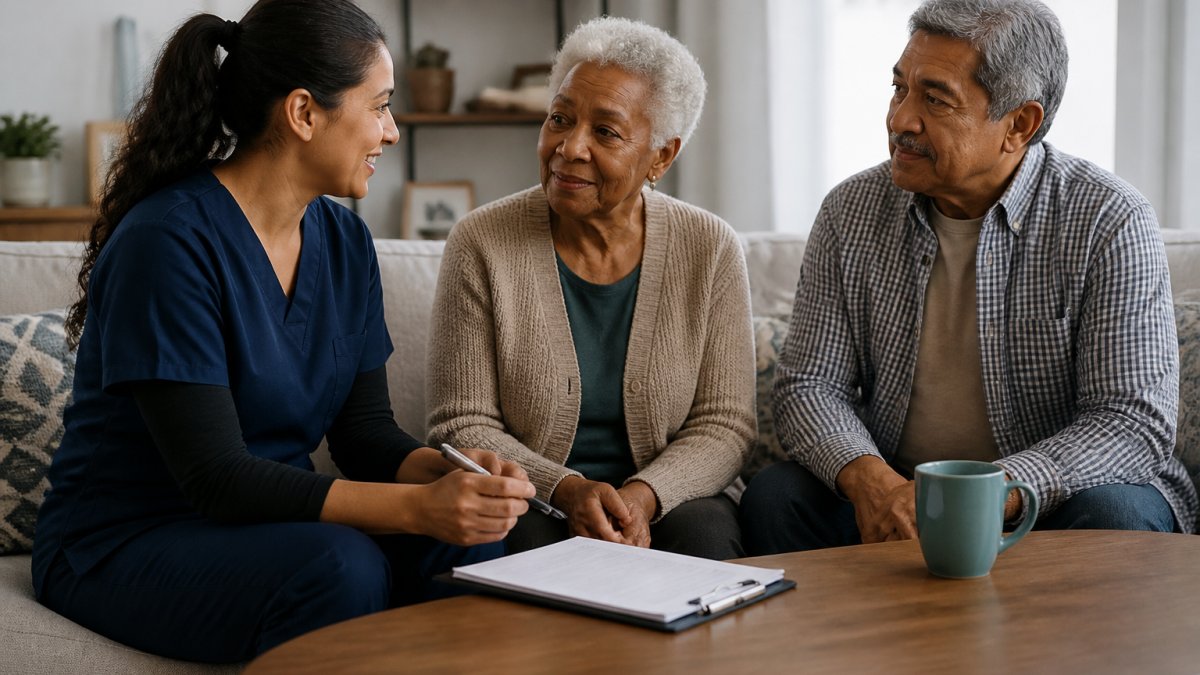
Walk the home with a clipboard and a flashlight, ideally with the person who lives there. Work through each area:
- Every room: clear pathways at least 36 inches wide, secured rugs, working overhead lights, no cords across walkways
- Bathroom: grab bars beside the toilet and in the shower, non-slip mat, raised toilet seat, night light, no glass shower doors that swing outward into a wet floor
- Stairs: handrails on both sides, anti-skid strips on every step edge, a light switch at both the top and bottom, no stored items on the treads
- Bedroom: bedside lamp within reach while lying down, clear path to the door, phone or alert button on the nightstand, bed height that lets feet touch the floor flat
- Kitchen: frequently used items between waist and shoulder height, a sturdy step stool with a handrail (never a chair), no loose floor mats
- Entryways: a bench or chair for putting on shoes, a mat that does not slide, a working porch light
- Medications: a full review for dizziness or drowsiness side effects, and a system that prevents double-dosing
- Vision and hearing: annual screenings, and a spare pair of glasses kept in a known spot
The Caregiver Audit Angle
If you are caring for someone else, do the walk-through with them, not for them. Point out what you see and ask what they notice, a parent who spots the hazard themselves is far more likely to accept the fix. Take photos of each room so you can compare next year and catch drift.
What to Do If a Fall Happens Anyway
- Do not rush to stand up. Stay still for a moment and check for pain, especially in the hip, head, or back.
- If there is no serious injury, roll onto the side, then onto hands and knees, and crawl to a sturdy chair. Place both hands on the seat, bring one knee up, and push up slowly while turning to sit.
- If standing is not possible or there is pain, call for help. Use a medical alert pendant or phone if one is within reach. If not, try to make noise, a whistle kept on a wristband or nightstand works when a voice is weak.
- Call 911 for any head injury, suspected fracture, loss of consciousness, or if the person cannot get up. Head injuries in older adults on blood thinners can be serious even without visible symptoms.
- Report the fall to a doctor even if there is no obvious injury. A single fall is a strong predictor of another, and the cause, medication, blood pressure, vision, footwear, is often fixable.
7. Hiring Home Caregivers for Stubborn Seniors and Managing Medications
Some risks are beyond what family can manage alone, especially when a parent refuses help. Hiring home caregivers for stubborn seniors works best when the caregiver focuses on independence rather than taking over.
Frequently Asked Questions
What are some effective fall prevention strategies for older adults?
Effective strategies include removing tripping hazards like loose rugs and clutter, installing grab bars and handrails, improving lighting with motion-sensing night lights, wearing supportive footwear, and starting balance exercises. A home safety assessment for seniors can identify specific risks in each room. The CDC STEADI tool provides a structured framework for assessing fall risk and creating an action plan. Combining home modifications with regular physical activity and medication reviews offers the strongest protection against falls.
What should I do if my elderly parent refuses to accept help with fall prevention?
Start by listening to their concerns rather than pushing changes. Frame modifications as tools that protect independence, not as signs of decline. Involve them in choosing grab bars or night lights so they feel in control. If they resist professional care, hiring home caregivers for stubborn seniors works best when caregivers focus on building trust first and helping with specific tasks like fall prevention exercises for elderly adults. Small wins often open the door to accepting more support over time.
Are there specific exercises that help seniors improve balance and prevent falls?
Yes. Programs like SilverSneakers, often covered by Medicare Advantage plans, offer strength and balance classes designed for older adults. Simple exercises include heel-to-toe walking, single-leg stands while holding a counter, and seated leg raises. Physical therapy can create a personalized routine if balance is significantly impaired. Consistency matters more than intensity: aim for most days of the week. Always check with a healthcare provider before starting a new exercise program to prevent falls safely.
How can I assess my home for fall hazards?
Walk through each room and check for loose rugs, cluttered pathways, poor lighting, and missing grab bars in bathrooms. Test stairway safety by confirming handrails are secure and anti-skid strips are in place. Look at nighttime routes between the bedroom and bathroom for adequate lighting. The CDC STEADI tool offers a printable home hazard audit checklist. A professional home safety assessment for seniors can catch issues you might overlook, especially in bathrooms and stairways.
What role do professional caregivers play in fall prevention?
Professional caregivers provide supervision during daily activities like bathing, dressing, and moving between rooms, which reduces fall risk. They can remind seniors to use assistive devices, encourage fall prevention exercises for elderly adults, and monitor for medication side effects that cause dizziness. Caregivers also spot new hazards as they appear and help families adjust the home environment. For families in Ohio and North Carolina, Katys home healthcare offers 24/7 support designed to help seniors age in place safely.
Preventing falls at home takes more than a grab bar. It takes cleared pathways, better lighting, stronger muscles, and often a second set of trained hands. When family caregiving reaches its limit, Katys home healthcare can help with 24/7 support, medication management, and caregivers experienced with resistant seniors, all built around keeping your parent independent. Get started with Katys home healthcare and give your family the calm, consistent support that makes aging in place possible.