 listicle
Home Health Care Laurinburg NC: 2026 Agency Review
Table of Contents
- How We Evaluated Home Health Care Agencies in Laurinburg
- Quick Comparison: Laurinburg Home Health Care Options
- Katys Home Healthcare: 24/7 Care Built on 10+ Years of Experience
- Bayada Home Health Care: Clinical Skilled Nursing in Scotland County
- Carolina Hearts Home Care: Local Non-Medical Support for Daily Living
- Scotland Health Care System: Hospital-to-Home Coordination
- Questions to Ask Home Health Agencies Before You Sign
- Medicare Home Health Coverage in North Carolina
- What Home Health Care Costs in Laurinburg
- Signs It Is Time for Home Care
- Frequently Asked Questions
Last Updated: September 27, 2026
How We Evaluated Home Health Care Agencies in Laurinburg
Finding home health care in Laurinburg means sorting through hospital systems, national chains, local agencies, and online marketplaces, all with different strengths. Finding home health care in Laurinburg means sorting through hospital systems, national chains, local agencies, and online marketplaces, all with different strengths. We looked at four factors: whether skilled nursing is offered, how fast care can start, how the agency handles caregiver consistency, and what families can verify before signing.
Quick Comparison: Laurinburg Home Health Care Options
The table below summarizes the main options serving Scotland County and the surrounding area. Use it to shortlist providers before you call.
| Provider | Care Type | Availability | Best For |
|---|---|---|---|
| Katys home healthcare | 24/7 personal and daily living care | Round-the-clock | Families needing consistent, full-day support |
| Bayada Home Health Care | Skilled nursing and therapy | Scheduled visits | Medically supervised recovery |
| Carolina Hearts Home Care | Non-medical daily living support | Hourly or scheduled | Companionship and independence support |
| Scotland Health Care System | Hospital-to-home coordination | Transition-based | Patients leaving inpatient care |
Katys Home Healthcare: 24/7 Care Built on 10+ Years of Experience
Katys home healthcare is the strongest fit for families who need round-the-clock support rather than scheduled visits. The agency has operated for more than a decade and staffs a seasoned team of caregivers who cover daily living activities, mobility assistance, and hygiene support. Care is available on a 24/7 basis across North Carolina and Ohio. Patients and their families rate the agency at five stars.
Bayada Home Health Care: Clinical Skilled Nursing in Scotland County
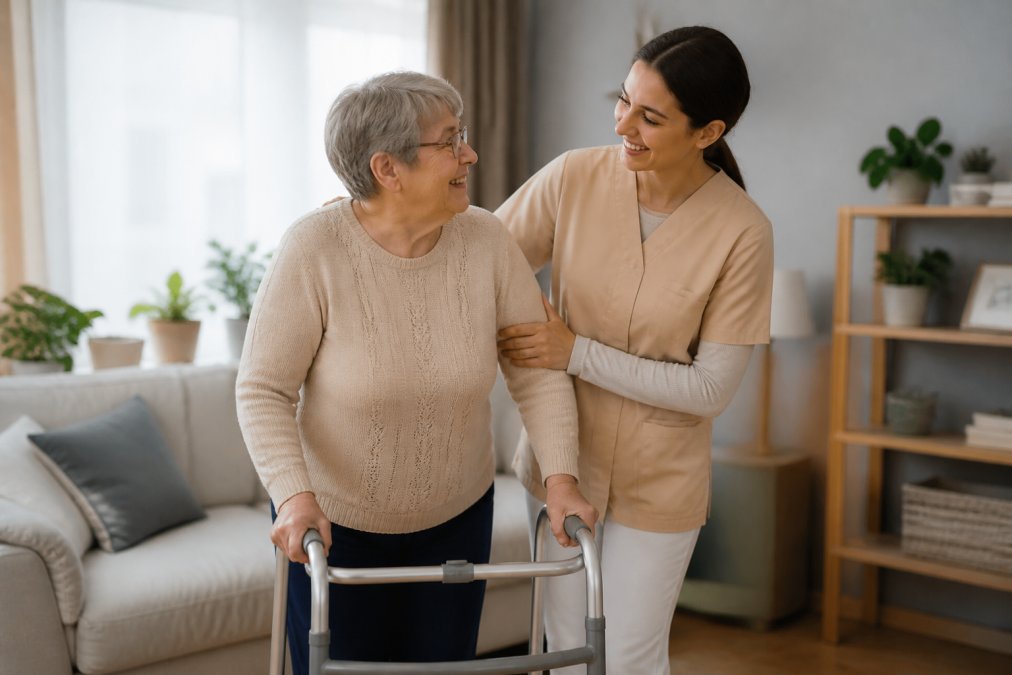
Bayada runs a local home health office and focuses on clinical services: skilled nursing, physical therapy, and occupational therapy. That makes it a fit for patients who need medical assistance at home after a hospital stay, not long-term companionship. The tradeoff is scope. Bayada is built around intermittent skilled visits, so families needing constant supervision will still need a separate personal care agency.

Carolina Hearts Home Care: Local Non-Medical Support for Daily Living
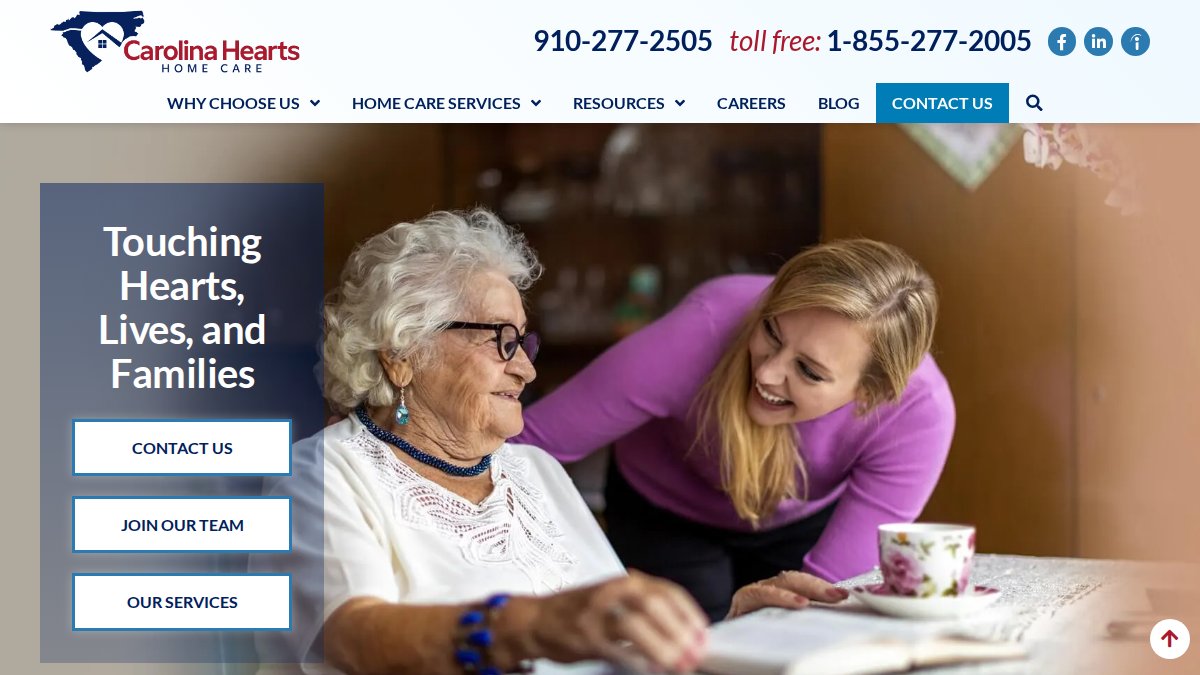
Carolina Hearts serves the Sandhills area with non-medical support: help with daily living activities, companionship, and caregiver staffing for seniors who want to stay independent at home. It is a reasonable choice for families who need a few hours of help per day and prefer a locally focused provider. The limitation is clinical. There is no skilled nursing or medication management oversight, so anyone with complex medical needs will need to pair this with a clinical agency.
Scotland Health Care System: Hospital-to-Home Coordination
Scotland Health Care System is not a standalone home care agency, and treating it as one leads to frustration. Its role is transition support: coordinating care between its hospital facilities and home for patients leaving inpatient treatment. That coordination matters, since the days right after discharge are when readmission risk is highest. For long-term daily support, families will still need a dedicated home care provider.
Questions to Ask Home Health Agencies Before You Sign
Ask these questions before signing with any agency, and get the answers in writing. The right questions separate agencies that can actually deliver from those that oversell.
- How are caregivers vetted, and what background checks and certifications do they hold?
- Can we meet the assigned caregiver before the first shift?
- What happens if our regular caregiver calls out? Who covers the shift?
- How does the agency handle a client who resists care or becomes aggressive?
- Is there a written care plan, and how often is it reviewed?
- What is the process for reaching a supervisor after hours?
- How does billing work, and what documentation is provided for insurance claims?
Medicare Home Health Coverage in North Carolina
Medicare home health coverage follows federal rules, and the single most common mistake families make is assuming it pays for long-term personal care. It does not. Understanding the split between home health and home care prevents weeks of wasted phone calls.
- A doctor orders the care and documents a face-to-face visit within the required timeframe.
- The patient needs skilled services, skilled nursing, physical therapy, speech-language pathology, or continuing occupational therapy.
- The patient is homebound, meaning leaving home requires considerable effort and is not recommended, or is medically contraindicated. Brief, infrequent absences for medical appointments or religious services do not disqualify someone.
- The agency is Medicare-certified.
How to actually start services.
- Ask the discharging hospital or the treating physician for a home health order and a face-to-face encounter note.
- Request a list of Medicare-certified agencies in the area, hospitals are required to give you a choice, and you are not obligated to use the one they suggest.
- Confirm the agency is Medicare-certified and accepts Medicare assignment before the first visit.
- Expect an initial assessment, a written plan of care signed by the physician, and a review of the plan at least every 60 days.
What Home Health Care Costs in Laurinburg
What actually drives the hourly rate:
- Level of caregiver. A companion or sitter rate is lower than a certified nursing assistant (CNA) rate, which is lower than a registered nurse (RN) visit rate. Skilled nursing visits are typically billed per visit, not per hour.
- Shift length. A four-hour minimum shift usually carries a higher effective hourly rate than an eight- or twelve-hour shift, because the agency still has to cover travel and scheduling overhead.
- Time of day and day of week. Overnight, weekend, and holiday shifts commonly carry a premium over weekday daytime rates.
- Live-in vs. hourly 24/7. A live-in caregiver, who sleeps on-site and is paid a flat daily rate with defined break periods, is usually less expensive than two or three caregivers rotating through 24 hours of hourly shifts. The tradeoff is that live-in coverage assumes the client does not need hands-on help through the night.
- Agency vs. independent caregiver. Marketplace platforms list independent caregivers at lower posted rates because the family absorbs the risk: no backup coverage, no workers' compensation, no supervision, and no employer tax handling. Agency rates bundle those protections in.
What to confirm is included in any quote:
- Supervision and case management
- Backup coverage when the assigned caregiver calls out
- Care plan development and periodic review
- Mileage or travel charges, if any
- Whether the rate changes on holidays
For regional rate benchmarks, Caregiverlist's regional cost data publishes area averages, and Care.com's Laurinburg home care listings shows posted rates for independent caregivers. Treat both as starting points, not quotes.
Signs It Is Time for Home Care
Certain changes signal that aging in place needs professional support. Watch for missed medications, unexplained weight loss, unopened mail piling up, bruises from falls, or a decline in hygiene. Resistance to help is common and does not mean care is unnecessary. A caregiver experienced with reluctant patients can rebuild routines gradually rather than taking over. If a parent has been hospitalized recently, the transition home is the highest-risk window, and guidance from the National Institute on Aging recommends arranging support before discharge rather than after a crisis.
Frequently Asked Questions
How much does a home health aide cost in NC?
Home health aide rates in the Laurinburg area vary based on the level of care and hours needed. Regional cost data for senior care shows hourly rates generally falling in the mid-teens to upper twenties per hour, depending on whether you need basic companionship or hands-on personal care. For 24-hour or live-in arrangements, expect a daily or monthly rate rather than hourly. Because every care plan is different, agencies typically provide a personalized quote after an in-home assessment. Contact individual providers directly for current pricing.
Does Medicare pay for home health care in North Carolina?
Medicare covers home health care in North Carolina when specific criteria are met: a doctor must certify that you need skilled nursing or therapy services, you must be homebound, and the care must be provided by a Medicare-certified agency. Medicare generally does not pay for non-medical personal care like bathing, dressing, or companionship unless it is part of a skilled care plan. Coverage rules can change, so verify your specific situation with the agency and your plan before starting services.
What questions should I ask home health agencies before hiring?
Ask about caregiver screening and background checks, how the agency handles staff turnover and consistency, what happens if a caregiver calls out sick, and whether you can meet the caregiver before they start. Also ask about licensing, insurance, and how they handle emergencies. For families in Laurinburg, it helps to ask whether the agency has a local office or coordinates from a distance. Get clear answers on billing, cancellation policies, and who to call with concerns before you sign anything.
What is the difference between home health care and personal care services?
Home health care involves skilled medical services like nursing, physical therapy, or medication management, typically ordered by a doctor and often covered by Medicare or insurance. Personal care services cover non-medical help with daily living activities such as bathing, dressing, meal preparation, and mobility assistance. Many families need both types, sometimes from the same agency. Understanding which category your loved one needs helps you choose the right provider and figure out what insurance might cover.
How do I verify the licensing of a home health agency in North Carolina?
In North Carolina, home health agencies that provide skilled medical services must be licensed by the state Division of Health Service Regulation. You can verify a provider's license status through the NC Department of Health and Human Services website. For non-medical home care agencies, licensing requirements differ, so ask directly about their credentials, insurance, and caregiver screening process. Always request proof of licensure and insurance before services begin, and check for any complaints or regulatory actions on file.