 comparison
Home Care vs Nursing Home Costs: 2026 Comparison
Table of Contents
- Home Care vs Nursing Home Costs: Key Differences
- Cost Comparison: Home Care vs Nursing Home
- Average Cost of Home Health Aide Services
- Factors That Influence Care Costs
- Insurance, Medicare, and Medicaid Long-Term Care Eligibility
- Free Services for Senior Citizens and Financial Assistance
- Quality of Life and Independence in Home Care vs Nursing Homes
- The Hidden Cost: Caregiver Burnout and Respite Care
- Frequently Asked Questions
Last Updated: August 23, 2026
Home Care vs Nursing Home Costs: Key Differences
When aging parents need care, the decision between home care and nursing home placement often hinges on cost. The answer depends heavily on the level of medical care required, geographic location, and weekly hours needed. At Katys home healthcare, we've helped families in Ohio and North Carolina navigate this decision by breaking down what each option actually costs.
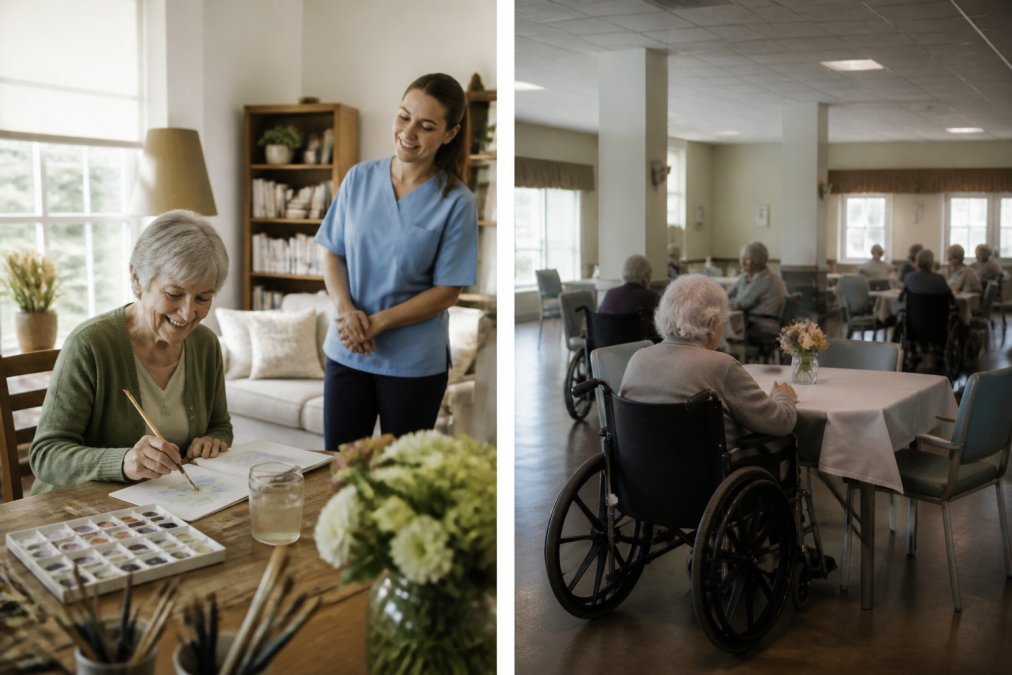
A nursing home provides 24/7 facility-based care with structured medical oversight, meals, activities, and housing bundled together. Home care brings caregivers to your loved one's existing residence, allowing them to age in place while maintaining independence. These are different care models with different trade-offs and costs.
Families often underestimate the true expense of one option or overestimate the other. A semi-private nursing home room might seem cheaper than full-time in-home care initially, but the comparison changes once you factor in what's included and how long care will be needed.
Cost Comparison: Home Care vs Nursing Home
Home care and nursing home costs operate on different pricing models. Home care charges by the hour or week, while nursing homes charge monthly per room. The crossover point depends entirely on your specific situation.
For part-time care (under 20 hours per week), home care is almost always more affordable. You pay only for hours used with no facility overhead. For full-time care (40+ hours per week), nursing homes often become competitive or cheaper, especially if your loved one requires skilled nursing care.
Semi-private and private room costs
Nursing home rooms come in two configurations: semi-private (shared) and private (single occupancy). Semi-private rooms cost less but sacrifice privacy. Private rooms offer autonomy but carry a significant premium.
Both room types include meals, housekeeping, activities, and basic care coordination, services that would cost extra if purchased separately at home. This is where nursing homes can appear competitive on price, even though per-hour care costs are often lower than in-home alternatives.
Full-time in-home care pricing
Full-time in-home care requires either multiple part-time caregivers rotating shifts or a single live-in caregiver. Live-in caregivers typically cost less per hour than part-time staff because they occupy a room and receive meals, reducing net hourly expense. However, live-in arrangements require careful screening, clear boundaries, and backup plans for caregiver time off.
The advantage of full-time in-home care is flexibility. You can scale hours up or down based on changing needs, whereas nursing home costs remain fixed regardless of service usage.
Average Cost of Home Health Aide Services
A home health aide provides non-medical assistance with daily living: bathing, dressing, grooming, meal preparation, light housekeeping, medication reminders, and companionship. This differs from skilled nursing care, which requires a licensed nurse for medical procedures.
Home health aides are the backbone of affordable in-home care. They cost less per hour than nurses yet handle the bulk of daily caregiving that keeps someone living independently. Many families can afford 10-20 hours per week of aide services, often enough to support a parent with family members helping with medical decisions and transportation.
Agency aides come with background checks, training verification, and insurance coverage but cost more. Independent aides cost less but require you to handle screening, payroll, and liability. Many families use a hybrid approach: agency aides for primary care, supplemented by independent caregivers for flexibility.
Quality matters most here. A skilled, compassionate aide can prevent falls, catch health changes early, and provide emotional support that keeps someone mentally engaged.
Factors That Influence Care Costs
Care costs swing based on several variables that compound each other.
Geographic location and regional pricing
Where you live determines nearly everything about care costs. Urban areas with high labor costs drive up both home care hourly rates and nursing home monthly fees. Rural areas often have lower labor costs but fewer providers, sometimes increasing prices due to scarcity.
State-level regulations also matter. Some states mandate higher staffing ratios in nursing homes, increasing facility costs but theoretically improving care quality. Your state's Medicaid reimbursement rates influence what private-pay facilities charge.
Within the same state, a 30-mile difference can mean 20-30% variation in costs (peer-reviewed research). Families in Ohio and North Carolina should get local quotes rather than relying on national averages.
Level of medical care and supervision needed
A parent needing help with bathing and meal prep costs far less than one requiring insulin injections, wound care, or continuous cardiac monitoring. Skilled nursing tasks command premium hourly rates.
Dementia care, even without medical complexity, often costs more because it requires specialized training in behavioral management and safety protocols. Someone who can be left alone for hours costs less than someone requiring constant presence due to fall risk or cognitive decline.
Hours of care and staffing requirements
More hours mean higher costs, but the relationship isn't linear. Moving from 10 to 20 hours per week is a 100% increase. Moving from 20 to 40 hours might involve a 150% increase because you're now paying for overnight coverage or multiple caregivers.
Consistency of caregiver also affects cost. A family willing to accept different caregivers each week can negotiate lower rates. Katys home healthcare prioritizes consistent caregiver matching because continuity improves outcomes and reduces crises.
Overnight care multiplies costs because it requires either a live-in caregiver or night-shift staffing. Many families find that combining overnight monitoring technology (bed sensors, motion alerts) plus occasional overnight aide presence is more affordable than 24/7 live-in care.
Insurance, Medicare, and Medicaid Long-Term Care Eligibility
Understanding what insurance covers is critical because out-of-pocket costs can bankrupt a family without planning.
Medicare coverage for in-home care
Medicare covers home health care only under specific conditions: you must be homebound, your doctor must order services, and care must be skilled nursing or physical therapy (cms.gov). Medicare does not cover custodial care, the daily living assistance most seniors actually need.
If your parent needs help bathing but not skilled nursing, Medicare won't pay. If they need wound care after surgery, Medicare covers nurse visits but not the aide who helps with bathing on non-nursing days. Coverage is also temporary; once recovery is complete, coverage stops.
Medicaid coverage options
Medicaid is a need-based program, not insurance (medicaid.gov). It covers long-term care, including in-home services, but only if you meet strict income and asset limits. Medicaid long-term care eligibility requires a spend-down process where you use assets to pay for care until you fall below the threshold.
Medicaid covers both home care and nursing home care, but reimbursement rates are low, limiting provider choice. Many agencies prioritize private-pay clients because Medicaid pays less. Some states have waiver programs allowing Medicaid to cover in-home care as an alternative to nursing home placement, though waitlists can be long.
Free Services for Senior Citizens and Financial Assistance
Area Agencies on Aging provide care coordination, benefits counseling, and sometimes subsidized services. They help navigate Medicaid and understand what you qualify for.
Veterans and their spouses may qualify for Aid and Attendance benefits, providing substantial monthly payments specifically for long-term care. Community health centers, senior meal programs, and transportation services reduce the burden on family caregivers and allow seniors to age in place longer with less paid care.
Working with a geriatric care manager or social worker who knows the local landscape can uncover benefits you didn't know existed.
Quality of Life and Independence in Home Care vs Nursing Homes
Cost alone shouldn't drive this decision. Quality of life and your loved one's sense of independence matter enormously and often correlate with better health outcomes.
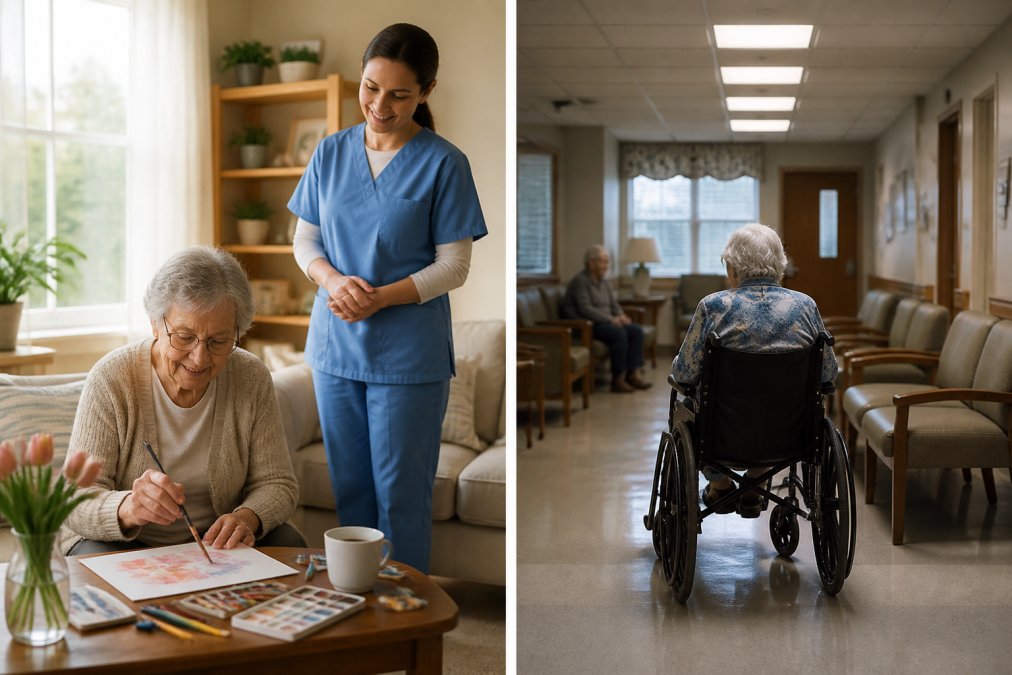
Home care preserves independence in ways nursing homes can't. Your parent stays in their own home, maintains routines, keeps possessions around them, and retains control over daily decisions. They can eat when they want and spend time with family without navigating facility visiting hours. This autonomy has measurable mental health benefits; depression and cognitive decline are lower in seniors who age in place.
Nursing homes offer structure, social activities, and immediate medical response that home care can't match. For someone with advanced dementia or severe medical complexity, 24/7 nursing presence and coordinated care can be safer than home care. Nursing homes also provide built-in social interaction, addressing isolation risks.
The ideal scenario for many families is hybrid care: home-based care for as long as it's safe, with a plan to transition to facility care if medical needs become too complex.
The Hidden Cost: Caregiver Burnout and Respite Care
The most overlooked cost in home care is the emotional and financial toll on family caregivers. Adult children who become full-time unpaid caregivers while working often experience depression, health problems, and lost income, costs that never appear on a care budget but are very real.
Respite care, temporary relief care allowing family caregivers to rest, is essential but often treated as a luxury. A few hours per week can prevent caregiver burnout and extend how long someone can safely remain at home. Without respite, quality of care declines and situations deteriorate into crisis.
Professional caregivers provide more than hands-on care; they provide relief for exhausted family members. Caregiver burnout also has hidden downstream costs: increased hospitalizations, higher depression rates, and family conflict. Preventing burnout through respite care is cheaper than managing consequences.
Choosing between home care and nursing home care requires balancing cost, medical needs, independence, and family capacity. For many families in Ohio and North Carolina, a combination approach, starting with home-based care supplemented by respite services, allows aging parents to maintain independence while protecting family caregivers from burnout. Katys home healthcare provides 24/7 dedicated care services designed to help your loved ones age in place with dignity and support. Our experienced caregivers work with you to create sustainable care arrangements that prioritize both quality of life and financial responsibility. Create Account with Katys home healthcare and explore how personalized, consistent care can make aging at home both safer and more affordable for your family.
| Care Setting | Best For | Cost Structure | Independence Level |
|---|---|---|---|
| Part-time home care (under 20 hrs/week) | Seniors needing light assistance with daily tasks | Hourly rate, pay only for hours used | High, stays in own home |
| Full-time in-home care (40+ hrs/week) | Complex medical needs or advanced dementia | Hourly rate or live-in arrangement | Moderate, professional oversight |
| Semi-private nursing home | Seniors needing skilled nursing and social engagement | Fixed monthly fee, includes meals and activities | Low, facility schedule and routines |
| Private nursing home room | Seniors prioritizing privacy and medical care | Higher monthly fee, private accommodations | Low, facility-based living |
| Hybrid (home + respite) | Family caregivers preventing burnout while aging in place | Mixed hourly and facility costs | High, maintains home base |
Frequently Asked Questions
Is it cheaper to have home care or a nursing home?
The answer depends on the level of care needed and where you live. Full-time in-home care with a home health aide typically costs less than a nursing home's semi-private room for 40 hours per week or fewer. However, 24/7 live-in home care often exceeds nursing home costs. Geographic location significantly affects pricing, rural areas may have lower costs than urban centers. Medicaid coverage varies by state, which can shift the financial balance. Consult the Genworth Cost of Care Survey or LTC News Cost of Care Calculator for your specific region to compare actual figures.
How much will Medicare pay for in-home care?
Medicare Part A covers skilled nursing care and home health services only after a hospital stay of at least three days, and only when medically necessary. Coverage includes skilled nurse visits, physical therapy, and occupational therapy, not custodial care or non-medical assistance with daily living activities. Medicare Part B may cover some equipment and supplies. Most in-home care for daily activities (bathing, dressing, meal preparation) is not covered by Medicare and requires out-of-pocket payment or Medicaid. Speak with your doctor or a Medicare representative to determine what services qualify for coverage.
What is the difference between custodial care and skilled nursing care?
Custodial care provides non-medical assistance with daily living activities: bathing, dressing, eating, grooming, and toileting. A home health aide or personal care assistant provides this care. Skilled nursing care involves medical treatment, wound care, medication management, and monitoring of chronic conditions, delivered by a licensed nurse or therapist. Nursing homes provide both types; home care can offer either or both depending on the person's needs. Medicare typically covers skilled nursing care but not custodial care. Understanding which type you need affects cost and coverage eligibility.
Do you lose Social Security benefits when you enter a nursing home?
No. Social Security benefits continue whether you live at home, in a nursing home, or in assisted living. Your benefit amount does not change based on where you live. However, if you receive Supplemental Security Income (SSI), living in a nursing home may affect eligibility or the benefit amount because some facility costs may be counted as income. Medicaid eligibility and benefits may also change if you enter a nursing home. Contact the Social Security Administration or your state's Medicaid office for details about how your specific situation affects benefits.
What are the downsides of in-home care?
In-home care can strain family caregivers emotionally and financially, leading to caregiver burnout. Hiring reliable, trained caregivers requires vetting and ongoing management. If 24/7 supervision is needed, costs rise sharply and may exceed nursing home rates. Social isolation can occur if the person receives care only at home without community engagement. Medical emergencies may require faster response in a facility with on-site nursing staff. Home modifications for safety and accessibility add upfront costs. Despite these challenges, many people prefer aging in place for independence and familiar surroundings.
This article was written using GrandRanker