 how-to
How to Find Dementia Care at Home in North Carolina
Table of Contents
- Step 1: Assess Your Loved One's Needs with Dementia Care Assessment Tools
- Step 2: Understand What Home Care Services Are Available
- Step 3: Explore Medicaid Home Care for Dementia and State Programs
- Step 4: Find Local Dementia Care Providers and Agencies
- Step 5: Plan for Respite Care for Dementia Caregivers
- Step 6: Complete Legal and Financial Planning
- Step 7: Prepare for the Transition to Home Care
- Frequently Asked Questions
Last Updated: September 15, 2026
Step 1: Assess Your Loved One's Needs with Dementia Care Assessment Tools
Finding the right support starts with one honest question: what can your parent still do safely, and where do they need hands-on help? This guide from Katys home healthcare walks through how to find dementia care at home in North Carolina, from first assessment to the day a caregiver walks through the door.
Dementia care is specialized support for people living with Alzheimer's disease or another progressive cognitive impairment, adapted to the stage of the condition and the person's remaining abilities. A structured assessment is the foundation of every good care plan.
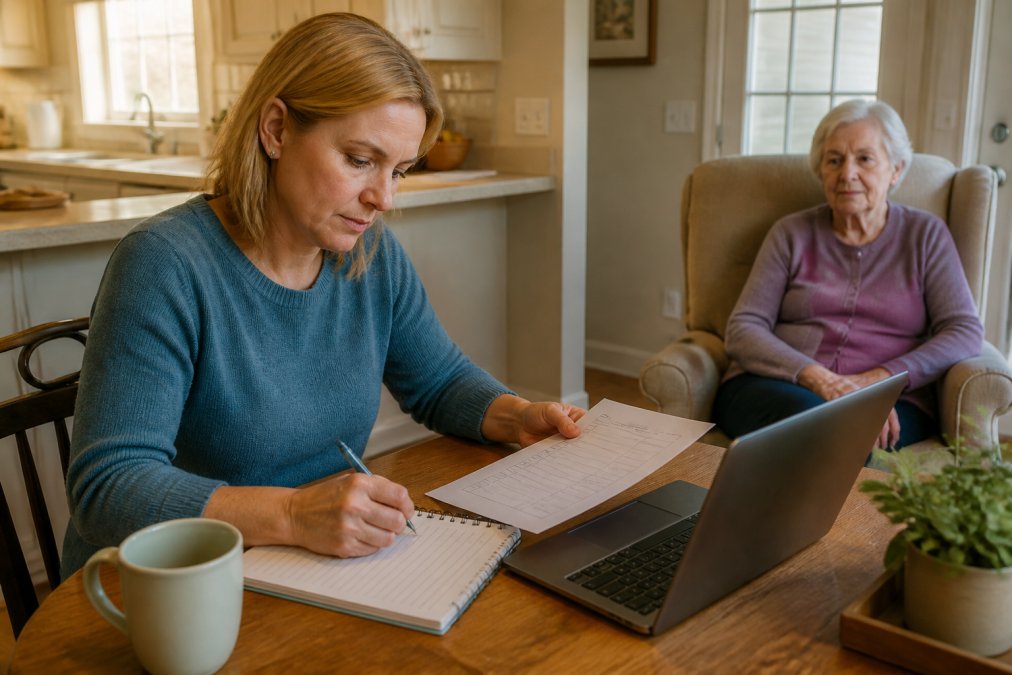
What Activities of Daily Living Reveal About Care Level
Activities of daily living, or ADLs, are the routine tasks a person performs daily: bathing, dressing, eating, toileting, transferring, and walking. Instrumental activities like managing medication, cooking, and paying bills often decline first.
Watch for these signals that supervision is now necessary:
- Missed medications or duplicate doses
- Unpaid bills or unusual purchases
- Wandering or getting lost on familiar routes
- Weight loss from skipped meals
- Unwashed clothing or skipped bathing
A common mistake is waiting for a crisis, a fall or hospital stay, before arranging help. The safest time to start is when you first notice two or more of these signs.
Behavioral Management Techniques for Home Caregivers
Aggression, sundowning, and repeated questions are symptoms of the disease, not personal attacks. Caregivers who reframe behavior this way respond more calmly and get better outcomes.
Try these approaches:
- Redirect rather than correct. If your father insists it is Tuesday, talk about what he'd like for lunch instead.
- Keep evenings calm. Reduce noise and bright light after 4 p.m. to ease sundowning.
- Maintain a predictable routine for meals, bathing, and sleep.
- Use short, simple sentences and one instruction at a time.
Step 2: Understand What Home Care Services Are Available
Home care for dementia falls into three main tiers, and knowing which one your loved one needs prevents both overspending and under-staffing. The right tier depends on medical needs, not budget.
Companion Care vs. Home Health Aide vs. Skilled Nursing
The table below breaks down what each service actually provides.
| Service Type | What It Covers | Who It Suits |
|---|---|---|
| Companion care | Company, meal prep, light housekeeping, errands | Early-stage dementia, socially isolated seniors |
| Personal care services | Bathing, dressing, toileting, mobility, medication reminders | Mid-stage dementia, mobility impairment |
| Home health aide | Personal care plus basic health monitoring | Later-stage dementia, chronic conditions |
| Skilled nursing | Wound care, injections, clinical assessment | Post-surgery, complex medical needs |
Many families start with companion care and add personal care services as the disease progresses. The mistake is hiring for today's needs only; dementia is progressive, so build a plan that can scale.
Step 3: Explore Medicaid Home Care for Dementia and State Programs
Medicaid home care for dementia is the largest funding source for families who cannot pay privately, but eligibility rules vary by state and waiver program. Most people assume Medicare covers long-term home care. It does not.
Medicare generally covers skilled nursing and therapy short-term after a hospitalization, not the ongoing personal care dementia usually requires. For long-term support, families typically turn to:
- Medicaid waiver programs that fund in-home personal care for people who would otherwise need a nursing facility
- State-funded programs for seniors who don't qualify for Medicaid but need help
- Older Americans Act services such as meals and case management
Because eligibility requirements and enrollment processes change, check the official state Medicaid agency and your local Area Agency on Aging for current rules before you apply. The official Medicaid program information is the starting point for federal guidance, and your state's Medicaid office handles the actual application.
Veterans Benefits and Private Pay Options
Veterans may qualify for benefits that help cover in-home care, including the VA's Aid and Attendance benefit for those who served during wartime. Contact the U.S. Department of Veterans Affairs to confirm eligibility, since the rules depend on service history and income.
For families paying privately, costs depend on hours, level of care, and location. Katys home healthcare does not publish standard rates because every care plan is built around the individual. Request a quote directly for current pricing.
Step 4: Find Local Dementia Care Providers and Agencies
Most guides stop at "call the Eldercare Locator." That is a starting point, not a plan. Families who find good dementia care fastest work three channels in parallel: the public aging network, condition-specific nonprofits, and private agencies, then cross-check what each tells them.
The Public Aging Network
The Eldercare Locator is a free national service run by the Administration for Community Living that routes you to your local Area Agency on Aging (AAA). Your AAA is the single most useful phone number in this process because it administers Older Americans Act services, maintains the local provider list, and can tell you which Medicaid waiver slots are open in your region. Ask specifically for the Family Caregiver Support Program contact, not just the general intake line.
Condition-Specific Nonprofits
General home care agencies serve many conditions; dementia-focused organizations serve one. The Alzheimer's Association runs a 24/7 helpline, a searchable directory of providers and support groups, and free caregiver education through local chapters. The Alzheimer's Foundation of America offers similar navigation help. These organizations do not employ caregivers, but they vet and refer, giving you a second opinion on any agency you consider.
Private Agencies
When you shortlist private agencies, verify rather than assume. Ask for the agency's state home care licensure number and confirm it through your state's licensing portal. Ask whether caregivers hold the Certified Dementia Practitioner (CDP) credential from the National Council of Certified Dementia Practitioners or completed the Alzheimer's Association's essentiALZ training.
Rural Counties vs. Metro Areas
Access looks very different depending on where you live.
Questions to Ask Every Agency
Step 5: Plan for Respite Care for Dementia Caregivers
Step 6: Complete Legal and Financial Planning
Phase 1: Do This Now, While Capacity Is Intact
Phase 2: Inventory and Review
Phase 3: If Capacity Is Already Gone
Where to Get Help
Step 7: Prepare for the Transition to Home Care
Frequently Asked Questions
Does Medicare pay for dementia care at home in North Carolina?
Original Medicare generally covers part-time skilled nursing and therapy at home when a doctor orders it, but it does not pay for long-term personal care or 24/7 supervision. Medicaid home care for dementia through NC Medicaid may cover personal care services for those who qualify financially and medically. Veterans benefits can also help. Check with the NC Department of Health and Human Services or a Medicaid case manager to confirm your parent's eligibility.
How do I assess the level of care needed for a loved one with dementia?
Start with a geriatric care manager or a dementia care assessment tools evaluation that reviews activities of daily living like bathing, dressing, eating, and safety monitoring. If your parent wanders, forgets medications, or cannot manage meals alone, they likely need daily support. If they need wound care or physical therapy, a skilled nursing referral is appropriate. A patient assessment also screens for fall risk and behavioral challenges so the care plan matches real needs.
What is the difference between companion care and skilled nursing for dementia patients?
Companion care provides supervision, meal preparation, transportation, and social engagement. It does not include medical tasks. Skilled nursing covers clinical care like medication management, wound care, and therapy, and must be ordered by a physician. Many families start with companion care or personal care services and add skilled nursing after a hospitalization or as dementia progresses. A home health aide can bridge both levels depending on training and state scope of practice.
How can I access respite care for dementia caregivers in North Carolina?
Contact your local Area Agency on Aging or the NC Department of Health and Human Services to ask about state-funded respite programs and Medicaid waiver options. Nonprofits like the Alzheimer's Association also connect families with support groups and short-term relief. Respite care for dementia caregivers can be provided in the home or at an adult day center. Many private agencies, including Katys home healthcare, offer scheduled respite visits so you can rest or handle personal matters.
Dementia care at home is one of the hardest things a family can organize, and it rarely gets easier without the right partner. Katys home healthcare has spent more than a decade helping families across Ohio and North Carolina keep loved ones safe and independent at home, with 24/7 availability, a seasoned team of caregivers, and a care plan built around your parent's actual needs. Get started with Katys home healthcare and give your family the calm, consistent support it deserves.