 how-to
How to Find Adaptive Equipment for Seniors With Limited Mobility
Last Updated: October 22, 2026
Quick Summary
Adaptive equipment for seniors starts with understanding your loved one's specific mobility challenges through observation and professional assessment. A physical or occupational therapist can evaluate their home and recommend equipment matched to their abilities, with many insurance plans covering part of the assessment cost.
- A physical or occupational therapist can assess your senior's needs at home and recommend matched equipment.
- Medicare Part B covers durable medical equipment like walkers, wheelchairs, and canes when medically necessary and properly documented.
- Grab bars must be anchored into wall studs and rated for at least 250 pounds of force to prevent bathroom falls.
- Many Area Agencies on Aging maintain loan closets for walkers, wheelchairs, and shower chairs at no cost.
- Monthly safety checks of equipment tips, wheels, brakes, and fasteners catch wear before it causes a fall.
Table of Contents
- Assess Your Senior's Specific Mobility Needs
- Mobility Aids for Seniors: Types and Selection
- Daily Living Aids for Seniors: Essential Equipment
- Home Safety Equipment for Seniors: Structural Modifications
- Medicare Coverage for Durable Medical Equipment
- Where to Find and Purchase Adaptive Equipment
- Safety Checks, Maintenance, and Fall Prevention
- Conclusion
- External Resources
- Frequently Asked Questions
Assess Your Senior's Specific Mobility Needs
Finding the right adaptive equipment for seniors starts with understanding what your loved one can and cannot do. Watch their daily routine to see which tasks cause pain or frustration.
Evaluate Current Limitations and Daily Challenges
List the specific activities your senior finds difficult: standing from a chair, climbing stairs, balance problems, joint pain.
Common mobility challenges include:
- Getting in and out of bed
- Rising from a seated position
- Walking without losing balance
Next, observe their home: narrow hallways, slippery bathroom floors, high thresholds.
Ask your senior directly what frustrates them most. Someone who dreads the shower needs different equipment than someone afraid of falling on stairs.
Consult with a Professional Assessment
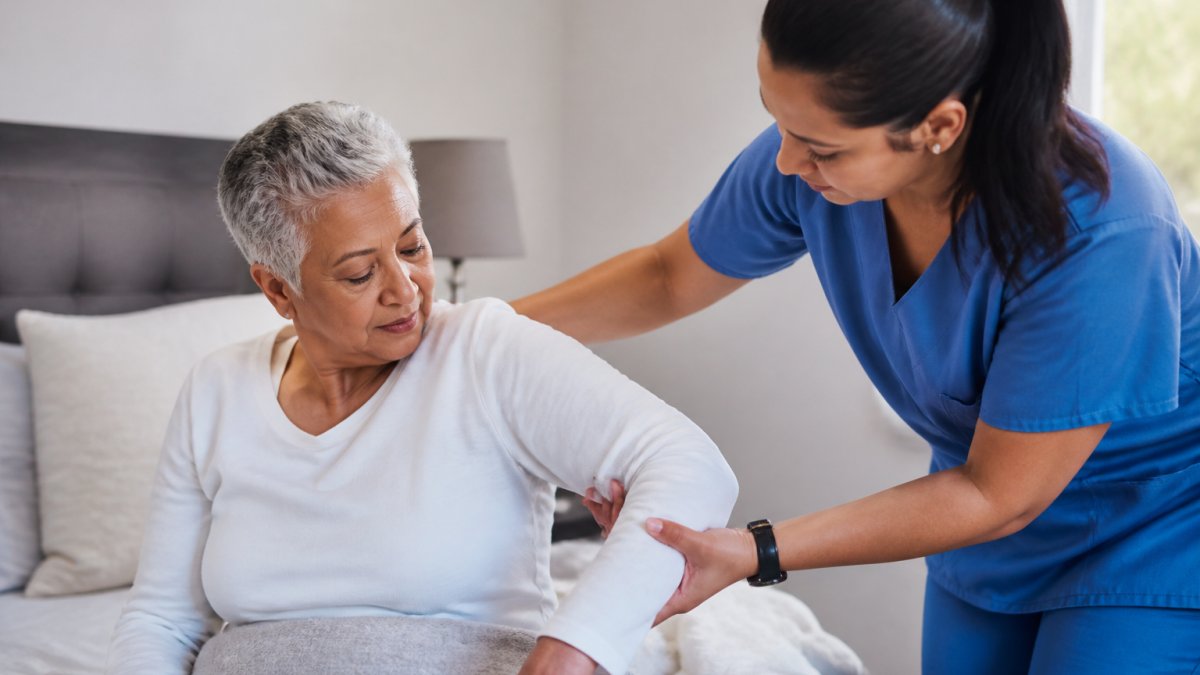
A physical or occupational therapist can assess your senior's needs at home, often worth the cost.
During an assessment, a therapist will:
- Observe how your senior moves and balances
- Test strength and range of motion
- Evaluate the home layout
Many insurance plans cover part of an assessment. Ask your senior's doctor for a referral; this expert opinion becomes your roadmap for purchasing the right equipment.
Mobility Aids for Seniors: Types and Selection
Mobility aids help seniors move safely and independently; the right one can transform daily life.
Canes, Walkers, and Crutches
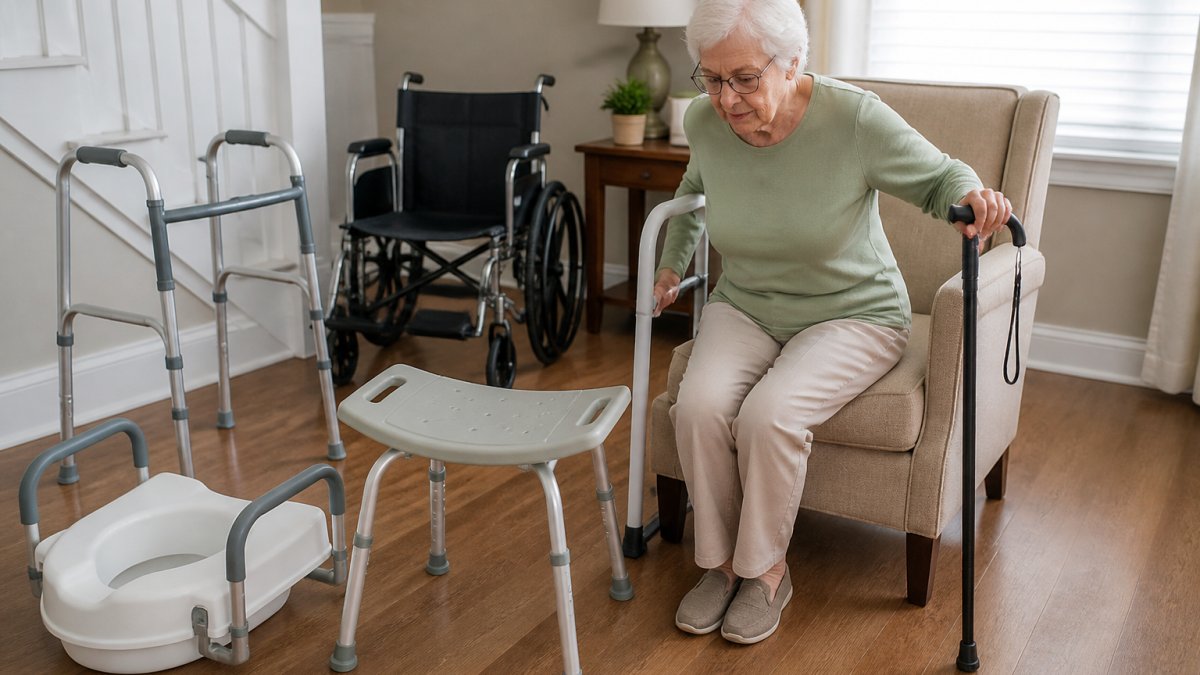
A cane is the simplest mobility aid, best for mild balance problems or one-sided pain. A quad (four-point) cane offers more stability but is bulkier.
Walkers support moderate balance issues or weakness. Standard walkers require lifting with each step; rolling walkers with wheels and brakes suit limited strength, and some include a seat.
Crutches are less common for older adults but useful during surgery or injury recovery.
Key selection factors:
- Height: Equipment should fit your senior's frame without forcing them to hunch or reach
- Weight capacity: Check the manufacturer's limits
- Terrain: Some walkers handle outdoor surfaces better than others
Daily Living Aids for Seniors: Essential Equipment
Beyond mobility aids, daily living aids for seniors make everyday tasks manageable and restore independence.
Bathroom Safety and Personal Care Devices
The bathroom is where most falls happen; grab bars, shower chairs, and commodes make it safer.
Grab bars should be installed securely into wall studs, not drywall alone, and hold 250 pounds of force.
A shower chair lets your senior sit while bathing, reducing fall risk and conserving energy.
Bathroom safety equipment includes:
- Grab bars (vertical and horizontal)
- Shower chairs or benches
- Raised toilet seats with armrests
Adaptive Utensils, Dressing Aids, and Reaching Tools
Arthritis and limited hand strength make eating and dressing difficult. Adaptive utensils have thicker handles, weighted utensils reduce tremors, and plate guards prevent food from sliding off.
Reaching aids extend your senior's reach by 26 to 32 inches, invaluable for high shelves or picking up dropped objects without bending or falling.
Essential daily living devices:
- Adaptive utensils (forks, spoons, knives)
- Plate guards and non-slip placemats
- Sock aids and shoehorns
Home Safety Equipment for Seniors: Structural Modifications
Your senior's home itself can be modified to support independence and prevent injury.
Ramps, Handrails, and Grab Bars
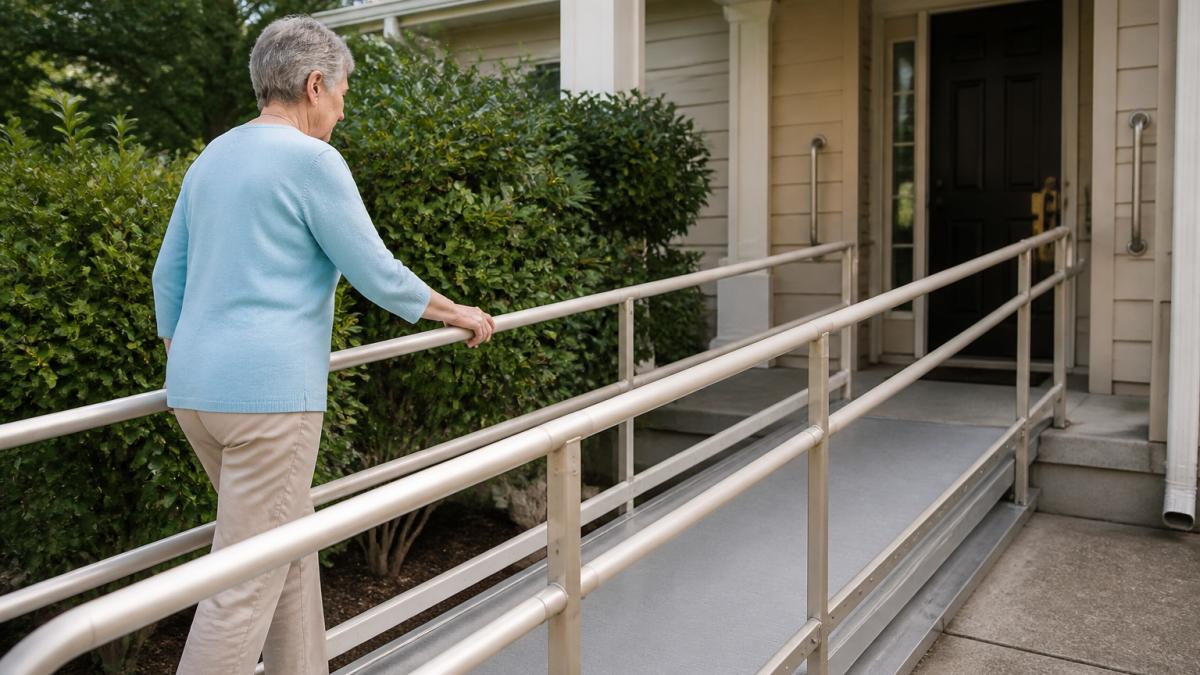
Entry ramps eliminate steps.
Handrails on stairs should be 34 to 38 inches high, easy to grip, and installed on both sides if possible; hallway handrails help your senior navigate safely.
Grab bars in bathrooms prevent falls during the highest-risk activities. Install them horizontally near the toilet and vertically in the shower, rated for 250 pounds of force minimum.
Home accessibility modifications:
- Entry ramps with proper slope and width
- Handrails on stairs and hallways
- Grab bars in bathrooms
Stair Lifts and Entry Modifications
A stair lift is a motorized seat that carries your senior up and down stairs. It's expensive but often cheaper than moving to a single-story home, works on straight or curved staircases, and requires professional installation.
Entry modifications might include widening doorways, removing thresholds, or installing ramps so wheelchairs and walkers pass easily.
Medicare Coverage for Durable Medical Equipment
Cost is the question families ask first, and the answer is more nuanced than "Medicare covers it." Coverage depends on the equipment category, the supplier, the documentation, and whether the item is classified as durable medical equipment (DME) at all.
What Medicare Covers and Documentation Requirements
Medicare Part B covers DME when it is durable, medically necessary, used for a medical purpose, and not useful in the absence of illness or injury.
The documentation burden falls on the prescribing practitioner, not the family.
A practical pattern that experienced suppliers follow:
- Get the order from a practitioner who has seen the patient recently and can document the need.
- Confirm the supplier is enrolled in Medicare and will bill Medicare directly rather than asking for upfront payment.
- Ask the supplier to verify coverage and prior-authorization requirements before delivery.
Medicare generally pays 80% of the approved amount after the Part B deductible, and the beneficiary is responsible for the remaining 20%.
Supplemental Insurance and Out-of-Pocket Options
Medigap policies may cover some or all of the 20% coinsurance, but benefits vary by plan letter and insurer, check the specific policy.
When insurance does not cover an item, several lower-cost paths exist:
- Loan closets. Many Area Agencies on Aging, faith communities, and veterans' organizations maintain loaner closets for walkers, wheelchairs, shower chairs, and commodes. Availability varies, and items are often donated and lightly used.
- Rental. Temporary needs, recovery from surgery, a short rehabilitation stay, are often better served by renting from a medical supply company than buying.
- Grants and charitable programs. Some disease-specific organizations and local charities offer equipment grants. Eligibility is usually income- and diagnosis-based.
Families often overpay by buying new equipment for a short-term need a loan closet or rental could have covered, or by buying an item Medicare would have covered had the order been documented correctly.
Where to Find and Purchase Adaptive Equipment
Finding quality equipment at reasonable prices requires knowing where to look.
Medical Supply Retailers and Online Vendors
Local medical supply stores offer hands-on evaluation: your senior can test equipment before buying, and staff can answer questions and ensure proper fit.
Online retailers offer lower prices and wider selection, but your senior cannot test equipment first. Read reviews carefully and check return policies.
Major online retailers and specialized medical supply sites both carry adaptive equipment.
Where to shop:
- Local medical supply stores
- Online medical equipment retailers
- General retailers (Amazon, Walmart, Target)
Rental Versus Purchase Decisions
Renting makes sense for temporary needs like surgery recovery.
Purchase is best for long-term needs: your senior can customize equipment and use it indefinitely, and isn't responsible for maintenance or repairs (unless they damage it).
Some equipment depreciates quickly. Expensive items like stair lifts hold value better than simple walkers. Consider your senior's prognosis and how long they'll need the equipment.
Rental versus purchase factors:
- Duration of need (temporary vs. permanent)
- Total cost over time
- Maintenance responsibility
Safety Checks, Maintenance, and Fall Prevention
Equipment only reduces fall risk when it is correctly fitted, installed, and used. A walker set too high, a grab bar anchored in drywall, or a wheelchair with a worn tire can create the very hazard it was meant to prevent. Here is a practical inspection and fit routine to repeat monthly and after any change in your senior's condition.
Fit, Weight Limits, and Safe-Use Training
Fit is the most common and most fixable safety problem.
Weight limits are printed by the manufacturer and should be treated as hard ceilings, not suggestions. Specify bariatric equipment when needed rather than pushing a standard item past its limit.
Safe-use training matters as much as fit.
Installation Standards and Routine Inspection
Installation is where many bathroom and stair modifications fail. Grab bars must be anchored into wall studs or blocking, not drywall alone, and rated to hold at least 250 pounds of force; towel bars are not grab bars. Ramps should follow a gentle slope of about 1 inch of rise per 12 inches of run, be at least 36 inches wide, and have handrails on both sides.
A monthly inspection routine catches wear before it causes a fall:
- Rubber tips and ferrules. Check cane and walker tips for cracks, hardening, or wear. Replace them when the tread is worn smooth.
- Wheels and brakes. Spin wheels to check for flat spots or wobble; test walker and wheelchair brakes on a slight incline.
- Fasteners and hinges. Tighten loose bolts and check folding mechanisms on walkers and wheelchairs.
Fall-Risk Considerations Beyond Equipment
Equipment is one layer of fall prevention, not the whole system. A room-by-room walkthrough should check lighting in hallways and stairwells, remove throw rugs and clutter, secure loose cords, and keep frequently used items within easy reach.
Consider a medical alert system or a phone kept within reach so your senior can call for help after a fall. Review medications with the prescriber, since some combinations increase dizziness or drowsiness.
Conclusion
Helping your senior find the right adaptive equipment for seniors with limited mobility takes time and thought. Start with a professional assessment. Listen to what your senior tells you about their challenges.
The goal isn't just safety. It's independence. The right equipment lets your senior do more, feel more confident, and stay engaged with life.
External Resources
For more information on adaptive equipment and senior mobility, consult these authoritative sources:
According to the National Institute on Aging's guide to fall prevention, home safety modifications and assistive devices are among the most effective strategies for reducing fall risk in older adults.
The American Occupational Therapy Association's resources provide detailed information on activities of daily living aids and how occupational therapists assess equipment needs for seniors.
For Medicare coverage details, visit Medicare's official durable medical equipment page to understand what equipment is covered and how to obtain prescriptions and prior authorization.
Frequently Asked Questions
How do I know which adaptive equipment a senior needs?
Start by observing which daily activities your loved one struggles with: walking, bathing, dressing, eating, or climbing stairs. An occupational therapist can conduct a formal assessment to identify specific limitations and recommend equipment tailored to their situation. Professional assessment considers both current needs and anticipated changes, helping you invest in equipment that truly addresses mobility challenges rather than guessing what might help.
What does Medicare cover for adaptive equipment and durable medical equipment?
Medicare Part B covers durable medical equipment like wheelchairs, walkers, and oxygen equipment when prescribed by a doctor. Coverage typically requires that equipment be medically necessary and used in the home. Your doctor must document the medical need, and you generally pay 20% of the approved amount after meeting your deductible. Coverage varies by item, so verify with Medicare or your supplier before purchasing to understand your costs.
Should I rent or buy adaptive equipment for seniors?
Renting works well for short-term needs, such as recovery from surgery when equipment use may be temporary. Buying is more economical for long-term use, though upfront costs are higher. Consider the expected duration of use, frequency of replacement, storage space, and whether equipment may be needed by multiple family members. Many suppliers offer both options, so compare total costs over the anticipated timeline.
Can an occupational therapist recommend adaptive equipment for seniors with limited mobility?
Yes, occupational therapists specialize in assessing how seniors perform daily activities and recommending equipment to improve independence and safety. They evaluate your home layout, mobility level, and specific tasks your loved one wants to accomplish. Many insurance plans, including Medicare, cover occupational therapy assessments when ordered by a physician, making professional evaluation an affordable first step in finding the right equipment.