 ultimate-guide
Managing Caregiver Burnout for Parents: A 2026 Guide
Table of Contents
- Signs of Caregiver Burnout in Parents
- What Causes Caregiver Burnout in Parent Caregivers
- Caregiver Stress Relief Techniques That Actually Work
- How to Ask for Help as a Caregiver
- Respite Care Services for Parents: What to Know
- Financial Planning and Legal Resources for Long-Term Care
- Building a Sustainable Care Plan to Prevent Burnout
- Frequently Asked Questions
Last Updated: August 14, 2026
Signs of Caregiver Burnout in Parents
Caregiver burnout is a state of physical, emotional, and mental exhaustion that develops when caregiving demands consistently outpace available resources. It builds quietly, week after week, until the person who once showed up with energy and patience finds themselves running on empty. Caregiver burnout differs from ordinary tiredness, it persists regardless of rest and worsens over time without deliberate intervention.
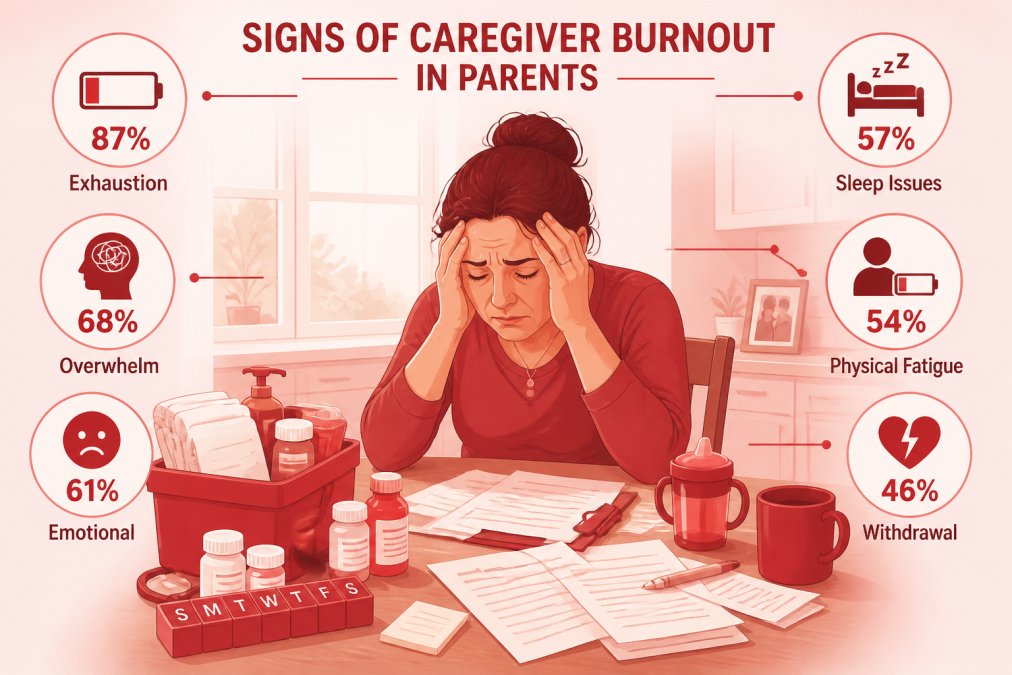
Physical Symptoms You Should Not Ignore
The body often signals caregiver stress before the mind acknowledges it. Common physical symptoms include chronic fatigue that doesn't improve with sleep, frequent illness, persistent headaches or muscle tension, and changes in appetite or weight. Many caregivers also report sleep disruption, difficulty falling asleep or waking repeatedly through the night.
Dismissing these symptoms as "just stress" compounds the problem. A caregiver who isn't sleeping, eating, or moving well has fewer reserves each day. Scheduling a health checkup with a primary care provider is not a luxury, it's a practical necessity.
Emotional and Psychological Warning Signs
Emotional exhaustion often shows up as irritability, resentment, or helplessness. Caregivers may feel their identity has been entirely absorbed by the caregiver role. Compassion fatigue, the gradual erosion of empathy from sustained emotional labor, is especially common among parents caring for aging relatives while raising children.
Other warning signs include withdrawing from friends and social activities, losing interest in things that once brought pleasure, and experiencing persistent anxiety or low mood. Caregiver guilt compounds all of this, creating cycles that are hard to break without outside support. According to the National Alliance for Caregiving's resources on caregiver mental health, emotional symptoms of caregiver burden are among the most underreported and undertreated aspects of the caregiving experience.
What Causes Caregiver Burnout in Parent Caregivers
Caregiver burnout causes rarely arrive singular, they accumulate. Role overload, where the volume of caregiving tasks exceeds what one person can sustainably manage, combines with financial pressure, inadequate sleep, caregiver isolation, and the absence of genuine time off.
For parents simultaneously raising children and caring for an aging parent, the pressure multiplies. They're managing two generations of need, often while employed, with no clear boundary between "on duty" and "off duty."
Caregiver stress syndrome, a recognized pattern of chronic stress responses tied to caregiving demands, develops when the nervous system stays in heightened alertness too long. Sustained caregiver burden has been linked to higher rates of anxiety, depression, and social withdrawal, as documented by the Family Caregiver Alliance's caregiver health research.
Caregiver Stress Relief Techniques That Actually Work
Most guides offer generic advice: "take care of yourself," "ask for help," "join a support group." These aren't wrong, but they're incomplete without practical scaffolding that makes them executable.
Setting Boundaries Without Guilt
Boundary setting is the skill most caregivers resist longest and benefit from most. A boundary isn't rejection, it's a structural limit that protects your capacity to keep showing up.
Practical boundary-setting looks like this:
- Identify tasks only you can do versus tasks someone else could handle.
- Assign specific "off-hours" where you don't take caregiving calls unless it's a genuine emergency.
- Communicate limits clearly to other family members rather than absorbing all responsibilities silently.
- Stop apologizing for having needs of your own.
Caregiver guilt will resist every step. That resistance is normal. The goal isn't eliminating guilt but acting despite it, because the alternative is complete collapse of your own health.
Digital Tools and Apps for Caregiver Management
Several categories of digital tools reduce the cognitive load of caregiving:
- Care coordination apps allow multiple family members to share task lists, medication schedules, and appointment calendars in one place, eliminating exhausting back-and-forth communication.
- Medication management tools send reminders for complex schedules, reducing the mental burden of tracking multiple prescriptions.
- Telehealth platforms allow healthcare consultations without coordinating transportation, a significant time drain.
- Caregiver assessment tools available through organizations like the AARP Caregiver Assessment and Resource Hub help identify specific stress points and connect with relevant resources.
The barrier isn't finding tools, it's activation energy when already depleted. Ask a tech-comfortable family member to handle setup during a scheduled family meeting.
| Caregiver Challenge | Digital Tool Category | Practical Benefit |
|---|---|---|
| Medication tracking | Reminder and pill-tracking apps | Reduces missed doses and mental load |
| Family coordination | Shared care calendar apps | Spreads tasks across family members |
| Emotional support | Caregiver support community platforms | Reduces isolation between in-person meetings |
| Healthcare access | Telehealth services | Saves travel time, enables faster consultations |
| Legal and financial planning | Document management tools | Centralizes important records securely |
How to Ask for Help as a Caregiver
Most caregivers wait too long to ask for help, asking from crisis rather than planning, which makes the request harder and response less organized.
Asking for help is a skill, not a personality trait:
- Be specific. "I need help" is harder to act on than "Can you take Mom to her Thursday appointment this month?"
- Create a task list before reaching out. When someone offers help, have three or four concrete options ready.
- Involve family members in a structured conversation. A single family meeting with a written agenda is more productive than scattered individual conversations.
- Contact your local Area Agency on Aging. These federally supported agencies connect caregivers with community resources, volunteer programs, and professional support services.
- Talk to a mental health professional. Caregiver burnout has a psychological component that practical help alone won't resolve. Caregiver-focused counseling addresses emotional exhaustion, guilt, and grief.
The real difference between caregivers who sustain their role and those who collapse often comes down to one thing: willingness to accept support before it becomes urgent.
Respite Care Services for Parents: What to Know
Respite care is temporary relief care provided by a trained professional so the primary caregiver can take a genuine break. It's one of the most effective caregiver burnout prevention tools available and one of the most underused.

Respite care services come in several forms. In-home respite brings a professional caregiver into the home for set hours or days. Adult day programs offer structured activities and supervision outside the home during daytime hours. Residential respite provides short-term stays in a care facility for longer breaks.
For families managing long-term care needs, respite works best when built into the regular care plan rather than used only in emergencies. Katys home healthcare offers 24/7 in-home care services, allowing families to arrange consistent, professional support on a schedule that gives the primary caregiver sustainable relief.
Before arranging respite care:
- Confirm the provider has experience with your loved one's specific needs.
- Introduce the respite caregiver to your loved one before the first full session.
- Use the time off for actual rest, not catching up on errands.
Financial Planning and Legal Resources for Long-Term Care
Financial planning for long-term care is one of the most avoided conversations in family caregiving, and avoidance is costly. Many family caregivers reduce work hours or exit the workforce entirely, with significant long-term consequences for their own retirement security.
Key areas to address:
Medicare and Medicaid: Medicare covers specific home health services under defined conditions. Medicaid may cover a broader range of long-term care services for those who qualify based on income and assets. For current program details and eligibility criteria, check the official Medicare and Medicaid resources at CMS.gov directly, as coverage conditions change regularly.
Legal documents: A durable power of attorney, healthcare proxy, and advance directive should be in place before a health crisis makes them urgent. An elder law attorney can help families structure these documents correctly.
Veterans benefits: If the care recipient is a veteran, the VA's Aid and Attendance benefit may provide financial assistance for in-home care costs. Check current eligibility through official VA resources.
Caregiver support programs: Some states offer caregiver stipend or support programs through Medicaid waiver programs. Contact your state's Medicaid office or local Area Agency on Aging for current options.
The time to do financial planning is before the crisis, not during it. A single consultation with an elder law attorney is one of the highest-return investments a family caregiver can make.
Building a Sustainable Care Plan to Prevent Burnout
A sustainable care plan is the structural antidote to caregiver burnout. Without one, caregiving operates in reactive mode indefinitely, which is exhausting by design.
A care plan documents the care recipient's needs, required tasks, who is responsible for each task, and what professional support is in place. It should be reviewed and updated regularly as needs change.
Effective care plans share key characteristics:
- They distribute responsibilities across more than one person.
- They include scheduled respite built in from the start.
- They identify triggers that would require escalation to higher-level care.
- They account for the caregiver's own health and limits.
Caregiver wellness isn't separate from care quality, they're directly connected. A caregiver who is physically depleted and emotionally exhausted provides objectively worse care than one who is supported and rested.
Work-Life Balance for Caregivers Who Are Also Working Parents
Work-life balance for caregivers who are simultaneously employed is less about perfect equilibrium and more about intentional structure. The two roles will compete. The goal is preventing either from completely collapsing.
Practical strategies working parent-caregivers find useful:
- Talk to your employer about the Family and Medical Leave Act (FMLA), which provides eligible employees with up to 12 weeks of unpaid, job-protected leave per year for qualifying family caregiving situations. Check eligibility through the U.S. Department of Labor FMLA resources.
- Use your employer's Employee Assistance Program (EAP) if available. Many offer free short-term counseling and caregiver resource referrals.
- Protect at least one fixed block of time per week entirely for yourself.
- Accept that productivity will fluctuate. Planning for lower-output periods is more sustainable than expecting consistent peak performance indefinitely.
Planning for the Post-Caregiving Transition
When a caregiving relationship ends, whether the care recipient passes away, transitions to a facility, or no longer requires the same level of support, the primary caregiver often experiences a significant identity and purpose crisis. Grief, relief, guilt about the relief, and purposelessness frequently arrive together.
Post-caregiving transition planning means acknowledging this phase before it arrives:
- Maintain at least one relationship, interest, or activity outside caregiving throughout the caregiving period.
- Recognize that grief after caregiving is legitimate even when the care recipient is still alive but has transitioned to different care.
- Consider connecting with a support group specifically for former caregivers.
Caregiver burnout recovery after the role ends is a real process. Treating it as such is the more honest and effective approach.
Managing caregiver burnout for parents is one of the most demanding challenges families face, and it rarely gets serious attention until a crisis forces the issue.
Katys home healthcare has spent over a decade supporting families navigating this situation. Our seasoned team of 24/7 caregivers provides consistent, professional in-home support in Ohio and North Carolina, giving family caregivers the genuine respite and reliable coverage they need to sustain their own health alongside their loved one's care. With a five-star rating from the patients and families we serve, we're committed to creating a calm, supportive care environment that works for the whole family. Create an account with Katys home healthcare and take the first step toward a care plan that protects everyone involved.
Frequently Asked Questions
How do I know if I am experiencing caregiver burnout?
Caregiver burnout typically shows up as a combination of physical and emotional signals. Chronic fatigue that sleep does not fix, growing resentment toward the person you care for, withdrawing from friends and hobbies, and feeling emotionally numb are common signs. If you find yourself dreading caregiving tasks you once handled without issue, or if your own health checkups keep getting postponed, those are strong indicators that caregiver stress has crossed into burnout territory. A mental health professional can help you assess where you are.
What is the difference between caregiver fatigue and caregiver burnout?
Caregiver fatigue is the tiredness that builds up from the daily physical and emotional demands of the caregiver role. It can ease with rest and short breaks. Caregiver burnout goes deeper: it is a state of chronic exhaustion, emotional detachment, and reduced ability to function that does not resolve with a single night of sleep. Burnout often involves compassion fatigue, a sense of hopelessness, and serious impacts on the caregiver's own physical health. Respite care services for parents can help interrupt the cycle before fatigue becomes full burnout.
Can caregiver burnout lead to physical health issues?
Yes. Prolonged caregiver stress syndrome has well-documented physical effects. Caregivers experiencing burnout often report weakened immune function, disrupted sleep, high blood pressure, and neglected preventive care. The psychological impact of caregiver burden creates a feedback loop: stress worsens physical health, and declining health makes caregiving harder. Scheduling regular caregiver health checkups and using respite care to create recovery time are two practical steps that directly reduce these physical risks.
What are effective interventions for caregiver burnout recovery?
Effective caregiver burnout recovery usually requires several approaches at once. Accessing respite care gives you real time off. Joining a caregiver support group reduces caregiver isolation and provides peer coping mechanisms. Working with a mental health professional addresses the psychological impact. Reviewing your care plan to redistribute tasks prevents the same burnout causes from recurring. Digital tools that help coordinate caregiving responsibilities also reduce the daily mental load. Starting with one change, such as scheduling a respite care session, builds momentum.
This article was written using GrandRanker