 ultimate-guide
24/7 Home Care for Parkinson's: A Complete Guide
Table of Contents
- Why 24/7 Home Care Matters for Parkinson's Patients
- How to Find Reliable 24/7 Home Care Services
- Managing Parkinson's Medication Schedules at Home
- Preventing Falls in Parkinson's Patients
- Activities of Daily Living Support and Independence
- Understanding the Cost of 24/7 Home Care for Seniors
- How 24/7 Care Reduces Caregiver Burnout
- Frequently Asked Questions
Last Updated: October 2, 2026
Why 24/7 Home Care Matters for Parkinson's Patients
Parkinson's disease affects movement, balance, and cognitive function, making daily tasks increasingly difficult. Managing this complex condition requires round-the-clock attention, not just daytime assistance. The benefits of 24/7 home care Parkinson's patients receive fundamentally improve quality of life while allowing them to maintain independence and dignity in their own homes.
Parkinson's doesn't follow a predictable schedule: tremors intensify at night, medication timing shifts, and falls happen unexpectedly. A patient stable at breakfast may struggle with balance by evening. This unpredictability is why 24/7 home care works where part-time assistance falls short.
Without continuous care, patients face serious risks: missed medication doses, falls at night, and confusion during medication side effects. With 24/7 support, a caregiver is present when medication needs adjustment and can steady a patient during fall risk moments. Consistency replaces chaos.
How to Find Reliable 24/7 Home Care Services
Finding a trustworthy home care provider requires careful vetting. You're inviting someone into your parent's life for months or years, with personal and medical stakes.
Identify what you need: skilled nursing care, personal care assistance, or companionship with medication reminders. A provider specializing in post-surgical recovery may lack expertise in progressive neurological conditions like Parkinson's. Look for providers with specific experience in complex chronic conditions.
Ask directly about experience with Parkinson's specifically.
Verify background checks and certifications. This is non-negotiable. Ask what screening process they use, whether they conduct reference checks, and how they verify caregiver training. Many families skip this step because it feels uncomfortable to ask. Don't. A provider that hesitates to discuss their vetting process is a provider to avoid.
What to Look for in a Home Care Provider
A quality provider ensures consistency in staffing. Different caregivers every week means your parent constantly adapts to new people and routines, which is exhausting for someone managing Parkinson's. Ask whether they assign a primary caregiver with backup coverage.
Second, willingness to coordinate with your parent's medical team. A caregiver who attends appointments, takes notes, and communicates observations to doctors becomes part of the medical team.
Third, flexibility with your parent's personality. Some Parkinson's patients resist accepting help early in the disease. A good caregiver offers support without pushing, suggesting rather than insisting, building trust before demanding compliance.
Questions to Ask Before Hiring
Before committing to any provider, get answers to these specific questions:
- Can you guarantee the same caregiver most days, or will I get different people each week?
- What training do your caregivers have specifically in Parkinson's management?
- How do you handle medication management, do caregivers administer medications, remind patients, or supervise?
- If my parent refuses care or becomes aggressive, how do your caregivers respond?
- What's your process if a caregiver calls in sick? How quickly can you provide coverage?
- Can caregivers attend medical appointments and communicate with my parent's doctors?
- What happens if my parent's needs change suddenly? How do you adjust the care plan?
Vague responses suggest they haven't thought through these scenarios. Specific answers indicate real experience.
Managing Parkinson's Medication Schedules at Home
Parkinson's medications work on tight schedules. Miss a dose or take it late, and a patient goes from functional to immobilized within hours. The medication window is narrow.
A 24/7 caregiver tracks doses, anticipates timing, and notices when medication effectiveness changes. These observations become crucial for the neurologist to adjust treatment. Without consistency, medication management becomes a guessing game.
Caregivers watch for side effects, dyskinesia, "off" periods, hallucinations, or mood changes, noting timing and reporting to the medical team. This feedback loop is impossible with part-time caregiving.
Structured routines around medication, morning dose with breakfast, midday with lunch, evening with dinner, create natural anchors. A consistent caregiver builds and maintains these routines; a rotating caregiver restarts them each week.
Preventing Falls in Parkinson's Patients
Fall risk in Parkinson's is serious. Patients lose balance control, freeze mid-step, and have slower reaction times. A fall can mean hospitalization, surgery, and loss of independence.
With 24/7 home care Parkinson's patients receive, a caregiver is present during high-risk moments: getting out of bed, bathroom visits, moving between rooms. They can steady a patient, catch them before they fall, or break a fall's impact.
Home Safety Modifications That Work
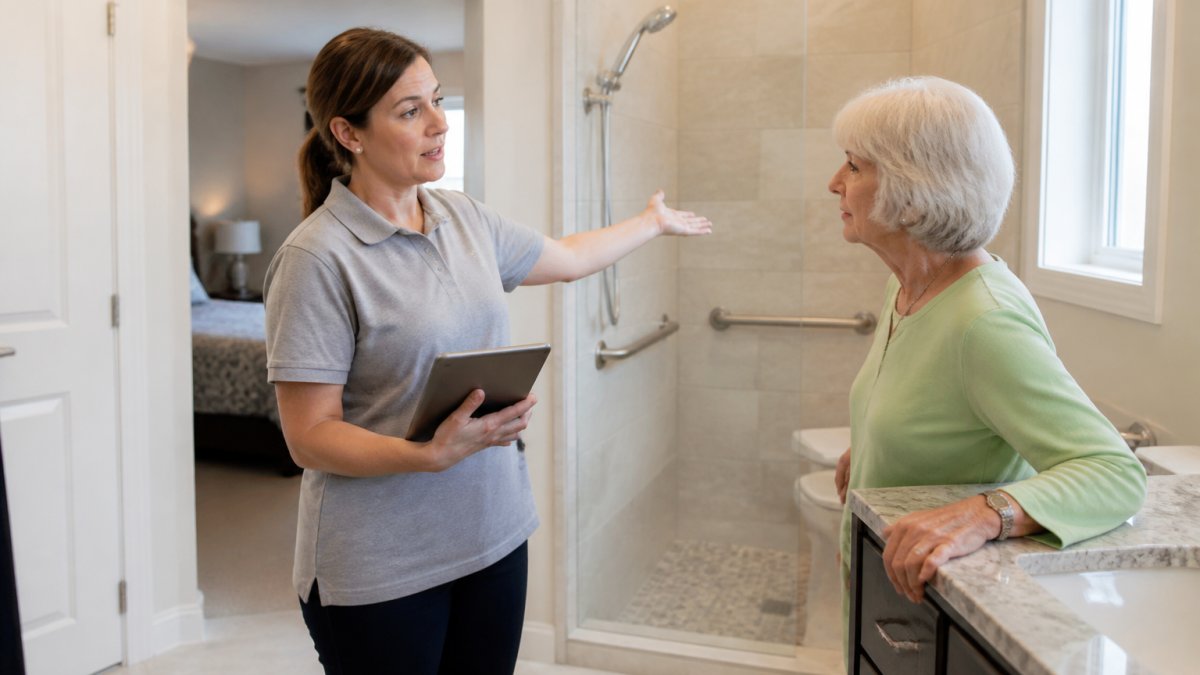
Install sturdy grab bars rated for full body weight beside the toilet, in the shower, and along the bathtub edge.
Remove tripping hazards: throw rugs, electrical cords, and clutter. Clear pathways from bedroom to bathroom to kitchen.
Improve lighting throughout the home. Parkinson's patients experience freezing episodes in dim lighting or when moving from bright to dark areas. Bright, consistent lighting reduces these episodes.
If possible, place the bedroom on the main floor to avoid stairs in the morning when medication hasn't fully kicked in. If stairs are unavoidable, install sturdy railings on both sides.
Install a walk-in shower or tub with a seat, non-slip flooring, and a raised toilet seat to reduce transfer distance.
Activities of Daily Living Support and Independence
Activities of daily living, bathing, dressing, toileting, eating, grooming, become genuinely difficult as Parkinson's progresses. Tremors make buttoning shirts impossible. Rigidity makes bending over to pull on pants painful.
This distinction matters profoundly. A patient who gives up on dressing themselves loses not just the activity but the sense of capability and dignity that comes with it.

Meal preparation and eating present similar opportunities.
Toileting and bathing are the most personal activities of daily living.
Companionship during these activities is often overlooked but crucial. Many Parkinson's patients experience depression and anxiety alongside physical symptoms. A caregiver who talks, listens, and engages while helping with daily activities addresses the emotional weight, not just the physical tasks.
Understanding the Cost of 24/7 Home Care for Seniors
Cost is the question every family asks, and the honest answer is: it varies significantly based on your parent's location, the specific services needed, and the provider's staffing model.
24/7 care is expensive because you're paying for continuous presence, not just hourly visits.
Some families assume their insurance will cover 24/7 care. In most cases, it won't.
This is where financial planning becomes critical. Some families use long-term care insurance, if they purchased it years ago.
The question from many families is not "what does 24/7 care cost" but "how do we afford it?" That requires honest conversation about what's available, what's needed, and what's sustainable.
At Katys home healthcare, we work with families to understand their situation and discuss options that fit their circumstances.
How 24/7 Care Reduces Caregiver Burnout
If your parent lives with you or you're the primary family caregiver, you already know the exhaustion. Parkinson's care is relentless. There's no off-shift for a family caregiver.
This burnout is not weakness or lack of love. It's a predictable consequence of unsustainable caregiving.
24/7 professional care doesn't eliminate family involvement, it transforms it. Instead of being the sole caregiver, you become the advocate and overseer. You visit your parent, you make medical decisions, you provide emotional support.
This shift has measurable benefits. Family caregivers with professional support report better mental health, less depression, and stronger relationships with their care recipients. The relationship improves because it's no longer strained by the burden of constant physical care.
For Parkinson's patients, this matters too. Many resist accepting care from family members. There's shame, loss of privacy, and strain on the relationship. A professional caregiver can provide the same physical support without the emotional baggage. The patient often accepts care more readily from someone who's not their child.
Frequently Asked Questions
How does 24/7 home care improve safety for Parkinson's patients?
Round-the-clock supervision prevents falls, which are a major risk for Parkinson's patients experiencing mobility challenges and balance issues. A caregiver can respond immediately to emergencies, manage medication on schedule, and help with transfer assistance to reduce injury risk. Caregivers also perform home safety assessments and implement modifications like grab bars and improved lighting, creating an environment designed around the patient's specific needs and reducing the likelihood of accidents that could complicate their condition.
When is the right time to transition to 24/7 home care for Parkinson's patients?
The transition typically occurs when a patient reaches mid-to-late stage disease, when cognitive decline, tremor management, and mobility support become complex and require constant attention. Signs include difficulty with toileting assistance, grooming and hygiene, meal preparation, or medication adherence. If a family caregiver is experiencing burnout or if the patient has had falls or near-misses, 24/7 care becomes essential. A consultation with the patient's neurologist can help determine the right timing based on their progressive neurological disorder stage and individual needs.
Can professional 24/7 home care help reduce caregiver burnout for family members?
Yes. Family caregivers managing Parkinson's patients often experience emotional exhaustion from constant supervision, medication management, and physical assistance. Professional 24/7 care provides respite care and removes the burden of round-the-clock responsibility, allowing family members to maintain their own health and relationships. This support also improves the patient's quality of life because professional caregivers bring specialized training in symptom management and therapeutic activities, while family members can focus on companionship and emotional connection rather than exhaustion-driven caregiving.
What specific tasks do caregivers perform for Parkinson's patients receiving 24/7 home care?
Caregivers provide transfer assistance, toileting assistance, grooming and hygiene support, meal preparation, and medication management. They monitor for tremor management issues, watch for signs of cognitive decline, and help patients maintain independence in activities of daily living for as long as possible. They also implement fall prevention strategies, perform therapeutic activities to support mobility, and provide companionship to address the emotional and psychological support needs that come with a complex medical condition. This personalized care plan is tailored to each patient's stage and needs.