 ultimate-guide
What Is a Certified Aging in Place Specialist?
Table of Contents
- What Is a CAPS Designation and Who Earns It
- Aging in Place Home Assessment: What Gets Evaluated
- Home Modifications for Seniors That Make the Biggest Difference
- Hiring Home Caregivers for Stubborn Seniors: Pairing CAPS With Daily Support
- How to Find a Qualified Specialist and What to Ask
- Cost, Insurance, and Funding Resources for Home Adaptation
- Frequently Asked Questions
Last Updated: September 28, 2026
What Is a CAPS Designation and Who Earns It
A Certified Aging in Place Specialist (CAPS) is a building professional who has completed specialized training to design and modify homes so older adults can live there safely as they age. The designation is administered through the National Association of Home Builders, and it signals that a contractor, remodeler, or designer understands both construction standards and the physical realities of aging.
The Role of an Aging in Place Specialist
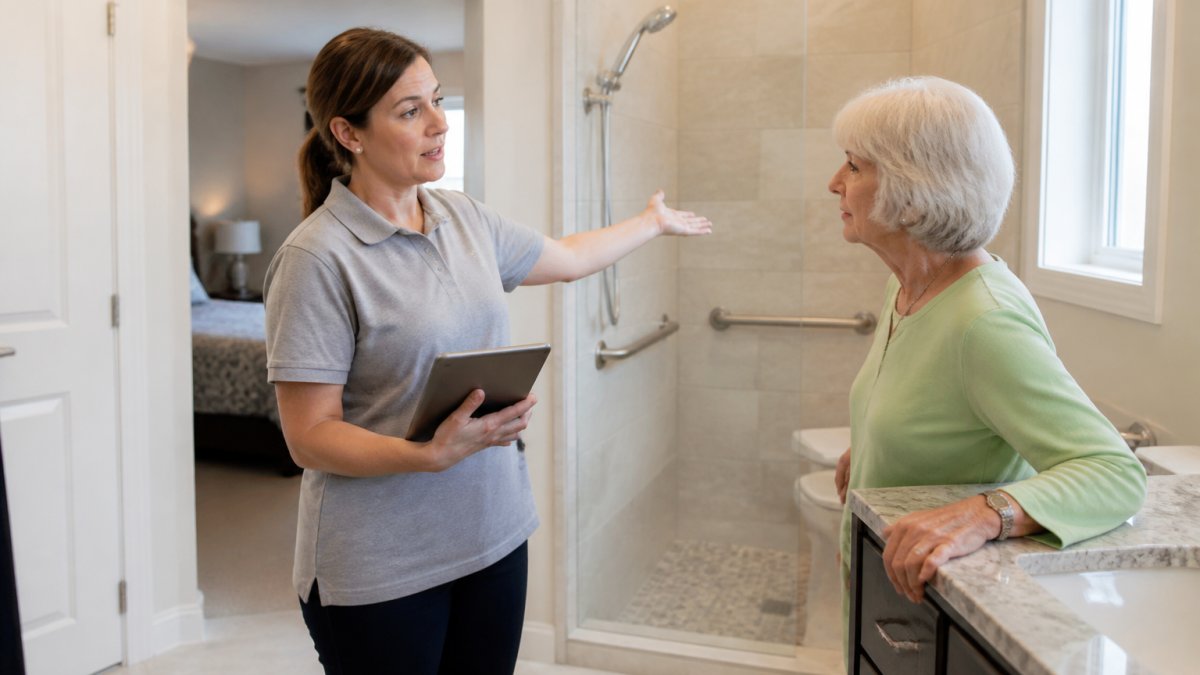
An aging in place specialist bridges construction and daily living. Their job is to assess how a real person moves through a real house, then recommend changes that reduce fall risk and preserve independence.
The scope typically covers three areas:
- Safety assessment: identifying hazards like loose rugs, poor lighting, and missing grab bars
- Modification planning: specifying ramps, walk-in showers, widened doorways, and lever handles
- Coordination: working with occupational therapists, caregivers, and family members so the changes match the person's actual needs
Aging in Place Home Assessment: What Gets Evaluated
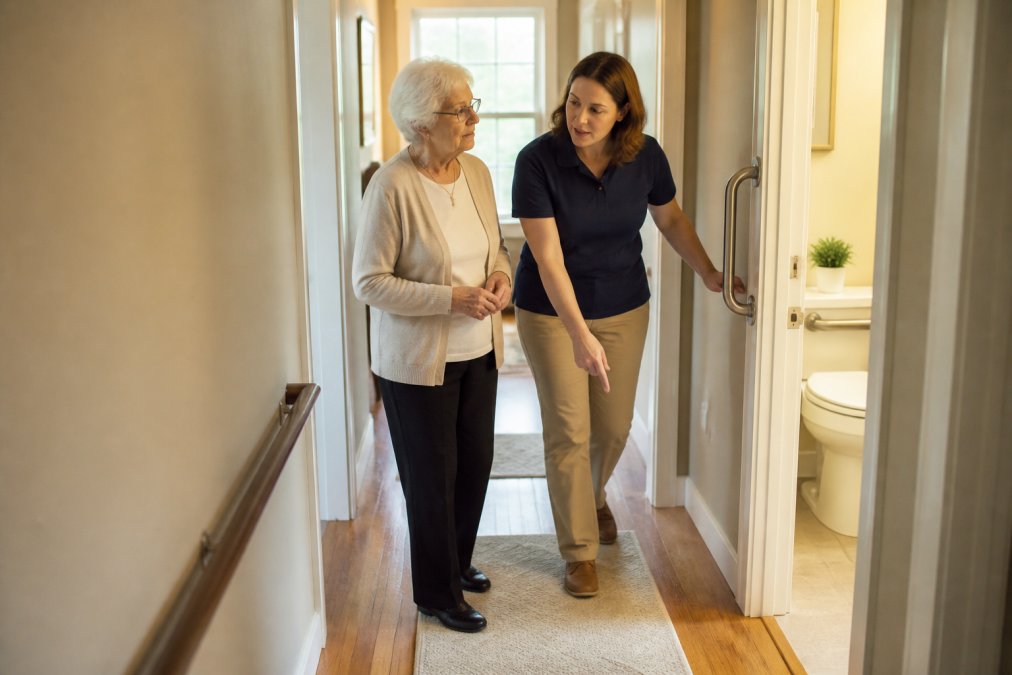
An aging in place home assessment is a room-by-room evaluation of how safely and independently a person can function in their current home. The evaluator checks entrances, stairs, bathrooms, kitchen, lighting, and floor surfaces, then ranks findings by urgency.
A Simple Checklist for Your First Home Safety Evaluation
Use this checklist before any professional visit. It helps you spot the obvious problems and ask sharper questions.
- Are there loose rugs or unsecured mats in walkways?
- Do all stairways have handrails on both sides?
- Is there a grab bar (not a towel bar) beside the toilet and in the shower?
- Can a walker or wheelchair clear every doorway?
- Are hallways and stairwells lit well enough to see at night?
- Is the water heater set to a safe temperature to reduce scald risk?
- Are frequently used items stored between waist and shoulder height?
- Is there a clear, unobstructed path from bed to bathroom?
- Is there a working light switch within reach of the bed?
- Are stair edges marked or contrasted so steps are visible?
- Is there a sturdy chair with arms in the bedroom for dressing?
- Can the front door be unlocked and opened without setting down a cane or walker?
The Cost-Benefit Math Behind Prioritizing Modifications
A common pattern is that families want to remodel the whole house at once, then stall when the quote arrives. The better approach is to rank modifications by risk reduced per dollar spent. Grab bars and handrails are inexpensive and address the two highest-frequency fall scenarios, wet bathroom surfaces and stairs. Widening doorways and converting a tub to a walk-in shower cost more but unlock independence for someone using a walker or wheelchair.
What a Written Assessment Should Contain
A useful written assessment names each room, describes the specific hazard, states the recommended fix, and assigns a priority tier. It should also note what does not need changing, so you are not sold work you do not need. Ask whether the specialist coordinates with an occupational therapist, because an OT can translate a physical limitation into a specific modification, for example, recommending a shower seat height based on how far the person can bend.
Home Modifications for Seniors That Make the Biggest Difference
Home modifications for seniors deliver the most value when they target the highest-risk moments. Getting in and out of the shower, navigating stairs, and moving between bed and bathroom account for a large share of household injuries.
| Modification | Primary Risk Addressed | Typical Priority |
|---|---|---|
| Grab bars in bathroom | Falls in wet, slippery areas | First |
| Handrails on both sides of stairs | Stairway falls | First |
| Walk-in shower or tub cut | Climbing over a tub wall | Second |
| Lever-style door and faucet handles | Grip strength decline | Second |
| Motion-sensor lighting | Nighttime navigation | Third |
| Widened doorways | Walker and wheelchair access | Third |
Hiring Home Caregivers for Stubborn Seniors: Pairing CAPS With Daily Support
A common mistake is presenting modifications as "because you're getting older." Frame them as upgrades that make the whole house easier to use. Resistance drops when the change is not framed as a verdict on capability.
Katys home healthcare has provided 24/7 home care across Ohio and North Carolina for more than a decade, and the caregivers we place work alongside the physical changes families make. Our team is built around consistency and trust, because a rotating cast of unfamiliar faces is exactly what a resistant parent will reject.
How to Find a Qualified Specialist and What to Ask
Finding a qualified specialist starts with verifying the credential, not the marketing. Ask directly whether the person holds a current CAPS designation and how they maintain it.
Questions worth asking before you hire:
- Do you hold a current CAPS designation, and through which program?
- How many aging-in-place assessments have you completed?
- Do you coordinate with occupational therapists or care agencies?
- Can you provide a written assessment with prioritized recommendations?
- What is your experience with the specific modification I need?
Cost, Insurance, and Funding Resources for Home Adaptation
The cost of home adaptation varies widely by scope, and most families should expect to fund it through a mix of sources rather than a single one. Pricing depends on the specific modifications, the contractor, and the condition of the existing home, so get written quotes rather than estimates over the phone. As a general pattern, grab bar and handrail installations are the least expensive tier, walk-in shower conversions and doorway widening sit in the middle, and full bathroom or kitchen remodels are the most expensive.
Funding options families commonly explore:
- Medicare: Original Medicare generally does not cover home modifications because they are considered home improvements rather than medical equipment. It may cover certain durable medical equipment, like a hospital bed or a walker, when prescribed by a doctor and deemed medically necessary. Coverage rules differ between Original Medicare and Medicare Advantage plans, so confirm with the plan before assuming a modification is covered.
- Medicaid: coverage is administered by each state, and some states offer home and community-based services waivers that can fund accessibility modifications for people who qualify. Eligibility and covered items vary widely by state, so contact the state Medicaid agency directly.
- Veterans benefits: the Department of Veterans Affairs administers grant programs for eligible veterans with service-connected disabilities, including grants for adapting an existing home and for constructing an adapted home. The VA housing grants for veterans with disabilities page lists current grant types, eligibility rules, and application steps.
- State and local programs: many area agencies on aging administer home repair and accessibility assistance, often with income limits. Some programs fund grab bars, ramps, and safety repairs directly.
- Long-term care insurance: some policies include home modification benefits, but the amount and the covered items depend on the individual policy. Read the policy language or call the insurer before assuming coverage.
- Nonprofit and community grants: local organizations, including some chapters of national nonprofits, sometimes fund grab bars, ramps, and safety repairs for older adults.
How to Sequence Funding Requests
A common pattern is to apply for the largest program first and let the smaller ones fill the gap. Start with any benefit tied to a specific eligibility category, veteran status, Medicaid waiver enrollment, or a long-term care policy, because those programs often have the clearest rules and the longest processing times. Then layer in state and local assistance, and finally nonprofit grants for the remaining items.
Do not pay a contractor in full before the work is complete, and do not sign a contract that bundles an assessment with a single fixed-price remodel. A low bid that skips the assessment phase often produces modifications that miss the actual risk, and you pay twice.
The Cost-Benefit Question
The cost-benefit question is real. A single avoided fall can prevent a hospitalization and a permanent loss of independence, which is why families often prioritize the highest-risk modifications first rather than remodeling the whole house at once. Phasing the work also spreads the cost across multiple budget cycles and lets you reassess after each phase, so you spend on what actually changes daily life rather than on what looks best in a catalog.
Frequently Asked Questions
What does an aging in place specialist do?
An aging in place specialist evaluates a home for safety and accessibility, then recommends or coordinates modifications that help an older adult stay independent. That includes assessing entryways, bathrooms, stairs, and lighting, suggesting changes like grab bars or ramps, and working alongside contractors, occupational therapists, and caregivers. The goal is to reduce fall risk and make daily activities easier without forcing a move to assisted living.
Is a CAPS certification worth it for homeowners?
It depends on your situation. A CAPS professional brings training in home safety evaluation, universal design, and remodeling standards that a general contractor may not have. If your parent has mobility challenges or you are planning a renovation, that expertise can prevent costly mistakes. For minor fixes like adding a bath mat, you likely do not need one. Start with a home safety evaluation to see what your home actually requires.
What is the difference between a contractor and a CAPS professional?
A general contractor builds or renovates to code. A CAPS professional is trained specifically in how aging affects home use, including fall prevention, barrier-free living, and home adaptation for maturing adults. Many CAPS holders are contractors, occupational therapists, or designers who added the credential. Hiring someone with both remodeling skills and the CAPS designation means the work addresses safety and independence, not just appearance.
How do I find a qualified aging in place specialist near me?
Ask your parent's occupational therapist or primary care provider for a referral, since they often know local professionals. You can also check with the National Association of Home Builders, which maintains a directory of CAPS-certified professionals. When you interview candidates, ask about their work experience requirements, continuing education, and whether they coordinate with caregivers. In Ohio and North Carolina, home care agencies like Katy's Home Healthcare can also point you toward trusted local resources.