 listicle
Qualities of a Good Home Caregiver
Table of Contents
- What Makes a Good Home Caregiver
- Essential Qualities of a Good Home Caregiver
- Technology Literacy and Modern Care Skills
- Burnout Prevention and Self-Care Practices
- Key Caregiver Interview Questions to Ask
- Home Health Aide Requirements in Ohio
- How to Vet a Home Caregiver Effectively
- Conflict Resolution and Legal Boundaries
- Frequently Asked Questions
Last Updated: September 3, 2026
What Makes a Good Home Caregiver
Finding the right person to care for a loved one means finding someone whose presence and competence can transform daily life. A good home caregiver does far more than assist with basic tasks, they become a trusted presence who understands that aging in place or recovering from illness requires both technical skill and genuine human connection.
At Katys home healthcare, we've spent over a decade identifying what separates caregivers who simply show up from those who genuinely improve quality of life. The difference comes down to a specific set of qualities that go beyond job training. These qualities determine whether a caregiver can handle the emotional complexity of the work, adapt when plans change, communicate effectively with family members, and build trust with the person they're caring for.
Essential Qualities of a Good Home Caregiver
The best caregivers share core attributes that shape how they approach the work every day. These aren't nice-to-haves, they determine whether someone can handle the physical demands, emotional weight, and interpersonal complexity of home care.
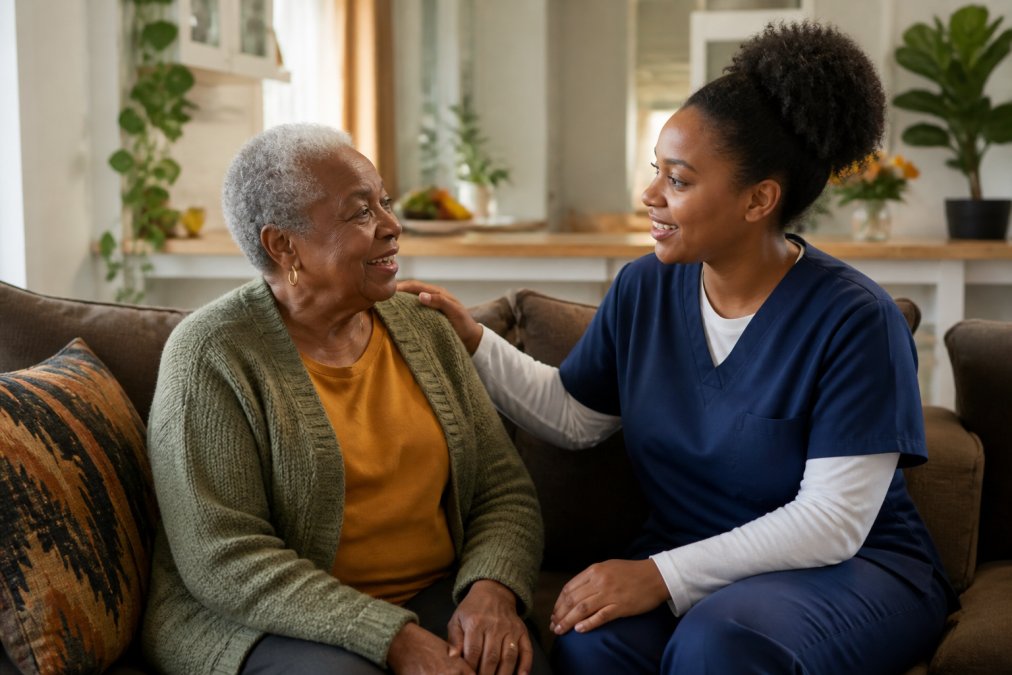
Compassion and Empathy
Compassion means genuinely understanding what another person is experiencing and letting that understanding guide your actions. A caregiver with real compassion sees the person, not just the tasks. They recognize that losing independence is frightening and that dignity matters more than efficiency.
Empathy in home care means anticipating needs before they're voiced and noticing when a client is withdrawn. It means understanding that resistance to help often comes from fear or grief, not stubbornness. This quality shows up in small moments: speaking respectfully, asking permission before helping with personal care, and remembering what matters to the person.
Patience and Emotional Resilience
Patience in home care is the ability to move at someone else's pace without frustration, even when tasks take longer than they should. An elderly person recovering from surgery moves slowly. Someone with dementia may ask the same question repeatedly. Patience means staying calm through all of it.
Emotional resilience is the ability to absorb difficult moments without taking them personally. A client's anger isn't about you. Caregivers with strong emotional resilience separate the person's emotions from the situation itself, which means they stay present and helpful rather than defensive. This matters especially in dementia care or when working with clients experiencing behavioral changes.
Dependability and Reliability
Dependability is perhaps the most underrated quality in home care and often the most valued by families. A client depends on their caregiver to show up at the scheduled time, every time, and to follow through on commitments.
Reliability means consistency in quality. A client shouldn't wonder if their caregiver will be attentive or distracted. It also means being accountable, admitting mistakes, and reporting problems to the family or care coordinator. When a caregiver is reliably present and consistently competent, it reduces anxiety for both the client and their family.
Communication Skills and Active Listening
A good caregiver listens to what a client says and what they don't say. They pick up on tone, body language, and changes in mood. Active listening means making eye contact, responding thoughtfully, and treating the client's concerns as valid. Many elderly clients have limited social interaction; a caregiver who listens well provides something as important as physical care.
Communication with family members is equally critical. A good caregiver reports accurately on the client's day, flags concerns early, and asks questions when instructions aren't clear. Clear, honest communication builds trust and prevents misunderstandings.
Attention to Detail and Observation
Attention to detail in home care can be the difference between safety and crisis. A caregiver notices when a client's appetite changes, when their pain level increases, or when they seem more confused than usual. These observations get reported to the family or healthcare provider and can lead to early intervention.
Observation skills also apply to the environment. A good caregiver notices hazards, loose rugs, poor lighting, or clutter that could cause falls. They notice if medications aren't being taken as prescribed and track patterns in the client's condition.
Physical Strength and Stamina
Home care is physically demanding work. A caregiver may need to help someone transfer from bed to chair or assist with bathing. Without adequate physical strength, these tasks become unsafe for both caregiver and client. Adequate stamina prevents mistakes and burnout.
This doesn't mean a caregiver needs to be an athlete, it means having the strength to safely assist with mobility and the endurance to work a full shift without becoming exhausted. Physical capability also affects the caregiver's confidence.
Flexibility and Adaptability
Plans change in home care constantly. A client's health takes a turn. A family member calls with new instructions. Caregivers who can adapt without becoming frustrated keep things running smoothly.
Adaptability also means adjusting approach based on the client's needs. What works one day might not work the next. This quality is especially important in dementia care or when working with clients whose condition fluctuates.
Trustworthiness and Confidentiality
A caregiver enters someone's home at their most vulnerable moments. Trustworthiness means the caregiver respects this privilege and maintains confidentiality. They don't gossip about clients or share health information inappropriately.
Trustworthiness also means honesty. A client and their family need to know they can believe what their caregiver tells them. If something went wrong, they need to know the caregiver will say so. This quality builds the foundation for the entire care relationship.
Technology Literacy and Modern Care Skills
Home care in 2026 increasingly involves technology. Electronic health records, medication management apps, telehealth visits, and monitoring devices are becoming standard. A good caregiver today needs basic technology literacy and comfort learning new systems.
This might mean helping a client navigate a virtual appointment with their doctor, managing medication reminders through an app, or understanding how to use a fall-detection device. Technology literacy also includes understanding privacy and security basics and knowing when to escalate a technical problem rather than trying to fix it alone.
Burnout Prevention and Self-Care Practices
The quality of care a caregiver provides is directly connected to their own wellbeing. A burned-out caregiver becomes less patient, less attentive, and more likely to make mistakes.
Good caregivers develop practices that sustain them: setting boundaries between work and personal time, maintaining relationships outside of caregiving, exercising, and sleeping adequately. They recognize when they're approaching their limit and communicate that to supervisors or families rather than pushing until they break.
Key Caregiver Interview Questions to Ask
When vetting potential caregivers, ask about a time they faced a difficult situation with a client and how they handled it. Listen for whether they took responsibility, showed flexibility, and maintained respect for the client. Ask how they would respond if a client refused care or became aggressive.
Ask what they find most rewarding about caregiving. Someone motivated by genuine care will answer differently than someone just looking for a paycheck. Ask how they handle stress and what they do to take care of themselves. Ask about their experience with technology and their willingness to learn new systems. Ask how they would handle a situation where they didn't know what to do, good caregivers admit when they need help.
Home Health Aide Requirements in Ohio
Home health aides in Ohio must meet specific state requirements to work legally. Home health aides working with Medicare or Medicaid clients must complete a state-approved training program and pass a competency exam (cms.gov). The training covers infection control, basic nursing skills, activities of daily living assistance, and client communication (cms.gov).
Ohio requires home health aides to have current CPR certification and background checks are mandatory (ohio.gov). Some agencies require additional certifications such as First Aid or dementia care training.
When hiring through an agency like Katys home healthcare, these requirements are handled as part of the vetting process. When hiring independently, verify that any caregiver meets these standards and ask to see documentation of their training completion and current certifications.
How to Vet a Home Caregiver Effectively
Start by checking references from previous clients or employers. Ask specific questions: How long did the caregiver work for them? Would they hire this person again? A vague reference is a red flag.
Verify certifications and licenses by contacting the training program or certifying body. Run a background check through an appropriate service. Meet with the caregiver in person before hiring and observe how they interact with your loved one. Trust your instincts, if something feels off, it probably is.
Ask to see how they would handle a specific situation relevant to your loved one's care. Check that the caregiver has proper training for your loved one's specific needs. Someone with general home care experience may not be equipped for dementia care, wound care, or working with clients who have behavioral challenges.
Conflict Resolution and Legal Boundaries
Even with the best hiring process, conflicts can arise. A good caregiver addresses problems directly and respectfully. If they disagree with how something is being done, they bring it up with the family or supervisor rather than doing things their own way.
Legal boundaries are equally important. A caregiver's role is to provide care, not to make medical decisions, give advice outside their scope, manage finances, or overstep into family matters. A good caregiver understands these boundaries and respects them.
Understanding confidentiality laws matters too. A caregiver cannot discuss a client's health information with anyone except those directly involved in care. When working with an agency like Katys home healthcare, these boundaries and conflict resolution processes are built into the system. For families managing caregivers independently, having clear conversations about boundaries at the start prevents problems later.
Finding a good home caregiver means looking beyond certifications to character, emotional maturity, and genuine commitment to your loved one's wellbeing. The qualities that matter most, compassion, reliability, communication, and trustworthiness, reflect who someone is as a person.
At Katys home healthcare, our caregivers are selected not just for their training but for these core qualities. We've built a team committed to helping your loved ones maintain independence while receiving the compassionate support they need to thrive. Our 24/7 availability and decade of experience in Ohio and North Carolina mean your family gets caregivers who understand both the work and the stakes. Learn more about finding reliable 24/7 home care through verified agencies or contact us to discuss your loved one's specific needs and find the right caregiver match.
Frequently Asked Questions
What are the key qualities of a good home caregiver?
A good home caregiver demonstrates compassion, patience, dependability, and strong communication skills. They show genuine empathy toward their clients, maintain consistent reliability in showing up on time, listen actively to client needs, and handle difficult situations with emotional resilience. Beyond soft skills, they possess the physical stamina for hands-on care, adaptability to changing circumstances, and trustworthiness with confidential health information. They also stay current with technology tools used in modern home care and understand professional boundaries.
What should I ask during a caregiver interview?
Ask about their experience with specific conditions relevant to your loved one, such as dementia care or post-surgery recovery. Request examples of how they've handled challenging behaviors or unexpected situations. Inquire about their approach to person-centered care and how they respect client preferences and dignity. Ask what certifications or training they hold, how they handle stress, and how they communicate with family members. Also ask about their availability, flexibility with schedule changes, and why they chose caregiving as a profession.
How do I vet a home caregiver before hiring?
Conduct thorough background checks covering criminal records and address history. Request references from previous clients or employers and contact them directly. Verify any certifications they claim, particularly CPR, first aid, or specialized training like dementia care. Meet the caregiver in person and observe how they interact with your loved one. Ask about their experience with your loved one's specific needs. Check that they understand confidentiality requirements and professional boundaries. Request a trial period to assess compatibility and care quality before committing to ongoing services.
What certifications do home health aides need in Ohio?
Home health aides in Ohio are required to complete a state-approved training program and pass a competency evaluation. Requirements vary depending on whether they work for a licensed home health agency or provide private care. Licensed home health agencies must employ aides who meet specific training standards. For private caregivers, Ohio does not mandate specific certifications, but many families prefer aides with CPR, first aid, or certified nursing assistant (CNA) credentials. Check with your local health department or the Ohio Department of Health for current requirements and approved training programs in your area.
This article was written using GrandRanker