 ultimate-guide
What Does Overnight Home Care Include for Elderly?
Table of Contents
- What Overnight Home Care Actually Covers
- Signs a Senior Needs Overnight Assistance
- Nightly Tasks and Health Monitoring
- Cost of Overnight Home Care and Financial Planning
- Medicare Coverage for Home Health Aides
- Safety, Fall Prevention, and Technology Integration
- Preventing Caregiver Burnout and Managing the Transition
- Frequently Asked Questions
Last Updated: September 24, 2026
What Overnight Home Care Actually Covers
Overnight home care is professional support provided in a senior's own home during nighttime hours, covering safety supervision, personal care, and health monitoring while the primary family caregiver sleeps. This guide from Katys home healthcare breaks down exactly what does overnight home care include for elderly loved ones, so families can decide whether it fits their situation.
Most families picture a caregiver simply sitting in a chair until morning.
Non-Medical Assistance vs. Skilled Nursing
Non-medical assistance covers daily living support: toileting assistance, mobility support, transfer assistance, medication reminders, meal preparation, and companionship through the night. This is what most overnight home care includes, and it does not require a nursing license.
Signs a Senior Needs Overnight Assistance
The clearest sign is a pattern of nighttime incidents, not a single bad night. Families who track two or three weeks of events usually spot the trend before a crisis forces the decision.
Behavioral and Medical Red Flags
Watch for these signals:
- Wandering prevention concerns: the senior is found disoriented or trying to leave the house at night
- Sundowning: agitation, confusion, or anxiety that escalates in the late afternoon and evening, common with cognitive impairment
- Nighttime urination that leads to unassisted trips to the bathroom and near-falls
- Insomnia, restless leg syndrome, or chronic pain keeping the senior (and everyone else) awake
- Repeated morning reports of poor sleep, headaches, or confusion
One caregiver's observation carries real weight here: if you are waking up multiple times a night to check on a parent, you are already providing overnight care without the training or the backup.
Nightly Tasks and Health Monitoring
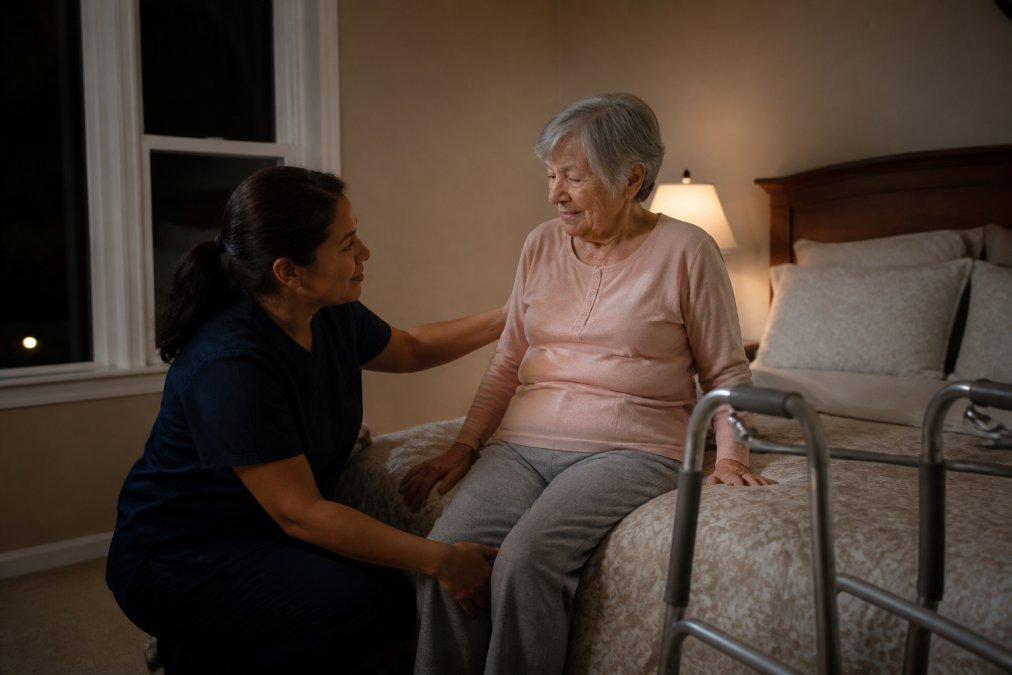
A typical overnight shift follows a predictable rhythm, though every plan adapts to the individual. Caregivers handle toileting assistance, repositioning to prevent pressure sores, medication reminders, hydration, and light housekeeping, while documenting everything for the family and the physician.
What a Shift Actually Looks Like, Hour by Hour
Most overnight shifts run 8 to 12 hours, and the tasks cluster around a few predictable windows. A common pattern looks like this:
- Arrival and handoff (first 15-30 minutes): the caregiver reviews the day's notes, confirms medications taken, checks that the phone and call button are within reach, and walks the path from bed to bathroom for trip hazards.
- Bedtime routine: toileting assistance, oral care, changing into nightclothes, positioning pillows, and applying any prescribed creams or compression stockings.
- First sleep block: the caregiver settles into a position where they can hear the senior, sets a quiet check interval, and begins the shift log.
- Midnight check: a visual check for breathing pattern, skin color, and comfort. Repositioning every two hours is standard for anyone at risk of pressure sores.
- Bathroom trips: most seniors wake at least once. The caregiver provides standby or hands-on transfer assistance, then re-settles the senior and logs the trip.
- Early morning: hydration, a light snack if ordered, medication reminders, and a written summary for the day shift or family.
Condition-Specific Monitoring
What the caregiver watches for depends on the diagnosis:
- Dementia or Alzheimer's: exit-seeking, sundowning agitation, and confusion about time of day. The caregiver redirects rather than corrects, and keeps exterior doors secured.
- Parkinson's disease: nighttime rigidity and difficulty turning in bed. Repositioning and gentle range-of-motion help prevent stiffness and falls on bathroom trips.
- Congestive heart failure: watching for increased nighttime urination, shortness of breath when lying flat, or new swelling, all signs the physician needs to know about.
- Post-surgery: incision checks, pain management timing, and watching for confusion that can signal an infection or a medication reaction.
- Diabetes: awareness of hypoglycemia symptoms at night, which can look like confusion or sweating.
Why Documentation Is the Real Deliverable
Safety monitoring runs continuously. That means checking breathing patterns, watching for signs of sleep apnea, responding to emergency support needs, and knowing when to call for medical help versus when to adjust a pillow and wait.
The Transition-to-Care Conversation
Most families underestimate how much the first two weeks shape the whole arrangement. A few practices make the transition smoother:
- Start with two or three nights a week, not seven. A trial schedule lets the senior experience the benefit before the arrangement feels permanent.
- Frame the caregiver as extra support, not a replacement for independence. "Someone to help you get to the bathroom safely" lands better than "someone to watch you."
- Let the senior keep every decision they can still make, what time lights go out, what they wear, what they eat for a bedtime snack.
- Introduce the caregiver before the first overnight shift. A daytime meet-and-greet over coffee removes the stranger-at-the-door problem.
- Keep the same caregiver on the same nights. Continuity is the single biggest predictor of whether a resistant senior accepts help.
Cost of Overnight Home Care and Financial Planning
Pricing for overnight home care depends on shift length, the level of medical need, and whether the caregiver stays awake or sleeps on site. Because rates vary by region and by agency, the honest answer is that you should request a written quote rather than rely on a national average.
| Billing Model | How It Works | Best For |
|---|---|---|
| Hourly rate | Billed per hour, often with a nightly minimum | Families needing 8-12 hours of coverage |
| Flat overnight rate | Fixed fee for a set shift window | Predictable monthly budgeting |
| Live-in rate | Lower hourly equivalent for 24-hour presence | Seniors needing round-the-clock support |
Insurance and Payment Options
Traditional health insurance rarely covers non-medical overnight care, because it is custodial rather than clinical. Long-term care insurance policies often do cover it, but only if the policyholder meets the benefit triggers defined in the contract. Veterans' benefits and Medicaid waiver programs may help qualifying families, though eligibility rules and covered services vary by state and by program. Check the official program source for current eligibility and amounts rather than assuming.
Medicare Coverage for Home Health Aides
Medicare coverage for home health aides is narrower than most families expect. Original Medicare covers part-time, intermittent home health aide services only when a physician certifies a skilled care need, such as nursing or therapy, and only while that skilled need continues. It does not pay for around-the-clock care or for custodial help with bathing and dressing when that is the only need.
The Financial Navigation Most Guides Skip
This is where families lose the most time and money. Four funding paths matter, and each has a specific trigger you need to understand before you sign anything.
- The elimination period. Most policies require 90 days of qualifying care before benefits begin. That is 90 days you pay out of pocket first.
- The benefit trigger. A physician and often a nurse assessor must document the ADL deficit. A diagnosis alone is not enough.
A Practical Order of Operations
When a family asks where to start, a workable sequence is:
- Pull the long-term care policy (if any) and read the elimination period and ADL triggers.
- Check VA eligibility if the senior or spouse served during a qualifying wartime period.
- Call the state Medicaid office and ask specifically about HCBS waiver waitlists.
- Only then price private-pay options, so you know the true out-of-pocket gap.
Safety, Fall Prevention, and Technology Integration
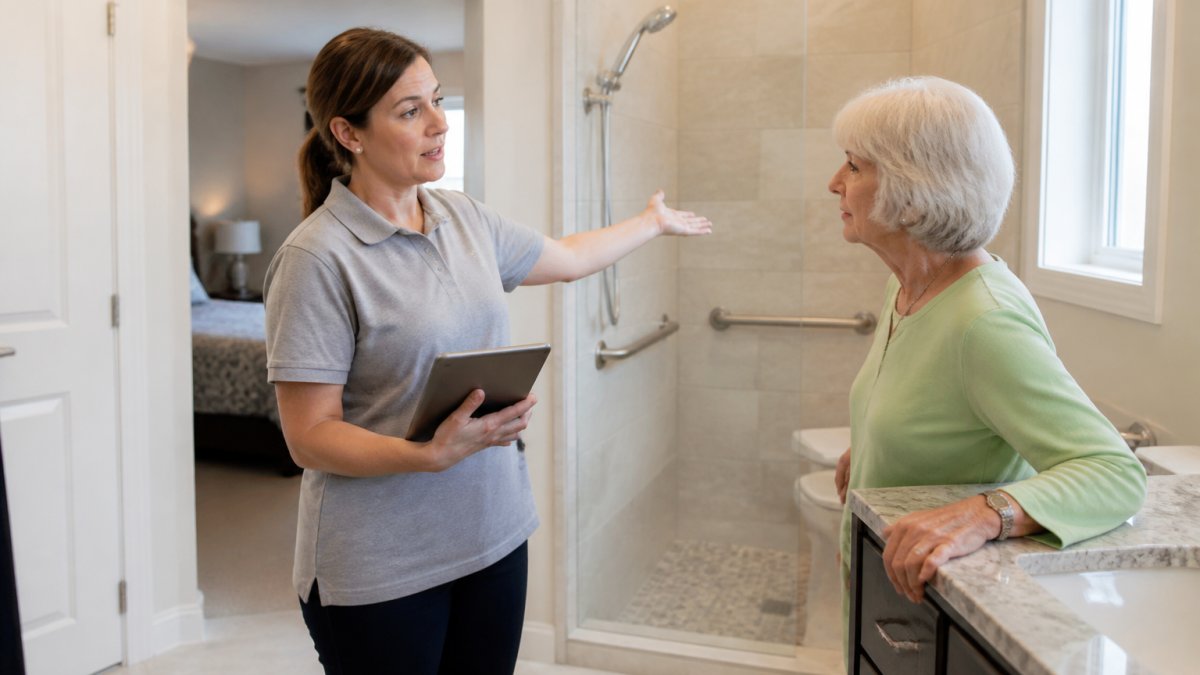
Fall prevention starts with a home safety assessment, not a purchase. Grab bars in the bathroom, a clear path from bed to toilet, motion-sensor night lights, and a properly fitted walker prevent more falls than any gadget.
Preventing Caregiver Burnout and Managing the Transition
Caregiver burnout is the quiet crisis in family caregiving, and it is the reason many families finally call for help. Sleep deprivation compounds stress, and a family caregiver running on four broken hours of sleep a night is at real risk of their own health decline.
Frequently Asked Questions
Does Medicare pay for overnight care?
Original Medicare (Part A and Part B) generally does not cover 24-hour home care or overnight shifts if that is the only care you need. Medicare covers home health aide services only when you also need skilled nursing or therapy, and even then, coverage is typically part-time. For overnight coverage, families usually pay out of pocket or explore Medicaid waivers, long-term care insurance, or veterans benefits. Check your specific plan and state rules, as coverage varies.
Do overnight caregivers sleep during their shift?
It depends on the type of shift you hire. A 'sleeping night' shift means the caregiver is expected to sleep for several hours and only wakes if needed. An 'awake night' shift means the caregiver stays awake the entire time, providing safety monitoring, toileting assistance, and medication reminders. If your parent has dementia, wanders, or needs frequent help, you will likely need an awake shift, which costs more.
What specific tasks do overnight caregivers perform for seniors?
Overnight caregivers handle nighttime urination, toileting assistance, medication reminders, mobility support, transfer assistance, and fall prevention. They also monitor for sleep apnea, insomnia, restless leg syndrome, and chronic pain management. For seniors with cognitive impairment, they provide wandering prevention and help with sundowning. They also handle emergency support and can perform light housekeeping like laundry or dishes while the senior sleeps.
How do I know if my aging parent needs overnight supervision?
Key signs a senior needs overnight assistance include frequent nighttime falls, waking up confused or disoriented, wandering, or trying to leave the house. You might also notice unexplained bruises, weight loss, or a decline in hygiene. If your parent has a chronic condition like sleep apnea or needs help with nighttime urination, professional overnight care can prevent emergencies. A home safety assessment can help you decide.