 blog
In-Home Care vs Family Caregiving: Which Is Right?
Table of Contents
- In-Home Care vs Family Caregiving: Understanding the Core Differences
- Types of Help: Activities of Daily Living and Beyond
- Benefits of Professional In-Home Care
- Benefits and Rewards of Family Caregiving
- Recognizing Family Caregiver Burnout Signs
- How to Hire an In-Home Caregiver and What to Expect
- Family Caregiver Respite Care: Taking Time to Recharge
- Combining Family Caregiving with Professional Care
- Frequently Asked Questions
Last Updated: October 12, 2026
In-Home Care vs Family Caregiving: Understanding the Core Differences
When a loved one needs daily support, families face a critical choice. Professional in-home care and family caregiving each offer distinct advantages and real tradeoffs. At Katys home healthcare, we help families navigate this decision every day.
In-home care vs family caregiving isn't a simple either/or decision, many families combine both. Understanding each option helps you choose what fits your loved one's needs, capacity, and finances.
What Professional In-Home Care Provides
Professional in-home care means hiring trained caregivers who come to your loved one's home on a schedule, from a few hours weekly to 24/7. They manage activities of daily living, medication reminders, mobility assistance, and companionship.
A professional caregiver brings consistency: the same person on the same schedule, building familiarity with routines.
Professional caregivers also bring training: safe bathing, injury-free transfers, recognizing warning signs of decline, and responding calmly to behavioral changes, vital for dementia or post-surgery recovery.
What Family Caregiving Involves
Family caregiving means you or another family member takes on daily support: personal care, household tasks, meals, medication management, and emotional support, on call constantly, not just during scheduled hours.
Family caregivers know their loved one deeply, history, preferences, fears, communication style. That emotional connection is powerful, and many older adults prefer aging in place with family rather than strangers.
But family caregiving is relentless. You're managing care while working, raising children, running a household, and trying to stay healthy. The weight accumulates.
Types of Help: Activities of Daily Living and Beyond
Both professional caregivers and family members help with the same core tasks, but scope and consistency differ.
Personal Care and Companionship
Personal care includes bathing, dressing, grooming, and toileting, tasks people need help with when mobility, strength, or cognitive decline makes independence impossible. Trained caregivers maintain dignity, prevent falls, and adapt techniques to different abilities.
Companionship matters just as much. Loneliness accelerates decline in older adults, so someone who sits, listens, and provides emotional presence, family member or paid caregiver, affects mental health and sense of purpose.
Household Assistance and Meal Preparation
Meal preparation, cleaning, laundry, and grocery shopping keep a household running. Professional caregivers handle these routinely; family caregivers often find them piling up alongside personal care, creating exhaustion.
Many families find that professional in-home care for household tasks alone frees up mental and physical energy for the relationship part of caregiving.
Medical Assistance and Supervision
Here's a critical boundary: nonmedical in-home care excludes skilled nursing tasks like wound care, medication administration, or medical equipment management. A personal care aide can remind your loved one to take medication and help them get to appointments, but cannot inject insulin or change a catheter.
If your loved one needs skilled nursing, you need a licensed nurse or home health aide with nursing credentials, a different service category that often requires a doctor's order. Family caregivers cannot perform these tasks safely, which is where professional medical home care becomes essential.
Benefits of Professional In-Home Care
Professional in-home care removes the burden of 24/7 responsibility. You're not the sole decision-maker, the only person trained for emergencies, or the one lying awake listening for a fall.
Consistency matters. Your loved one sees the same caregiver regularly, building trust and routine.
Professional caregivers bring training in safety, fall prevention, and behavioral changes.
For families, professional care preserves the relationship. You're not always the helper or enforcer, you can be a daughter, son, or grandchild again, enjoying time together without the weight of all-day care.
Benefits and Rewards of Family Caregiving
Family caregiving deepens relationships. You see your loved one through a vulnerable time and show up for them. That bond matters.
Aging in place with family feels safer and more familiar to many older adults: their own home, their belongings and memories, family nearby rather than only during scheduled visits.
There's also continuity: you know their history, preferences, and communication style, catch subtle changes others miss, and can advocate fiercely for their needs.
For some families, family caregiving is the only affordable option, professional care costs more than most can sustain long-term without strain.
Recognizing Family Caregiver Burnout Signs
Family caregiver burnout sneaks up. It accumulates from months of unrelenting responsibility rather than arriving overnight.
Watch for these signs in yourself or another family caregiver:
- Exhaustion that sleep doesn't fix
- Irritability or anger that feels disproportionate
- Withdrawal from friends or activities you once enjoyed
- Difficulty concentrating or making decisions
- Changes in appetite or sleep
- Feeling trapped or resentful
- Physical symptoms: headaches, chest tightness, muscle tension
- Neglecting your own health care or medications
Burnout doesn't mean you're weak or failing, it means you're carrying too much alone.
The solution isn't always to stop caregiving, it's to share the load. This is where respite care and professional support become essential, not optional.
How to Hire an In-Home Caregiver and What to Expect
Hiring well starts with one decision that shapes everything else: do you hire through an agency, or do you hire a caregiver directly?
Agency vs. Independent Hire
Home care agencies employ the caregiver. The agency handles recruiting, background checks, training, scheduling, supervision, payroll taxes, workers' compensation, and liability insurance. If your regular caregiver is sick or quits, the agency finds a replacement.
Direct hire (private hire) means you become the employer. You recruit, screen, schedule, and pay the caregiver yourself. You are generally responsible for withholding and paying employment taxes, maintaining workers' compensation coverage, and carrying liability insurance.
What to Clarify Before You Interview
Write down the specifics before you talk to anyone:
- Tasks: bathing, dressing, toileting, transfers, meal prep, medication reminders, companionship, light housekeeping, transportation
- Hours and days: a few hours a week, daily shifts, overnight, or 24/7 coverage
- Condition-specific needs: dementia, Parkinson's, post-stroke, post-surgical, hospice
- Language and cultural preferences: does your loved one want a caregiver who speaks their first language or shares their background?
- Transportation: does the caregiver need to drive your loved one, and is a valid license and insured vehicle required?
Questions That Reveal Real Experience
Generic questions get generic answers. Ask for specifics:
- "Tell me about a time a client refused care. What did you do?"
- "How do you respond when someone with dementia becomes agitated or tries to leave the house?"
- "Walk me through how you would help my mother transfer from bed to a wheelchair safely."
- "What would you do if you arrived and found my father confused and unusually weak?"
- "How do you document what happened during a shift, and who do you report changes to?"
Listen for concrete examples, not rehearsed phrases. A caregiver who has genuinely handled these situations will describe specific steps, not generalities.
Vetting and Background Checks
You are inviting someone into your home to care for a vulnerable person. Verify:
- Criminal background check at the state and, where available, federal level
- Driving record if the caregiver will transport your loved one
- Employment history and references, call at least two prior employers, not just personal references
- Credentials, certifications such as Home Health Aide (HHA) or Certified Nursing Assistant (CNA), CPR and first aid training, and any state-required registration
- Insurance, if hiring directly, confirm the caregiver carries or is covered by liability and workers' compensation insurance
Agencies typically handle these checks as part of onboarding, but it is reasonable to ask what their screening includes and how often it is repeated.
Trial Shifts and Clear Expectations
Start with a short trial, a few hours, or one shift, before committing to a schedule. Watch how the caregiver interacts with your loved one, whether they arrive on time, and whether your loved one seems comfortable. Trust your instincts; a caregiver who is technically qualified but does not connect is not the right fit.
Put expectations in writing:
- Start and end times, and the procedure if the caregiver is late or cannot come
- Specific tasks and any tasks that are off-limits
- How changes in your loved one's condition should be communicated, and to whom
- How the caregiver logs hours and how you will pay (hourly, weekly, through the agency)
- What happens if the caregiver or your family wants to end the arrangement
What It Costs and How Families Pay
Costs vary widely by region, level of care, and whether you hire through an agency or directly. Agency rates are higher because they include overhead, insurance, and supervision. Overnight and 24/7 coverage cost more than daytime hourly care, and dementia or high-acuity care often carries a premium.
Common ways families pay for in-home care include:
- Private pay, savings, income, or family contributions
- Long-term care insurance, if the policy includes home care benefits and the care recipient meets the benefit trigger (usually needing help with a set number of activities of daily living or having a cognitive impairment)
- Medicaid home and community-based services (HCBS) waivers, for those who qualify financially and functionally; waitlists are common
- Veterans benefits, the VA's Aid and Attendance or Housebound benefits can help eligible veterans and surviving spouses pay for home care
- Life insurance or annuity conversions, some policies allow accelerated death benefits or conversion to a long-term care benefit
Medicare generally does not pay for nonmedical personal care or homemaker services. It covers skilled home health under specific conditions, which is a different service category.
Family Caregiver Respite Care: Taking Time to Recharge
Respite care is temporary relief from caregiving, a few hours, days, or weeks where someone else takes over while you rest, handle other responsibilities, or just breathe.
Respite care can be informal (a family member or trusted friend staying with your loved one) or professional (a paid caregiver or care facility providing temporary coverage).
Many family caregivers resist respite care.
Respite care isn't abandonment. It's maintenance. You can't pour from an empty cup.
Start small. One afternoon per week might be enough to reset.
Combining Family Caregiving with Professional Care
The reality for most families is that in-home care vs family caregiving isn't an either/or choice, it's a both/and situation.
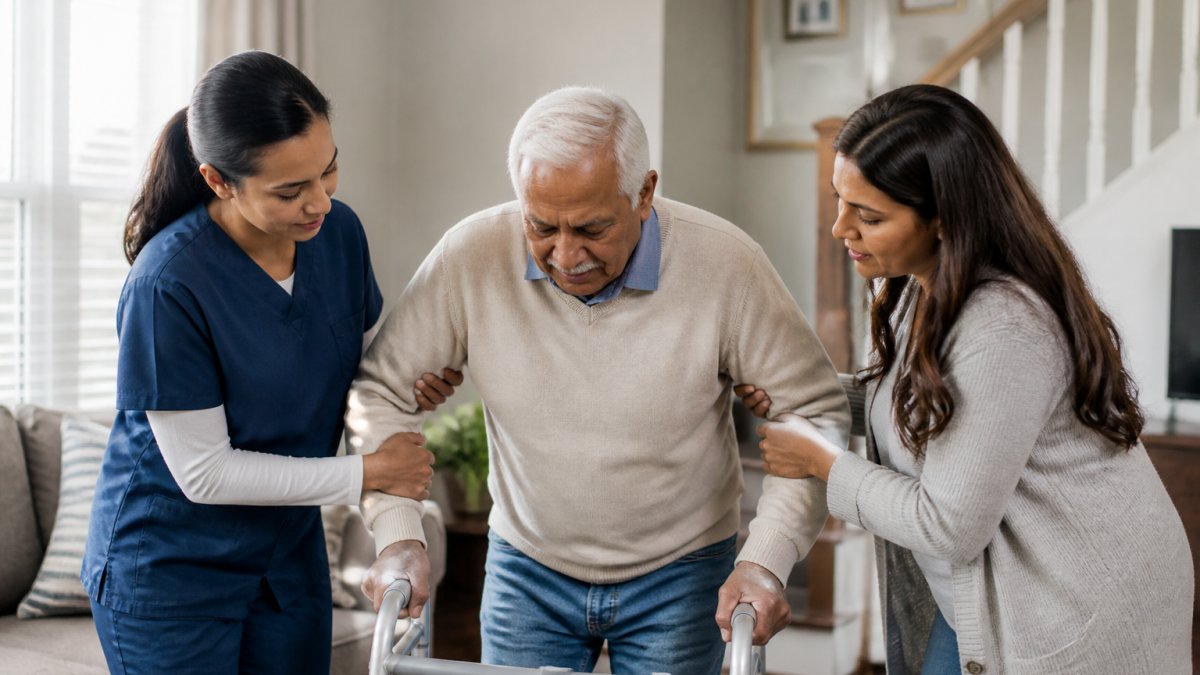
Many families find the sweet spot by combining approaches.
This hybrid approach reduces caregiver burden while preserving the family relationship and emotional connection. Your loved one gets professional expertise and family presence.
Coordination is essential. The professional caregiver needs to know your loved one's routines, preferences, and any changes you've noticed.
Katys home healthcare specializes in this kind of partnership.
The goal is sustainable care.
Frequently Asked Questions
What's the difference between in-home care and family caregiving?
In-home care involves trained professional caregivers providing structured assistance with activities of daily living, medical support, and household tasks. Family caregiving relies on relatives managing care responsibilities while balancing work and personal obligations. Professional caregivers bring formal training and can provide consistent, dedicated attention, while family caregivers offer emotional connection and familiarity but often face burnout and competing demands.
What are the signs of family caregiver burnout?
Common signs include persistent exhaustion, irritability, difficulty concentrating, neglecting your own health, social withdrawal, and feelings of resentment toward the care recipient. Physical symptoms like headaches, sleep problems, and increased illness are also indicators. If you recognize these signs, respite care, temporary professional coverage, can provide essential relief and help you maintain your own wellness while continuing to support your loved one.
Can family caregivers and professional in-home caregivers work together?
Yes, many families combine both approaches successfully. Professional caregivers can handle specific tasks like personal care, medication reminders, and household assistance, while family members focus on companionship, decision-making, and emotional support. This hybrid model reduces caregiver strain, ensures consistent supervision and safety, and allows aging in place with better quality of life for the care recipient and more sustainable support for the family.
How do I know when to hire professional in-home care?
Consider professional care when care needs exceed what family can safely manage, when you're experiencing burnout, after hospitalization or surgery requiring skilled support, or when medical supervision and medication management become complex. If your loved one needs assistance with bathing, dressing, mobility, or has behavioral challenges like dementia, professional caregivers with appropriate training can provide specialized support and help maintain independence and safety.