 blog
7 Ways to Prepare Your Home for Knee Surgery Recovery
Table of Contents
- Clear Pathways and Remove Trip Hazards
- Install or Check Handrails and Grab Bars
- What to Have at Home After Knee Replacement
- Set Up a Comfortable Recovery Area
- Fall Prevention After Knee Surgery
- Prepare Your Bedroom and Bathroom for Limited Mobility
- How Long Will I Need Help at Home After Knee Replacement Surgery
- Frequently Asked Questions
Last Updated: October 12, 2026
Clear Pathways and Remove Trip Hazards
To prepare home knee surgery recovery, start by clearing the routes you'll use most. Trip hazards are the biggest threat, a fall can set back healing by weeks or months.
Remove throw rugs (or secure them with non-slip tape), tape cords to baseboards, and clear pet toys and clutter. Move furniture so you have a clear route from bedroom to bathroom and kitchen.
Install nightlights or motion-activated lights along walking routes, and keep light switches easy to reach.
Pay special attention to stairs. Many people stay on one floor for the first few weeks after knee surgery, so stock that floor with everything you need.
Install or Check Handrails and Grab Bars
Handrails and grab bars give stability and are essential after knee surgery.
Check existing stair handrails: they should be sturdy and at a height where your hand rests comfortably with your arm at your side. If you don't have one, install it before surgery.
Grab bars in the bathroom are critical. Install them near the toilet and in the shower or tub at a comfortable grip height, secured firmly to wall studs, not just drywall.
Consider grab bars in hallways or near your bedroom door or bed if your home is large or you have mobility concerns.
Test all bars before surgery by pushing hard on them. Loose or weak bars are dangerous.
What to Have at Home After Knee Replacement
Stock supplies before surgery and keep frequently used items within arm's reach to reduce walking and lower fall risk.
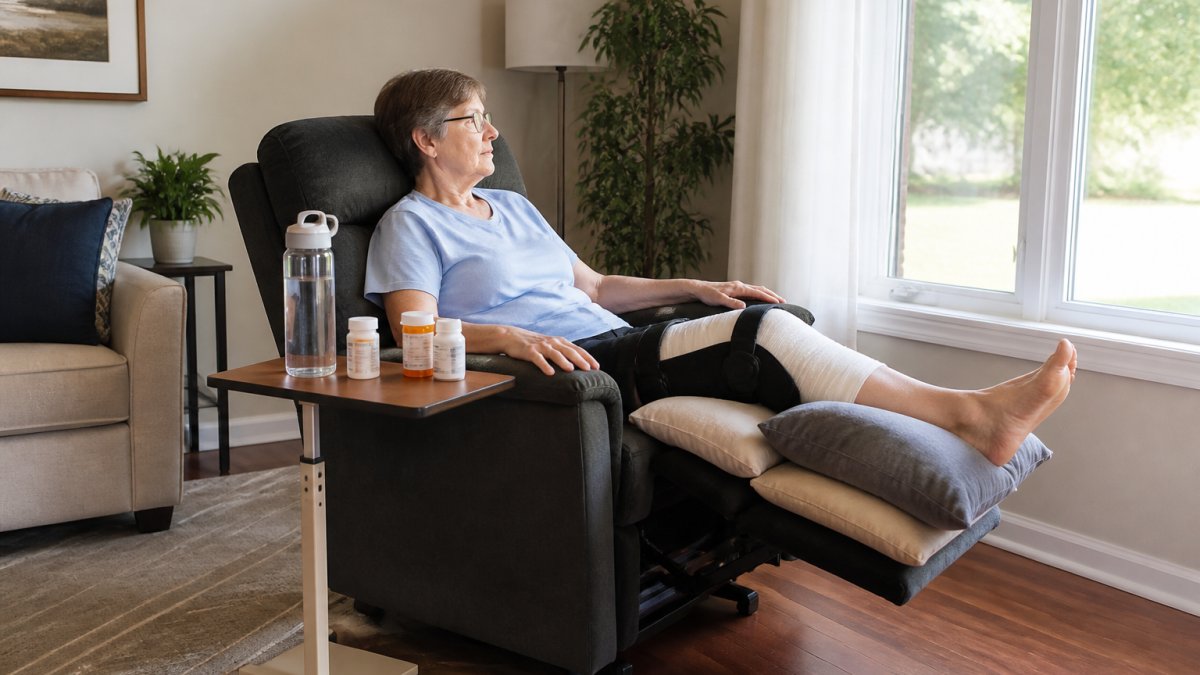
Create a recovery station in the room where you'll spend most time:
- Water bottles and a pitcher (stay hydrated during recovery)
- Pain medication and other prescribed drugs
- A small table or tray for meals and drinks
- Entertainment (books, tablet, remote control)
- Phone and charger within reach
- Tissues, hand sanitizer, and wet wipes
- A bell or call button if you have a caregiver
Keep your bedroom stocked too: extra pillows for leg elevation, and a bed height where your feet touch the floor and your knee doesn't bend too much when you sit on the edge.
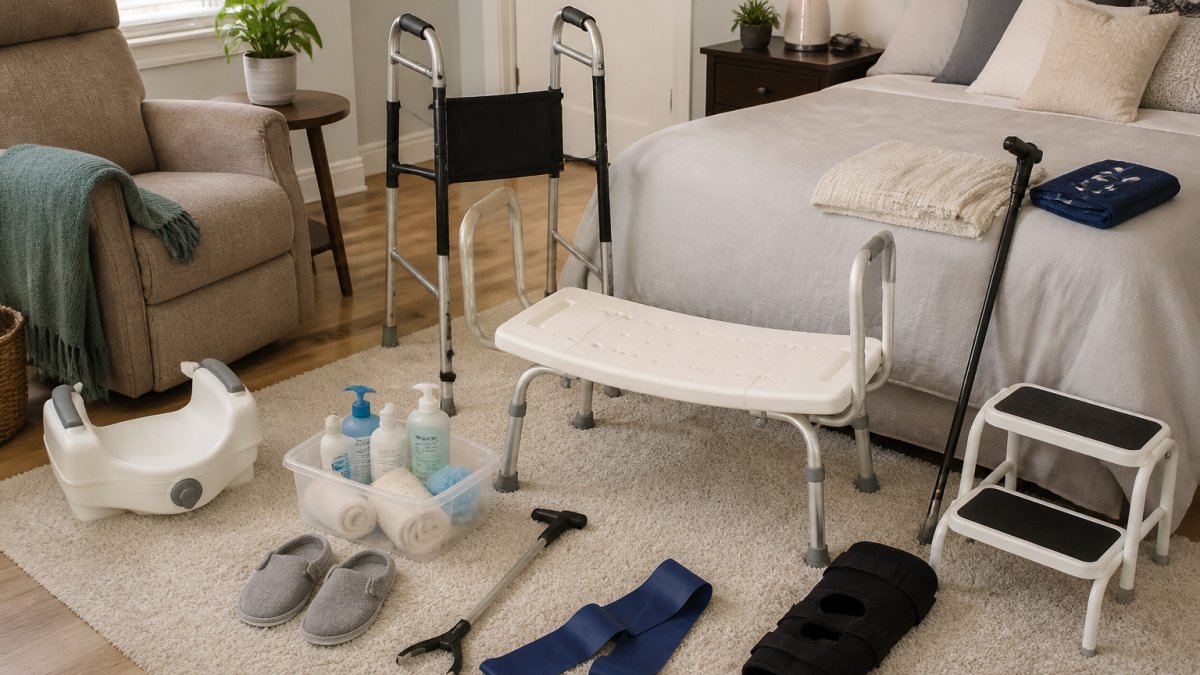
In the bathroom, place a shower chair or bath bench before surgery, add a handheld showerhead if possible, and stock toiletries within reach.
Prepare meals ahead of time or arrange delivery, cooking requires standing and balance, so let someone else handle meals during the first weeks.
Set Up a Comfortable Recovery Area
Choose your recovery area by three hard constraints: distance to the bathroom, distance to the kitchen, and whether you can avoid stairs entirely for the first two weeks.
Choose the room by function, not by comfort.
- In a two-story home, plan to live on one floor for at least the first 2 to 3 weeks; set up a temporary main-floor bedroom if needed.
- Keep the recovery room within easy walking distance of a bathroom and, ideally, the kitchen. If the bathroom is upstairs and the bedroom downstairs, solve that before surgery.
- Avoid thick carpet if you'll use a walker, wheels and legs catch on plush pile. Low-pile or hard flooring is easier.
Get the chair height right.
A standard sofa seat is usually 16 to 18 inches off the floor, too low for a healing knee.
Set up leg elevation properly.
Elevation reduces swelling only if done correctly: your leg should be above heart level when lying down. Use a wedge or two to three firm pillows under the calf, not directly behind the knee, to keep the knee slightly extended.
Build a reachable command center.
Everything you need for a two-hour stretch should be within arm's reach without standing:
- Phone and charger (a 6-foot charging cable beats a short one)
- Water bottle with a straw or a spill-resistant lid
- Current medications in a pill organizer
- Remote controls, tablet, book, or e-reader
- Tissues, hand sanitizer, lip balm
- A small notebook or phone app for logging pain levels and medication times
- A lightweight bag or basket attached to the walker for carrying small items between rooms
Plan the path, not just the room.
Walk the route from your chair to the bathroom and kitchen before surgery, noting every doorway, threshold, and turn.
Fall Prevention After Knee Surgery
Always use your walker or cane as directed by your physical therapist.
Wear non-slip shoes with good support, socks alone aren't safe, and loose slippers can slide off.
Move slowly and deliberately: take small steps and pause before changing direction so your body can adjust.
Keep your home well-lit. Use nightlights in hallways and bathrooms, and turn on lights before you start moving.
Stay hydrated and eat regularly, low blood sugar and dehydration cause dizziness and unsteadiness.
Have someone nearby during the first few weeks. A caregiver can steady you if you start to fall and help if you do.
Prepare Your Bedroom and Bathroom for Limited Mobility
These two rooms carry the highest fall risk and are where you'll spend most of your recovery. Treat them as separate projects with their own equipment lists.
Bedroom checklist
Bed height and access
- Sit on the bed's edge: both feet should rest flat with knees at roughly 90 degrees. If your feet dangle, the bed is too high, add a firm step stool with a handrail. If your knees sit higher than your hips, it's too low, add bed risers or a mattress topper.
- If you sleep on the side closest to a wall, switch sides so the surgical leg is on the outside, making getting in and out safer.
- Practice the "log roll" before surgery: sit on the edge, lower onto your side, then swing both legs onto the bed together while pushing up with your arms.
Bedroom supplies within reach
- Nightstand with phone, charger, water, medications, glasses, and a small light
- Extra pillows or a wedge for leg elevation
- A bedside commode if the bathroom is more than a few steps away, especially at night in week one
- A small trash can and a reacher or grabber tool to pick up dropped items without bending
Lighting and pathways
- Nightlights along the path from bed to bathroom, plus a bedside lamp you can turn on without getting up
- Clear the floor of shoes, laundry baskets, and charging cables
- Keep pets out of the bedroom at night during the first weeks
Bathroom checklist
Toilet setup
- A raised toilet seat adds about 3 to 5 inches and reduces how far you bend the surgical knee. A model with armrests is more stable.
- Install grab bars on both sides of the toilet if studs allow, mounted 33 to 36 inches from the floor, the range most adults can grip comfortably while seated (Fig. 29 Grab Bars at Water Closets).
- Never use a towel bar or suction-cup bar as a grab bar; towel bars aren't built for body weight and suction cups can fail without warning.
Shower and tub setup
- A shower chair or bath bench lets you sit while bathing. A bench spanning the tub wall lets you sit on the outside edge and slide over rather than stepping over the rim.
- A handheld showerhead with a long hose lets you rinse while seated and direct water away from the incision.
- Use a non-slip mat inside the tub or shower and a rubber-backed bath mat outside.
- A walk-in shower with a low-profile threshold (under 2 inches) is easier than a standard 4- to 6-inch curb; a transfer bench can bridge a higher curb.
- Keep the incision dry per your surgeon's instructions. Follow your discharge paperwork, not general advice.
Bathroom supplies within reach
- Soap, shampoo, and conditioner in pump bottles rather than bar soap or flip-top caps
- A long-handled sponge or back brush so you don't bend or twist
- Towels and a robe on a hook at seated height, not a high rack
- Toilet paper within reach without twisting, and a small trash can beside the toilet
Entryway and kitchen quick notes
- Entryway: a sturdy chair or bench for removing shoes, a non-slip mat, and a clear path from door to living area.
- Kitchen: move frequently used items, plates, cups, snacks, medications, to counter height so you don't reach overhead or bend to low cabinets. A rolling cart can bring meals to your recovery chair without carrying.
How Long Will I Need Help at Home After Knee Replacement Surgery
How long you need help depends on your recovery speed and home situation. Most people need significant help for the first 2-4 weeks after knee surgery.
By weeks 2-4, you may need less help.
After 4-6 weeks, many people manage basic daily tasks and can walk without a walker, though a cane still helps.
Full recovery takes 3-6 months.
Your timeline depends on age, overall health, and how well you follow physical therapy. Your surgeon can give a more specific estimate.
At Katys home healthcare, we help patients navigate this recovery period with compassionate, 24/7 support.
Properly preparing your home for knee surgery sets the foundation for a smooth recovery.
Frequently Asked Questions
What will I need at home after knee replacement surgery?
Stock your home with essentials before surgery: pain medications, ice packs, compression bandages, pillows for leg elevation, a walker or cane, handheld reacher, shower chair, and non-slip socks. Keep a phone, water bottle, and snacks within arm's reach of your recovery area. Ask your surgeon for a complete list of recommended items and equipment specific to your recovery plan.
How can I reduce fall risks at home after knee surgery?
Remove throw rugs, secure electrical cords, widen pathways to accommodate a walker, install grab bars in bathrooms and hallways, improve lighting in stairways and entryways, and keep frequently used items at waist height. Wear non-slip footwear and move slowly, especially when transitioning from sitting to standing. Clear clutter from walking routes and consider temporary rearrangement of furniture to create safer movement patterns.
How long will I need help at home after knee replacement surgery?
Most people need in-home support for 4 to 6 weeks after knee replacement, though recovery timelines vary. Your surgeon will provide specific guidance based on your mobility level and home situation. Some individuals benefit from extended support if they live alone or have limited mobility aids. Professional home caregivers can assist with daily activities, physical therapy exercises, and fall prevention during this critical recovery window.
Should I hire a professional caregiver for knee surgery recovery?
Professional caregivers are especially helpful if you live alone, have limited family support, or need assistance with mobility and daily tasks during the first weeks after surgery. A caregiver can help you move safely, manage medications, prepare meals, and ensure you follow your surgeon's activity restrictions. This support reduces fall risk and promotes faster, safer recovery while allowing you to focus on healing.