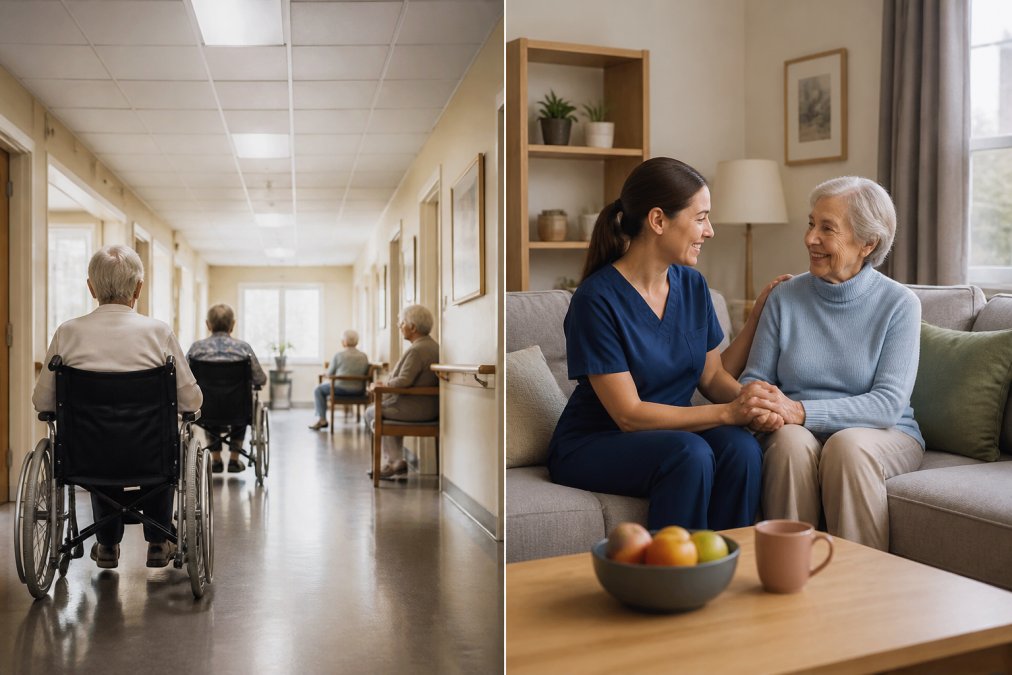
 comparison
Residential Care vs Home Care: Key Differences
Table of Contents
- Residential Care vs Home Care: Core Differences
- Medical vs Non-Medical Care Services
- Cost of Home Care vs Nursing Home
- Medicare Coverage for Long-Term Care
- Benefits of Aging in Place at Home
- 24-Hour Supervision and Support Levels
- How to Choose Between Residential and Home Care
- Frequently Asked Questions
Last Updated: September 20, 2026
Residential Care vs Home Care: Core Differences
Understanding residential care vs home care fundamentally shapes how an aging parent or recovering loved one experiences their final years. At Katys home healthcare, we understand this decision, and the answer isn't one-size-fits-all. Residential care offers structured environments with round-the-clock medical oversight. Home care preserves independence while bringing professional support directly into familiar surroundings. The difference between residential care and home care comes down to three factors: the level of medical supervision required, the degree of independence desired, and the financial capacity to sustain either option long-term.
Many families assume residential care is "more serious" or "better" because it's facility-based. That's a misconception. Some seniors thrive in their own homes with the right support system. Others genuinely need the structured environment and social community of a care facility. Understanding what each option actually provides, and what it costs, is the only way to make a decision you won't second-guess later.
What Residential Care Provides
Residential care facilities, also called nursing homes or assisted living communities, offer 24-hour on-site supervision and structured daily routines. A resident lives in a private or semi-private room within a facility staffed by nurses, aides, and activity coordinators. Meals are prepared centrally, medications are managed by clinical staff, and emergency medical response is immediate.
The environment is designed around custodial care, assistance with activities of daily living like bathing, dressing, and toileting, plus medication management and mobility support. Most facilities organize group activities, social events, and entertainment to combat social isolation, a genuine risk for seniors living alone. If a resident has a fall, a medication reaction, or a sudden health change, trained staff respond within minutes.
However, residential care means leaving home. A senior must adapt to a new physical space, new routines, and new social networks. Some adapt beautifully. Others experience depression or decline when uprooted, even when the facility is excellent.
What Home Care Provides
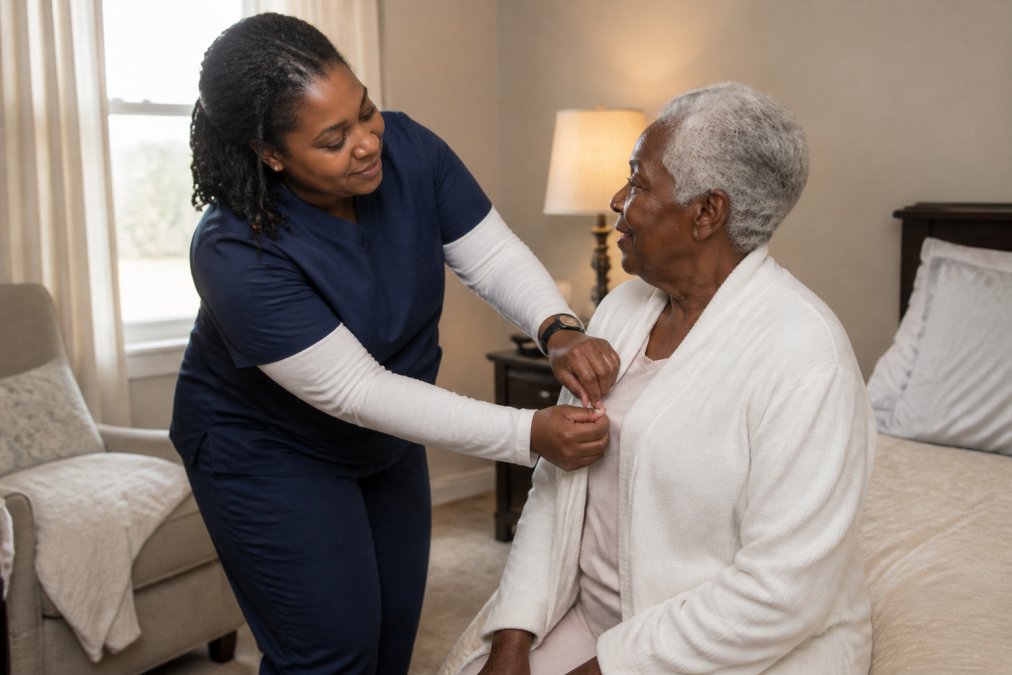
Home care keeps a person in their own home while bringing professional caregivers in to provide support. A home care aide might visit for two hours daily to help with personal care and meal preparation. Or a live-in caregiver provides 24-hour companionship and assistance. The senior sleeps in their own bed, maintains their own routines, and controls who enters their space and when.
Home care is fundamentally about non-medical assistance with activities of daily living. That includes hygiene assistance, meal preparation, housekeeping services, and companionship. Some home care agencies also offer skilled nursing services, wound care, medication management, physical therapy, through licensed nurses.
The psychological benefit is substantial. Aging in place, remaining in a familiar environment, correlates with better mental health outcomes, fewer behavioral problems, and stronger sense of autonomy. A person retains control over their daily schedule, their meals, their visitors, and their space.
The tradeoff: home care requires a functional home environment, reliable family oversight, and enough financial resources to pay for consistent, quality caregiving. If a caregiver calls in sick, there's no backup staff. If the home has stairs, poor lighting, or bathroom access issues, it becomes a safety liability.
Medical vs Non-Medical Care Services
The distinction between medical and non-medical care determines what types of professionals you're paying for and what insurance might cover.
Non-medical care is what most home care agencies provide. A home health aide assists with bathing, dressing, grooming, toileting, and meal preparation. They provide companionship and may remind a client to take medications (though they don't administer them). They help with light housekeeping and errands. Non-medical aides are trained but not licensed nurses. Their work is custodial, maintaining dignity and independence in daily functioning, not clinical.
Skilled nursing care involves licensed registered nurses or licensed practical nurses performing clinical tasks: wound dressing, catheter care, medication injection, blood pressure monitoring, or post-surgical recovery oversight. Skilled care is ordered by a physician and is often temporary, the first few weeks after hospitalization or during acute illness management. It's also significantly more expensive than non-medical care.
Residential care facilities typically employ both: non-medical aides handle activities of daily living, and nursing staff manage medical oversight. Home care agencies vary. Some provide only non-medical assistance; others have affiliated nursing services available on request. The difference matters for your budget and for what your insurance will cover.
Cost of Home Care vs Nursing Home
Pricing depends on several variables: hours of service, caregiver experience level, whether care is live-in or hourly, and your geographic location. Qualified language is essential here because every situation is different, and costs change frequently.
Home care agencies typically charge hourly rates for non-medical caregiving. Rates vary widely based on region and agency reputation. Live-in caregiving costs more per month than hourly visits, but the per-hour rate is often lower because the caregiver isn't commuting daily.
Residential care facilities charge a monthly fee that covers room, board, meals, activities, and staff supervision. Some facilities operate on a rental model (pay monthly, leave anytime). Others require a substantial upfront entrance fee plus monthly costs. Costs vary dramatically by region and facility quality.
The real comparison is messy. A senior needing 24-hour home care with a live-in caregiver may cost more monthly than a mid-tier assisted living facility. But a senior needing only 10 hours weekly of home care support might spend far less at home than in a facility. For specific pricing in your area, contact agencies directly or consult resources like A Place for Mom's cost comparison tools, which provides localized estimates.
Medicare Coverage for Long-Term Care
Medicare covers skilled nursing care in specific circumstances: after hospitalization (up to 100 days in a skilled nursing facility), during rehabilitation, or when medically necessary. It does NOT cover custodial care, the assistance with activities of daily living that most seniors actually need long-term.
Home health care is covered by Medicare only when ordered by a physician and provided by a Medicare-certified home health agency. The care must be skilled (nursing, physical therapy, or similar) and the patient must be homebound. Routine non-medical assistance like bathing or meal preparation is not covered, even if delivered at home.
For long-term custodial care, whether at home or in a facility, most families pay out-of-pocket.
Benefits of Aging in Place at Home
The psychological and emotional case for home care is compelling. Remaining in a familiar environment, surrounded by personal belongings, family photos, and established routines, preserves a sense of identity and control that many seniors lose in institutional settings.
24-Hour Supervision and Support Levels
The level of supervision required is often the deciding factor between home and residential care.
How to Choose Between Residential and Home Care
Start with a realistic assessment of the senior's medical and functional needs. Does the person require skilled nursing care (wound dressing, medication injection, complex medication management)? If yes, a facility with on-site nursing is often more practical than arranging skilled nursing visits at home.
| Factor | Home Care | Residential Care |
|---|---|---|
| Medical oversight | Limited; nursing must be arranged separately | 24/7 clinical staff on-site |
| Independence & autonomy | High; senior controls daily routines | Limited; structured environment |
| Social engagement | Depends on caregiver & family involvement | Built-in community & activities |
| Safety supervision | Gaps when caregiver absent | Continuous supervision |
| Cost predictability | Variable; depends on hours & services | Fixed monthly fee |
| Family burden | Requires active oversight & coordination | Facility manages daily care |
| Flexibility | Easy to adjust hours or services | Less flexible; requires facility move |
Frequently Asked Questions
What is the main difference between residential care and home care?
Residential care involves moving to a facility where you receive 24-hour supervision, meals, activities, and social engagement in a community setting. Home care brings trained caregivers to your residence to assist with daily activities while you remain in your own home. The choice affects independence, cost, social interaction, and continuity of care. Residential care suits those needing constant medical oversight or significant mobility support; home care works for those who can remain safe at home with scheduled assistance.
How much does home care cost compared to a nursing home?
Home care pricing depends on the type of services, hours needed, and your location. Non-medical assistance typically costs less than skilled nursing care. Residential facilities charge fixed monthly rates that cover housing, meals, and activities. Since Katys home healthcare customizes care to your needs, pricing varies based on your specific situation. Contact Katys home healthcare directly for a personalized quote, or visit their website to request pricing information tailored to your circumstances.
Does Medicare cover home care or residential care?
Medicare Part A covers skilled nursing care and home health services when ordered by a doctor and provided by a Medicare-approved agency, but only for medically necessary care related to a covered condition. Medicare does not cover custodial care, non-medical assistance, or residential facility room and board. Coverage depends on your specific diagnosis and care needs. For details on what Medicare will cover in your situation, speak with your healthcare provider or contact Medicare directly at 1-800-MEDICARE to discuss your eligibility.
What are the benefits of aging in place at home instead of moving to a care facility?
Aging in place preserves independence, maintains familiar surroundings, and allows you to control your daily routine and social life. Many people report better mental health and quality of life when they stay in their own homes. Home care also provides flexibility, you choose the hours and types of support you need rather than following a facility's schedule. Family members often find it easier to stay involved, and continuity of care improves when the same caregiver works with you over time, building trust and understanding your preferences.
Can home caregivers handle dementia and behavioral challenges?
Experienced home caregivers trained in dementia care can manage many behavioral and cognitive changes, including aggression, resistance to care, and confusion. They use specialized techniques to de-escalate situations, maintain patient dignity, and adapt to your loved one's needs. Katys home healthcare's seasoned team brings over a decade of experience caring for clients with complex conditions. The key is matching your loved one with a caregiver experienced in dementia care and ensuring consistent staffing so your family member builds trust with the same person over time.