 ultimate-guide
Benefits of Aging in Place Safely: A Guide
Table of Contents
- What Does Aging in Place Really Mean?
- The Top 5 Benefits of Aging in Place Safely
- Home Safety Modifications for Seniors: Where to Start
- Understanding the Cost of Aging in Place vs Assisted Living
- The Role of Professional Caregivers in Aging Safely
- Creating a Comprehensive Safety and Care Plan
- Conclusion: Making a Safe and Informed Choice
- Frequently Asked Questions
Last Updated: September 5, 2026
What Does Aging in Place Really Mean?
Aging in place is the ability to continue living in your own home and community safely, independently, and comfortably as you grow older, in contrast to moving to assisted living facilities or nursing homes. At Katys home healthcare, we have spent over a decade helping families in Ohio and North Carolina understand that staying home is about receiving the right kind of help in the right setting.
True aging in place requires intentional planning around home safety, health care access, and daily support systems. Without this planning, staying home can become dangerous; with it, seniors often experience better health outcomes, stronger emotional well-being, and a greater sense of control.
The Top 5 Benefits of Aging in Place Safely
The benefits of aging in place safely extend far beyond comfort, touching physical health, financial wellness, and emotional stability. Here are the five most significant advantages we see families realize every day.
1. Preservation of independence and autonomy. Seniors who age in place make their own schedules, choose their own meals, and maintain their personal routines. This sense of control is directly linked to better mental health and a stronger will to remain active.
2. Reduced risk of social isolation. Staying in a familiar neighborhood keeps seniors close to longtime friends, neighbors, and community groups. The National Institute on Aging research on social isolation notes that maintaining social connections is critical for cognitive health in later years.
3. Lower cost compared to facility care. While home care requires an investment, the cost of aging in place vs assisted living frequently favors staying home, especially when a spouse or family caregiver shares responsibilities.
4. Personalized, one-on-one care. In-home caregivers provide undivided attention, which often leads to better medication management and chronic condition monitoring than understaffed facilities can offer.
5. Familiarity supports cognitive and emotional health. Being surrounded by personal belongings, memories, and a beloved pet provides comfort that no institutional setting can replicate.
Home Safety Modifications for Seniors: Where to Start
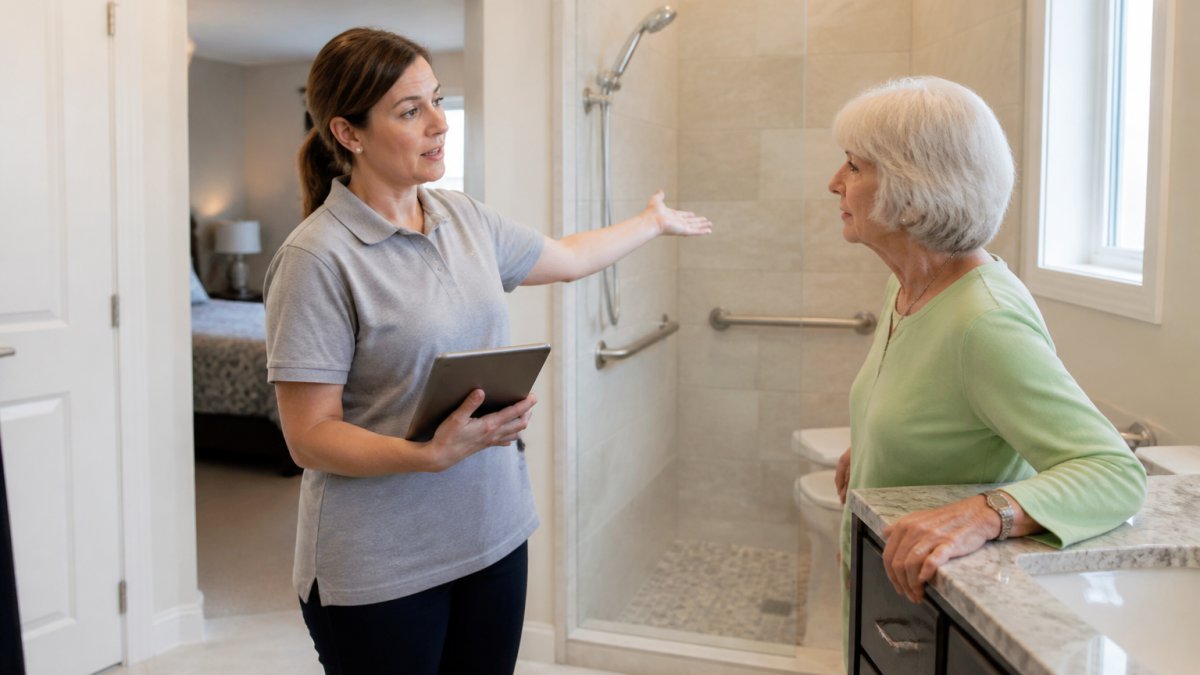
Home safety modifications for seniors do not require a full renovation, but they do require a systematic review of the most dangerous areas. Falls are the leading cause of injury among older adults, so a home safety assessment should begin with the bathroom, stairs, and bedroom. A truly modern safety plan also integrates smart home technology.
Start with the bathroom: install grab bars near the toilet and inside the shower, add a non-slip bath mat, and consider a raised toilet seat or shower chair. Next, evaluate the stairs and hallways, ensuring adequate lighting, removing loose rugs, and installing handrails on both sides of any staircase.
The bedroom and main living areas need clear pathways free of clutter and electrical cords. A common mistake is focusing only on mobility aids while ignoring environmental barriers like poor lighting. The Centers for Disease Control and Prevention fall prevention guidance emphasizes that simple modifications, such as improving home lighting and removing trip hazards, significantly reduce fall risk. For families unsure where to begin, a professional occupational therapist can conduct a thorough assessment and prioritize changes based on the senior's specific mobility level.
The Smart Home Advantage: Moving Beyond Passive Safety
While physical modifications are foundational, the next frontier in safe aging in place is proactive, sensor-based technology. Instead of just preventing a fall, smart home systems can help predict and alert caregivers to risks before an incident occurs.
- Motion Sensors and Lighting: Passive infrared (PIR) sensors placed in hallways and bathrooms can automatically trigger night lights, reducing the need for a senior to fumble for a switch in the dark. More advanced systems learn daily routines and can send an alert to a family member's smartphone if no motion is detected by a certain time in the morning, a potential sign of a fall or illness.
- Smart Fall Detection: Wearable devices with fall detection are well-known, but the market is shifting toward ambient sensors. Wall-mounted or ceiling-mounted devices from companies like Vayyar or Essence use radio waves to detect a fall without requiring the senior to wear or remember to charge a device. These are particularly useful for individuals with cognitive decline who may not use a wearable consistently.
- Video-Based Monitoring: Systems like Amazon's Alexa Together or dedicated camera systems offer a way for remote family members to check in visually. While privacy is a concern, these systems can be configured to only stream when a fall is detected or when the senior presses a help button, balancing safety with autonomy.
A Room-by-Room Technology Checklist
To make this actionable, here is a checklist that combines physical and digital safety measures:
| Room | Physical Modification | Smart Technology Addition |
|---|---|---|
| Bathroom | Grab bars secured into studs, raised toilet seat, non-slip flooring | Water leak sensor (to detect flooding), motion-activated night light, emergency call button within reach of toilet and shower |
| Bedroom | Clear path to the bathroom, bed at an appropriate height | Bed occupancy sensor (to alert if the senior gets up and doesn't return), voice-controlled lamp or light switch |
| Stairs | Handrails on both sides, high-contrast edge tape on steps | Motion-sensor lighting at top and bottom, smart plug to control a lamp on a timer |
| Main Living Area | Remove loose rugs, secure electrical cords | Smart speaker for voice-activated calls and reminders, video doorbell to see who is at the door without getting up |
By layering physical modifications with smart technology, families can create a safety net that is both reactive (preventing falls) and proactive (detecting emerging risks). This integrated approach is what separates a truly safe aging-in-place plan from a superficial one.
Understanding the Cost of Aging in Place vs Assisted Living
Comparing the cost of aging in place vs assisted living requires looking past the monthly price tag to the full picture of services included. Assisted living facilities typically charge a flat monthly rate that bundles housing, meals, activities, and baseline personal care, but that rate often increases as care needs grow and does not always include medication management or specialized memory care.
Aging in place involves more variable costs: home maintenance, utilities, groceries, and the hourly or daily rate of professional caregivers. For many families, the deciding factor is not the total dollar amount but how that money is spent. Home care dollars go directly toward one-on-one attention and customized support, while facility fees cover shared spaces and services the senior may not need.
Pricing for home care varies widely based on the level of care required, hours per day, and region. Since every care plan is unique, the most reliable way to understand costs is to request a personalized assessment from a provider like Katys home healthcare. Our team works with families to structure care that fits both clinical needs and budget, and we encourage families to check official sources for applicable state or federal assistance programs.
The Role of Professional Caregivers in Aging Safely
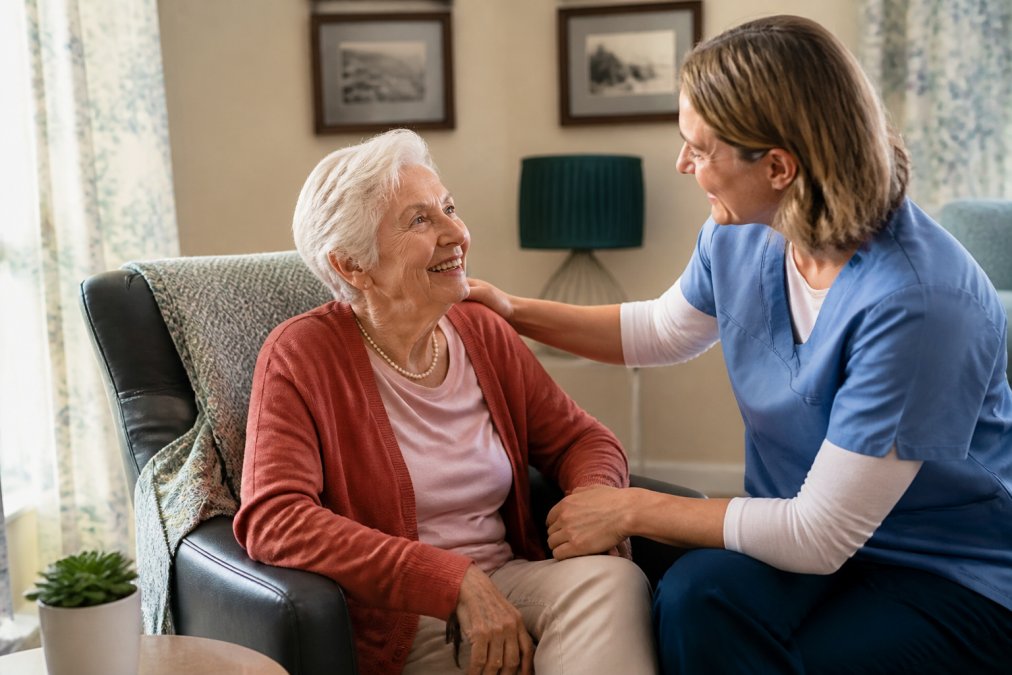
Professional caregivers are the backbone of a successful aging in place plan, bridging the gap between independent living and medical necessity. They provide personal care assistance with bathing, dressing, and grooming, as well as support with mobility, meal preparation, and light housekeeping, plus companionship that directly combats loneliness and depression.
The right caregiver also serves as a critical observer, noticing subtle changes in appetite, mood, or physical ability that family members who visit weekly might miss. This early detection can prevent hospitalizations and allow for timely adjustments to the care plan. Caregivers also provide essential respite so adult children can rest, work, and tend to their own health without guilt.
For seniors with chronic conditions like dementia or Parkinson's disease, a trained caregiver ensures the home environment remains safe and structured, implementing routines that reduce confusion and agitation, managing medications, and coordinating with visiting physical therapists and nurses.
Hiring Home Caregivers for Stubborn Seniors
Hiring home caregivers for stubborn seniors is one of the most delicate challenges families face. A parent who resists help is often protecting their sense of dignity, so the key is to stop framing care as a loss of independence and start framing it as a tool to preserve it.
Begin by including the senior in the hiring process; when a parent meets the caregiver and feels they have a say, resistance drops significantly. Introduce the caregiver gradually, starting with a few hours a day for companionship or light tasks before moving to full personal care. A common mistake is hiding the need for help and then surprising the parent with a stranger.
Caregivers experienced with resistant seniors use a technique called "redirecting." Instead of arguing about why help is needed, they focus on a shared activity, such as making lunch or watching a favorite show, and build trust through positive interaction. Katys home healthcare trains its team to work with seniors who are initially reluctant, understanding that patience and consistency are more effective than force. Our caregivers are available on a 24/7 basis, which provides the consistency stubborn seniors need to eventually accept and even welcome assistance.
Creating a Comprehensive Safety and Care Plan
A comprehensive safety and care plan weaves together home modifications, professional caregiving, medical support, and family involvement into a single, documented strategy shared with all family members, the primary physician, and the caregiving team. It begins with a clear assessment of the senior's abilities and limitations, covering mobility, medication management, nutrition, and cognitive status.
The plan must address emergency preparedness, a component many families overlook. This includes programming emergency contacts into a simple phone, installing medical alert systems, and establishing a check-in routine with a neighbor or family member. The plan should also document advance directives and legal preferences, ensuring that medical wishes are honored even if the senior cannot communicate them. The Administration for Community Living guidance on long-term care planning provides a useful framework for families working through these decisions.
Review the plan every six months or after any significant health event, such as a fall, hospitalization, or new diagnosis. Care needs change, and the plan must evolve with them.
The Legal Backbone: Estate Planning for Long-Term Home Residency
Most safety and care plans focus on the physical and medical aspects of aging in place but neglect the legal framework required to sustain it. Without the right legal documents, a senior's ability to remain at home can be jeopardized by a sudden health crisis.
- Durable Power of Attorney (POA) for Healthcare: This document names an agent to make medical decisions if the senior becomes incapacitated. It is not just about end-of-life care; it is about daily management. For example, if a senior with dementia is unable to consent to a new medication or a home health aide, the healthcare POA agent can legally authorize it. Without this, family members may face a court battle for guardianship, which is costly and time-consuming.
- Durable Power of Attorney for Finances: This allows a trusted person to manage bank accounts, pay bills, and handle insurance claims. This is essential for paying for home care services, home modifications, and medical supplies. A financial POA can also help prevent financial exploitation, a significant risk for isolated seniors.
- Living Will (Advance Directive): This document specifies the senior's wishes regarding life-sustaining treatment. While it is often associated with terminal illness, it also provides clarity for situations like a severe stroke or a traumatic fall. Knowing these wishes in advance prevents family conflict and ensures the senior's care aligns with their values, even if they cannot communicate.
- Home and Property Considerations: For seniors who own their home, it is important to understand the legal implications of aging in place. This includes ensuring the property title is clear and considering a Lady Bird Deed (or transfer-on-death deed, where available) to avoid probate and protect the home from Medicaid estate recovery. This is a nuanced area of law, and a consultation with an elder law attorney is a worthwhile investment.
Navigating Community Resources and Government Subsidies
Beyond legal documents, a robust plan includes a strategy for navigating community resources. The key is to understand the difference between medical home health care (skilled nursing, physical therapy, often covered by Medicare) and non-medical home care (assistance with bathing, dressing, meal prep, typically not covered by Medicare).
For non-medical services, funding often comes from state-level programs. The primary federal-state partnership is Medicaid, but eligibility and benefits vary dramatically by state. Many states offer Home and Community Based Services (HCBS) waivers that allow seniors who would otherwise need nursing home care to receive support at home. The application process is complex and often has waiting lists, so it is critical to start early. The Eldercare Locator, a service of the Administration for Community Living, is a public resource that can connect families to state and local agencies on aging, which are the entry point for many of these programs.
| Care Component | When to Review | Key Questions to Ask |
|---|---|---|
| Home Safety | Every 6 months | Are new fall hazards present? Do mobility aids still fit? |
| Medical Support | After any hospitalization | Are medications current? Is the physician aware of home conditions? |
| Caregiver Schedule | Monthly | Are daily needs being met? Does the family need more respite? |
| Emergency Plan | Every 6 months | Are contacts current? Do all family members know the procedure? |
| Legal Documents | Annually or after a major health event | Are the POA and living will up to date? Do they reflect current wishes? |
| Financial Plan | Quarterly | Are funds for home care being managed correctly? Is the senior eligible for any state waivers? |
By integrating legal and financial planning into the care plan, families move beyond a reactive safety checklist and create a sustainable, long-term strategy for aging in place.
Conclusion: Making a Safe and Informed Choice
Choosing how a parent or loved one will age is one of the most significant decisions a family makes. The benefits of aging in place safely are clear, but they are only realized through deliberate planning, honest conversations, and the right professional support.
Katys home healthcare provides dedicated, 24/7 home care services designed to improve the quality of life for patients in Ohio and North Carolina. With over a decade of experience, our seasoned team of passionate caregivers is committed to prioritizing client health, wellness, and independence. Whether your loved one needs support after surgery, help managing a chronic condition, or compassionate care for dementia, we work to help them regain their ability to perform daily activities while fostering a calm and supportive environment. Get started with Katys home healthcare and give your family the peace of mind that comes from knowing your loved one is safe, cared for, and thriving at home.
Frequently Asked Questions
What are the primary safety risks when aging in place?
The most common safety hazards at home are falls, often caused by throw rugs, poor lighting, and clutter in walkways. Other risks include burns from cooking, medication mix-ups, and the danger of having no immediate help during a medical emergency. A home safety assessment by an occupational therapist or a professional home care provider can identify these environmental barriers and recommend specific home safety modifications for seniors, such as grab bars and improved lighting, to reduce the risk of injury.
Is the cost of aging in place vs assisted living lower?
Aging in place can be more affordable than moving to an assisted living facility, but it depends on your specific needs. While a mortgage may be paid off, you still have ongoing costs for utilities, home maintenance, and property taxes. You may also need to pay for home modifications, medical equipment, and in-home care services. Assisted living facilities bundle housing, meals, and personal care assistance into one monthly fee, which often becomes a significant financial commitment. Getting a personalized care plan and cost estimate for home care is a practical first step.
How can home modifications improve safety for seniors?
Home modifications are changes to your living environment that reduce safety hazards and support independent living. Simple, high-impact changes include installing grab bars in the bathroom, adding non-slip mats, improving lighting in hallways and staircases, and removing loose rugs that can cause trips. For more significant mobility challenges, a ramp at the entrance or a walk-in shower can make daily tasks easier. These changes help prevent falls, which are a leading cause of injury, and allow seniors to navigate their homes with greater confidence and autonomy.
How do you handle hiring home caregivers for stubborn seniors?
When a senior is resistant to help, it is often a fear of losing their independence. Start by having a conversation that focuses on the benefits of staying home, not on what they can no longer do. Frame a caregiver as an assistant who helps with chores they dislike, freeing up their time and energy for hobbies. When hiring home caregivers for stubborn seniors, introduce them slowly. Ask the agency if you can arrange a meet-and-greet so your loved one has a say in the choice, which can build trust and reduce anxiety.
This article was written using GrandRanker